Education without entrance examinations
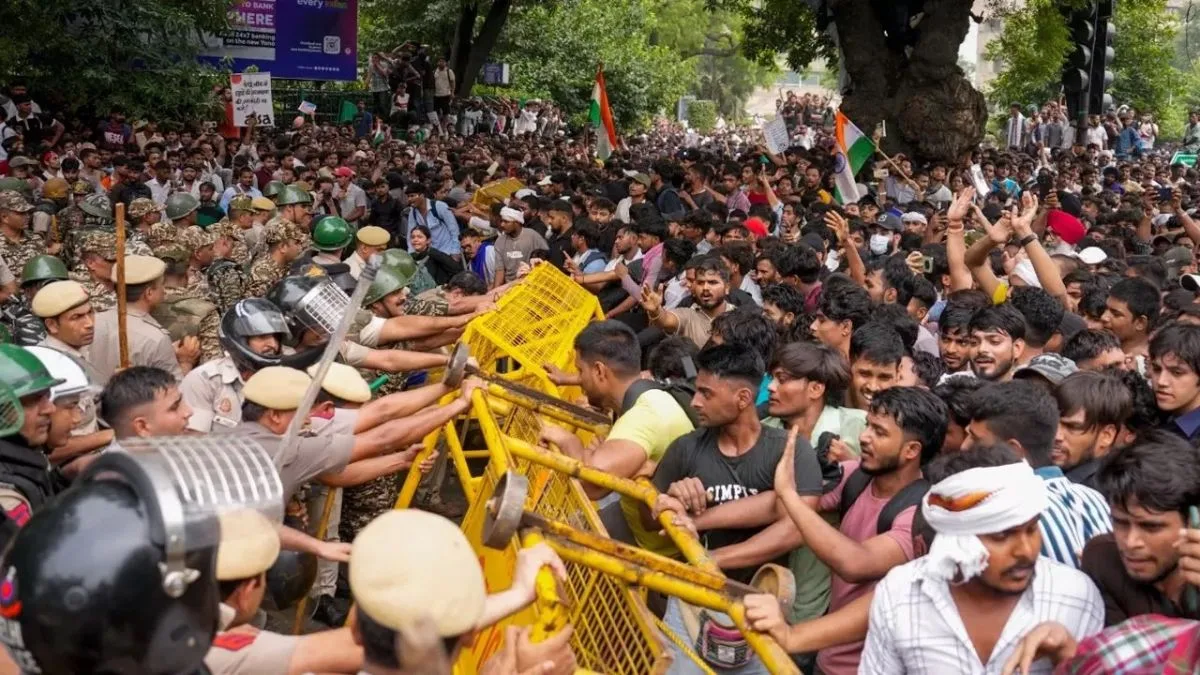
India’s entrance exam regime has grown into a parallel economy, draining families and destroying young lives.
The geopolitical shock created by the Iran conflict is forcing countries far beyond West Asia to confront an uncomfortable reality: energy security can no longer be built around a single region, a single route or a single set of political assumptions.





Photo:AI
The geopolitical shock created by the Iran conflict is forcing countries far beyond West Asia to confront an uncomfortable reality: energy security can no longer be built around a single region, a single route or a single set of political assumptions. For India, the renewed importance of Venezuela is less a story about one oil supplier and more a reflection of a changing global energy map.
For decades, India’s economic growth has depended on a steady flow of imported crude. That dependence has become increasingly vulnerable to events beyond its control. The Strait of Hormuz, through which a substantial portion of India’s oil imports pass, has long been recognised as a strategic chokepoint. Yet policymakers and markets alike often treated disruption there as a theoretical risk. The present crisis has transformed that risk into a practical concern. Against this backdrop, Venezuela’s acting President Delcy Rodríguez arrived in India at a moment when energy security is reshaping global diplomacy. This is why India’s engagement with Venezuela deserves attention.
Advertisement
The relationship is not driven by ideology, nor by any sudden diplomatic realignment. It is rooted in a basic principle of statecraft: diversification. A country that imports the overwhelming majority of its energy needs cannot afford excessive dependence on any one geography, regardless of how reliable that geography may appear during normal times. Venezuela offers India certain advantages. It possesses some of the world’s largest hydrocarbon reserves, and Indian refiners have the technical capability to process the country’s heavy crude.
Advertisement
Equally important, Venezuelan supplies provide an alternative source of energy that is geographically distant from the conflicts and tensions that periodically destabilise the Gulf. However, expectations should remain realistic. Venezuela is not about to replace Russia, Saudi Arabia or the United Arab Emirates as a leading supplier to India. Years of underinvestment, sanctions and economic turmoil have reduced its production capacity. The country’s potential remains enormous, but potential is not the same as output. Energy partnerships ultimately depend on reliable production and predictable delivery. The larger lesson lies elsewhere. India’s energy strategy is entering a phase where flexibility may matter more than long-term dependence on any single supplier.
The country has already demonstrated an ability to source crude from a wide range of producers, including Russia after the Ukraine war reshaped global oil flows. The growing interest in Venezuelan crude fits the same pattern. In the coming years, New Delhi will likely pursue a broader portfolio of suppliers while simultaneously expanding strategic reserves, renewable energy capacity and domestic energy infrastructure. Such an approach will not eliminate vulnerability, but it can reduce it. The significance of India’s renewed engagement with Venezuela, therefore, extends beyond trade figures and oil cargoes. It signals the emergence of a more pragmatic energy doctrine ~ one shaped not by traditional alliances but by the imperative of resilience in an increasingly fragmented and unpredictable world.
Advertisement