‘Perturbed’ with Netanyahu, Trump says he wants to meet Iranian Supreme Leader Ayatollah Mojtaba Khamenei
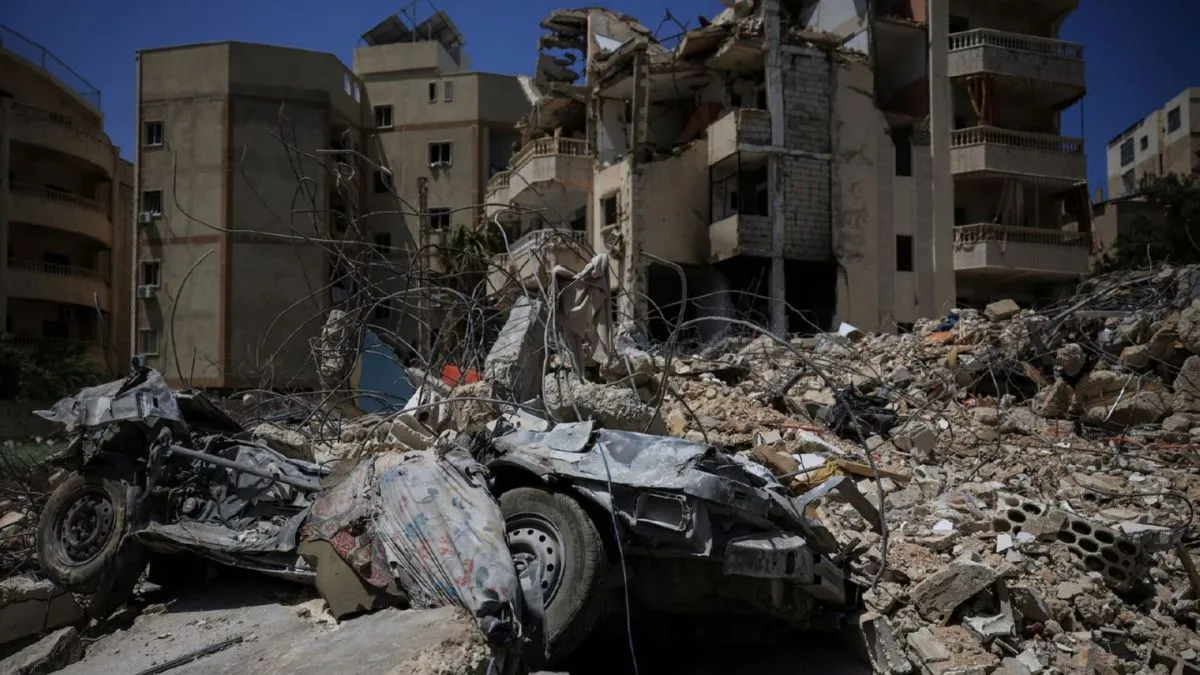
Trump said that he was "perturbed" at Netanyahu's military escalation in Lebanon.
Fresh security concerns emerged in the Gulf after Kuwait reported missile and drone interceptions, while negotiations between Washington and Tehran continued without a final breakthrough.





Photo: IANS
Kuwait’s armed forces said on Monday that the country’s air defence systems were responding to hostile missile and drone attacks, signalling fresh security concerns in the Gulf amid continuing uncertainty over a possible US-Iran agreement.
In a statement posted on X, the Kuwaiti Army said its air defences were actively confronting incoming threats and urged residents to follow all safety instructions issued by authorities. The military also said any explosion sounds heard by the public were linked to interception operations being carried out by defence systems.
Advertisement
The latest incident comes at a time when diplomatic efforts between the United States and Iran remain in flux, with no formal agreement yet announced despite weeks of negotiations aimed at extending a ceasefire and restarting talks over Tehran’s nuclear programme.
Advertisement
“The Kuwaiti air defenses are currently confronting hostile missile and drone attacks,” the Army said in its statement.
Authorities advised citizens and residents to comply with security and safety directives while interception operations were underway.
The development follows a similar episode reported on May 28, when Kuwaiti air defence units were also engaged in countering hostile missiles and drones.
As security concerns persist across West Asia, diplomatic contacts among Gulf nations have intensified.
According to Kuwait News Agency (KUNA), Kuwait’s Foreign Minister Sheikh Jarrah Jaber Al-Ahmad Al-Sabah held discussions with Qatar’s Prime Minister and Foreign Minister Sheikh Mohammed bin Abdulrahman Al Thani. The two leaders reviewed ongoing developments in the region and discussed efforts to strengthen regional and international security and stability.
Meanwhile, CNN reported that Iran has regained access to a substantial portion of its underground missile infrastructure after months of excavation and repair work.
The report said the restoration effort highlights limitations in the US bombing strategy that had focused on sealing tunnel entrances linked to Iran’s missile network.
The development comes as Tehran and Washington continue to weigh options for a broader understanding aimed at reducing regional tensions.
US President Donald Trump has reportedly asked for additional revisions to a draft agreement with Iran that seeks to prolong a ceasefire, according to CBS News.
Reports suggest the latest proposal includes a 60-day halt in hostilities, measures related to reopening the Strait of Hormuz and a framework for resuming negotiations over Iran’s nuclear programme. However, no final agreement has been announced.
A high-level meeting at the White House on Friday reportedly ended without a final decision.
Trump reiterated that preventing Iran from acquiring nuclear weapons remains a central condition for any future agreement.
“The one guarantee that I have to have is that there will be no nuclear weapons,” Trump said during an interview with Fox News.
He also indicated that he was not under pressure to conclude a deal quickly. According to Axios, cited by CBS News, Trump sought several changes during the White House discussions and later requested additional modifications.
A White House official told CBS News: “President Trump will only make a deal that is good for America and satisfies his red lines.”
The current proposal is also reported to include provisions concerning the Strait of Hormuz and Iran’s stockpile of highly enriched uranium.
Advertisement