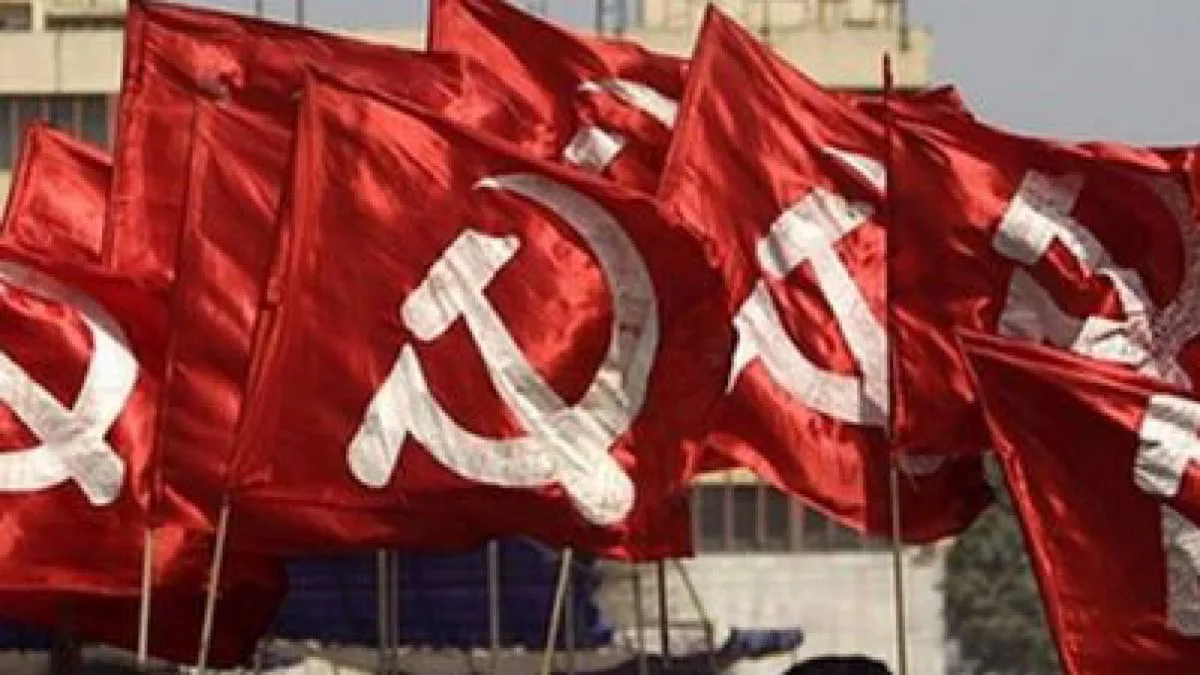
The end of communist rule in Kerala marks more than an electoral setback for the Left. It signals the closing of a long chapter in Indian political history ~ one in which communist parties once shaped not merely governments, but the intellectual and moral vocabulary of public life. For decades, India’s Left occupied a unique place in the democratic world. Unlike the authoritarian communist experiments elsewhere, Indian communists worked within elections, legislatures and constitutional politics.
From land reforms in West Bengal to decentralised governance and social development in Kerala, they demonstrated that Marxist politics could coexist with democracy. At their peak, communist governments influenced the lives of millions and helped define debates on labour rights, welfare, secularism and economic justice. That era now appears decisively diminished. The decline of the Left cannot be explained simply through electoral arithmetic or organisational weakness. The deeper reason lies in the transformation of Indian society itself.
Advertisement
The political language of class solidarity has steadily lost ground to the politics of identity, aspiration and nationalism. Religion, caste equations, welfare delivery and charismatic leadership now shape electoral outcomes far more than ideological mobilisation or trade union networks. Economic liberalisation accelerated this shift. The rise of a consumption-driven middle class weakened older collectivist politics and created new social ambitions that communist parties struggled to interpret. The Left continued speaking in the vocabulary of class struggle while large sections of India moved towards the language of opportunity, entrepreneurship and upward mobility.
Ironically, communist parties also became victims of their own compromises. Once fierce critics of capitalism, several Left-led governments eventually embraced private investment, industrialisation and public-private partnerships in the hope of remaining economically competitive. In doing so, they blurred the distinction between themselves and the economic order they once opposed. West Bengal offered the clearest warning. A movement that rose through peasant mobilisation eventually found itself accused of displacing farmers in the name of industrial growth.
Yet the decline of the Left presents an important paradox. Contemporary India displays many of the inequalities that historically fuelled socialist politics ~ rising concentration of wealth, insecure employment, agrarian distress and growing youth unemployment. But these anxieties are now channelled through regional movements, welfare politics or nationalist narratives rather than class-based mobilisation. This suggests that the crisis of Indian communism is not merely organisational. It is ideological. The Left failed to reinvent itself for a post-liberalisation India while its opponents successfully adapted to changing social aspirations.
Still, writing its obituary would be premature. Communist parties continue to retain institutional networks, influence in universities and pockets of social legitimacy. Kerala, despite the recent defeat, still demonstrated that the Left retains a durable electoral base. But survival cannot substitute renewal. If Indian communism is to remain politically relevant, it must move beyond nostalgia and rediscover a vocabulary that connects economic justice with the aspirations of a younger and more fragmented society. Without that reinvention, the red flag may continue to survive symbolically even as its political era steadily recedes into history