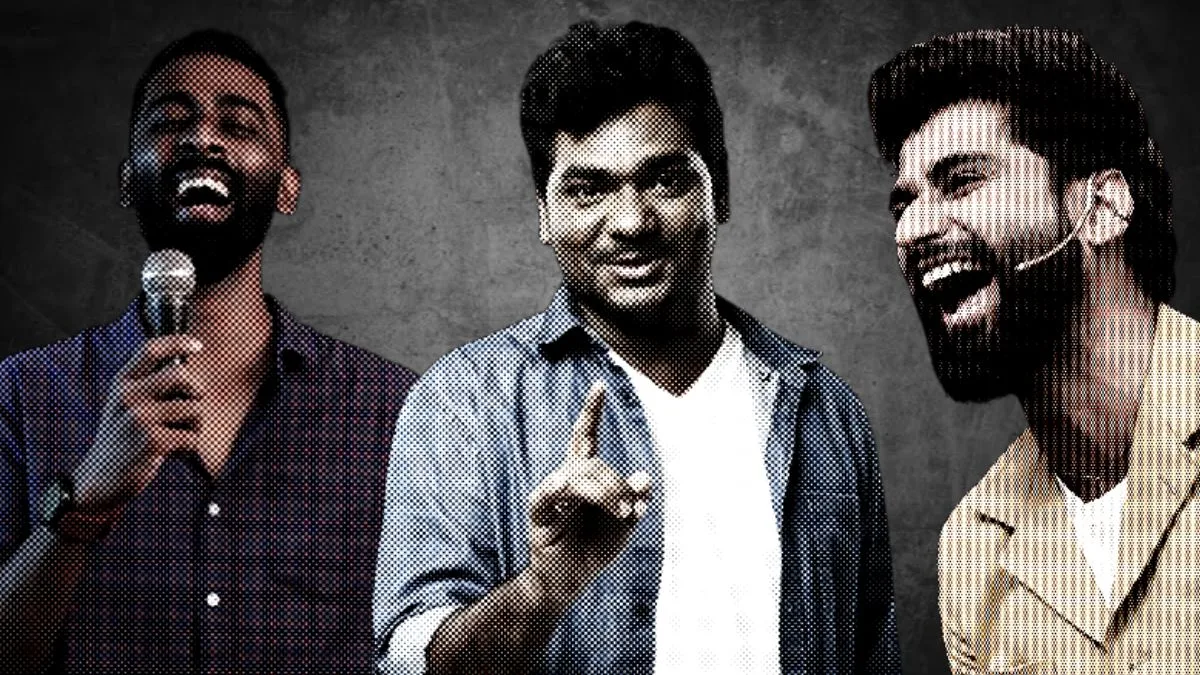
It started with a plate of chicken biryani.
During a recent episode of comedian Pranit More’s improv show, Ashleel Show, a male audience member shared an anecdote. He had taken a girl out on a date. He spent 370 rupees on biryani. She wanted to go home after eating. His complaint? He paid that money and “got nothing in return.”
Advertisement
Pranit More’s response was a laugh and a cheerful label: “Peak Gurgaon content.”
Every man in the audience laughed along.
That was it. No pushback. No pause. Also, no moment of discomfort. Just a room full of men finding it perfectly reasonable that a woman’s time, company, and body are a transaction. That food equals access. That a man who buys dinner is owed something.
What the joke actually says
Let’s be clear about what that “joke” contains.
The man in the audience was not being self-deprecating or absurd. He was ‘genuinely’ expressing frustration. He spent money. And, he expected something physical in return. The woman said no and left. He felt cheated.
This is not a joke about a bad date. The man in the audience describes a woman who clearly said, in her own words, that she was not in the mood for anything that day. He did not respect that. He did not leave. Instead, he kept pushing and forcing until she finally gave in and let him slide his hand inside her tops and leggings. A woman said no. A man ignored it and kept going until she stopped resisting. Pranit More heard all of this and laughed. His response was “aadhe paise vasool ho gaye.” (Half the money recovered). That is what he chose to say after listening to a man describe wearing a woman down past her stated boundary and touching her without real consent. He did not just laugh at entitlement. He laughed at coercion and put a billing rate on it.
This is not a quirky observation about dating culture in Indian cities. This is a transactional, coercive understanding of women. The idea that money spent on a woman creates an obligation on her part is not edgy humour. It is a dangerous belief. It has real consequences for how men treat women when they feel “owed.”
Pranit did not challenge this. He laughed and gave it a catchy tag line. Something relatable (to men). Something worth celebrating on a platform that gets five million views per episode.
That is not nothing. That is an endorsement with a microphone.
The silent edit
After the clip circulated and people called it out, Pranit More did something telling.
He trimmed the segment from the episode. Quietly. Without any statement. Without an apology. And, without even acknowledging that it had happened.
That silence is important.
A comedian who genuinely believed this was fine would have defended it. A comedian who was caught off guard and felt remorse would have said something. Pranit did neither. He just removed the evidence and moved on.
This is not the first time
The biryani comment is not an isolated incident. Netizens have also pointed to a previous controversy involving Pranit More.
During Bigg Boss 19, he reportedly showed an explicit AI-generated video featuring fellow contestant Malti to his live audience. He did not have her consent. The clip was kept out of the YouTube version but was shown to people in the room.
Using someone’s likeness to create explicit content without their knowledge or permission is not a prank. It is a violation. The fact that he shielded it from YouTube suggests he knew exactly what he was doing and knew it could not survive public scrutiny.
Two incidents. The same pattern. A woman’s dignity treated as material for entertainment. No accountability either time.
Harsh Gujral and the bigger picture
How can one forget comedian Harsh Gujral? His infamous “6000 joke” is worth remembering.
Gujral’s brand of comedy has long leaned on the idea that men who spend money on women and get rejected are victims. That women are gold-diggers. That male frustration over female rejection is valid, funny, and relatable.
This kind of content does not exist in a vacuum. It shapes how young men understand relationships. It tells them that women’s choices are transactional. That rejection is theft. That entitlement is personality.
When comedians with millions of followers repeat these ideas dressed up as jokes, they are not just reflecting culture. They are building it.
Zakir Khan did it way before
This pattern goes beyond Pranit and Harsh Gujral. Zakir Khan built an entire career persona around the “Sakht Launda.” The premise: a loyal, sensitive guy who gets friendzoned. The packaging was warm and nostalgic. The message underneath was something else entirely.
The “friendzone” as a concept implies that women owe men romantic or physical reward for being decent. That friendship given instead of a relationship is a punishment or a betrayal. Zakir Khan made this idea feel cosy and wholesome. That made it harder to identify and easier to absorb.
Millions of young men grew up seeing this framing as normal. As something to identify with. As a template for how women work.
These comedians did not invent misogyny. But they gave it a friendly face. They made it pass the laugh test. And once something makes you laugh, you stop questioning it.
Millions of views per episode
The number matters.
Pranit More’s ‘Ashleel Show’ is not a fringe internet corner. It is a major platform. Five million views per episode means five million people heard a man complain that biryani did not buy him a woman. They heard Pranit laugh. They heard the audience laugh.
Some of those viewers laughed too and felt confirmed in a belief they already held. Some absorbed it without thinking. A very small number were probably troubled by it.
The show’s name, Ashleel, means obscene or vulgar. It wears the label like a badge. The problem is that obscenity in comedy has long been used as a shield. Call it dirty comedy upfront and suddenly any critique is just someone being too sensitive.
But there is a difference between crude humour and content that teaches men that women owe them something. One is irreverent. The other is harmful.