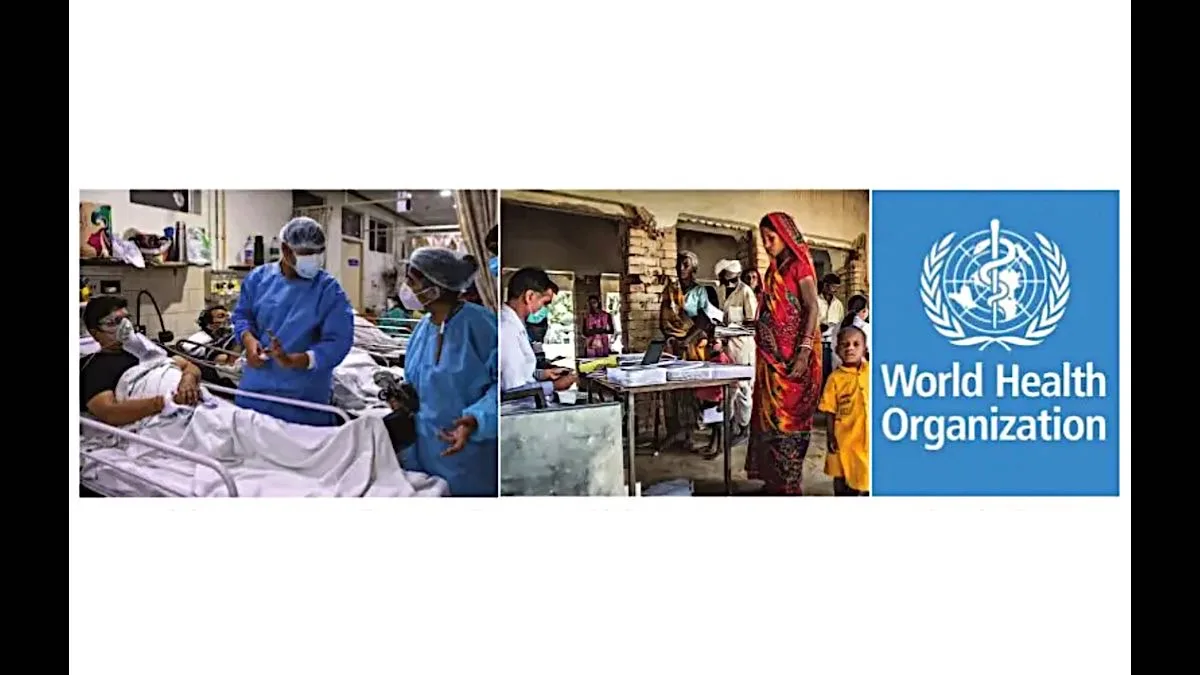
India’s healthcare system has yet to match the country’s claimed growth in economy and living standards. The strain comes not only from uncontrolled population increase and rapid urban migration, but also from a chronic shortage of doctors and paramedics. With fewer than one doctor per 1,000 people ~ far below WHO norms ~ and trained paramedics even scarcer, the gap is glaring. After years of study and heavy investment, many doctors gravitate toward corporate hospitals where compensation and visibility are higher.
Patients, meanwhile, are swayed by the publicity of gleaming corridors and machines, often overlooking modest clinics that could serve them more directly. The paradox is stark: families pay hefty sums to hospitals yet resist paying fair fees to individual practitioners, making private practice less viable. Rural areas continue to suffer from inadequate infrastructure, understaffed primary health centres, and limited emergency care, while urban centres choke under congestion, costly facilities, and rising lifestyle diseases. Out of pocket expenditure still accounts for nearly half of total health spending, leaving millions vulnerable.
Advertisement
The answer lies not in further corporatisation but in establishing multi specialist government hospitals where doctors and paramedics are compensated respectably to remain in service. Unless government hospitals are strengthened to retain skilled professionals, the imbalance between corporate hubs and neglected districts will only deepen. Without such dispersal and accountability, universal healthcare will remain elusive. The contrast between urban and rural facilities is stark.
Metros like Delhi or Mumbai boast world class hospitals, yet they are overcrowded and often inaccessible to the poor. In rural districts, primary health centres are understaffed, underequipped, and frequently non-functional. This imbalance leaves rural populations dependent on informal practitioners, while urban hospitals are flooded with patients who cannot afford private care. Emergency handling is equally uneven: ambulances are scarce in villages, trauma care is concentrated in cities, and reaching a hospital in time is itself a challenge for millions. Lives are lost not because treatment is unavailable, but because it is unreachable.
Modern Indian city life has become sedentary, screen heavy, and isolating. Over 243 million adolescents are at risk from inactivity, leading to obesity, hypertension, and diabetes. Energy levels are dwindling, physical strength is eroding, and mental resilience is weakening. Hours spent on screens reduce physical activity, slow metabolism, and increase insulin resistance. What was once a disease of middle age is now creeping into adolescence, visible in the declining vitality and patience of India’s young. Gyms mushroom across cities, yet remain underutilised, serving more as symbols of aspiration than instruments of health.
Alongside this physical decline, urban loneliness has emerged as a silent epidemic, with one in four youth suffering from depression, anxiety, or substance abuse. India has less than one psychiatrist per 100,000 people, far below WHO norms, leaving millions underserved. Academic stress, unemployment, and social media comparison fuel mental strain, which manifests in reckless behaviour, strained relationships, and a fraying social fabric. Unless addressed, this crisis will erode the resilience of an entire generation, worsened by stigma and the absence of accessible counselling or community support.
Alcohol consumption among youth is rising, with initiation as early as 14-18 years. National surveys show that more than one in ten young men and a growing proportion of young women consume alcohol, with sharp regional variations. Alarmingly, this trend has crept into young women, the mothers of tomorrow’s generation. The implications for maternal health and the wellbeing of future generations are serious. Rash driving and reckless public behaviour are direct spillovers. In 2023, India recorded over 1.7 lakh road accident deaths, with over speeding accounting for more than 80 per cent of cases.
Alcohol use and diminished self control contribute significantly to these violations. The sight of young men and women drinking openly in public spaces, followed by rash driving or violent altercations, is no longer rare. It signals a deeper erosion of civic discipline, where health decline translates into social decline. Diagnostics and testing form another neglected pillar. Hospitals in metros may boast advanced equipment, but the costs are prohibitive for ordinary families.
In rural areas, even basic blood tests or imaging facilities are scarce, forcing patients to travel long distances or rely on informal practitioners. Accountability here means ensuring that every district hospital, every primary health centre, has functional, certified diagnostic facilities that deliver results quickly and transparently. Without accountability, diagnostics become a profit driven enterprise rather than a public service. The issue becomes even more urgent when we look at food testing. Adulteration in milk, vegetables, and staples is widespread, and yet reliable testing facilities are few and far between.
Why does so much adulteration carry on unchecked in India? The answer lies in weak enforcement, lack of accessible testing labs, and a culture of impunity where violators rarely face consequences. Citizens are left consuming food contaminated with hazardous preservatives, chemicals or diluted substitutes, with little recourse to verification. Affordable, authentic food testing facilities must be dispersed across regions, so that both producers and consumers are held accountable.
Without this, the polluted plate becomes a silent killer, undermining health at its very foundation. Dietary pollution compounds the crisis. Adulterated food, pesticide laden produce, and processed diets are creating disastrous health hazards. Combined with sedentary lifestyles and mental strain, India faces a compounded health emergency that threatens productivity, stability, and the well-being of future generations. The polluted plate today is the precursor to tomorrow’s chronic disease.
The health hazards are not abstract ~ they are lived realities, shaping the energy, temperament, and productivity of India’s youth. The irony is that while India prides itself on being the world’s largest producer of fruits and vegetables, the very produce reaching our plates is often contaminated, robbing nutrition of its natural value. The polluted plate is a metaphor for the polluted environment, and together they conspire against the health of the nation. Other democracies offer lessons. Scandinavian countries embed preventive care into everyday life, ensuring that healthcare is not just about hospitals but about lifestyle.
Japan tackles urban health stress through community-based clinics and emphasis on diet and exercise. Canada disperses healthcare facilities across regions, reducing the rural-urban divide. Brazil, after facing corruption scandals in healthcare, moved toward universal access with stronger regulation. India can learn from these examples. Healthcare must be decentralised, preventive care must be embedded in education, and mental health must be treated as integral to wellbeing. Without such reforms, India risks falling behind not just in health outcomes but in social stability.
The comparison is not to suggest that India must copy models wholesale, but to underline that solutions exist, and the failure lies in political will and administrative inertia. The lesson is clear: healthcare reform is not a matter of convenience but of survival. Healthcare inequality in India is not just about rural versus urban access ~ it is now deeply intertwined with youth lifestyle changes, mental health crises, and social conduct deterioration. Unless addressed through universal healthcare, civic education, lifestyle awareness, stricter regulation of alcohol and road safety, and accountability in diagnostics and food testing, the nation risks a generational decline in both physical and mental resilience.
The solution lies in decongesting our choking cities, dispersing healthcare centres with affordable facilities, embedding preventive care into everyday life, and ensuring that food and diagnostic systems are reliable and authentic. Healthcare must be seen not as a privilege but as a universal entitlement, proportionate to the population and accessible to all. The urgency is clear: without bold reform, India risks not only a health crisis but a social crisis, where the very temperament of its youth is reshaped by neglect.
The danger is not distant; it is already visible in the impatience, aggression, and civic indiscipline that mark everyday life. Unless we wake up to reality, the decline may become irreversible. As Martin Luther King Jr. famously said, “Of all the forms of inequality, injustice in health is the most shocking and inhumane.”
(The writer is a retired Air Commodore, VSM, of the Indian Air Force)