Bengal’s new Public Safety Act essential to rein in Communist harmads, TMC goondas, says Suvendu
The Anti-Goonda Act has been brought into force to create a deterrent against organised crime and anti-social activities.
Recent conflicts have displayed two distinct characteristics. The first is a war between neighbouring countries primarily with territorial disputes while the second is when a state or an alliance, without a common border with the adversary, seeks to force it into submission or accept its terms.




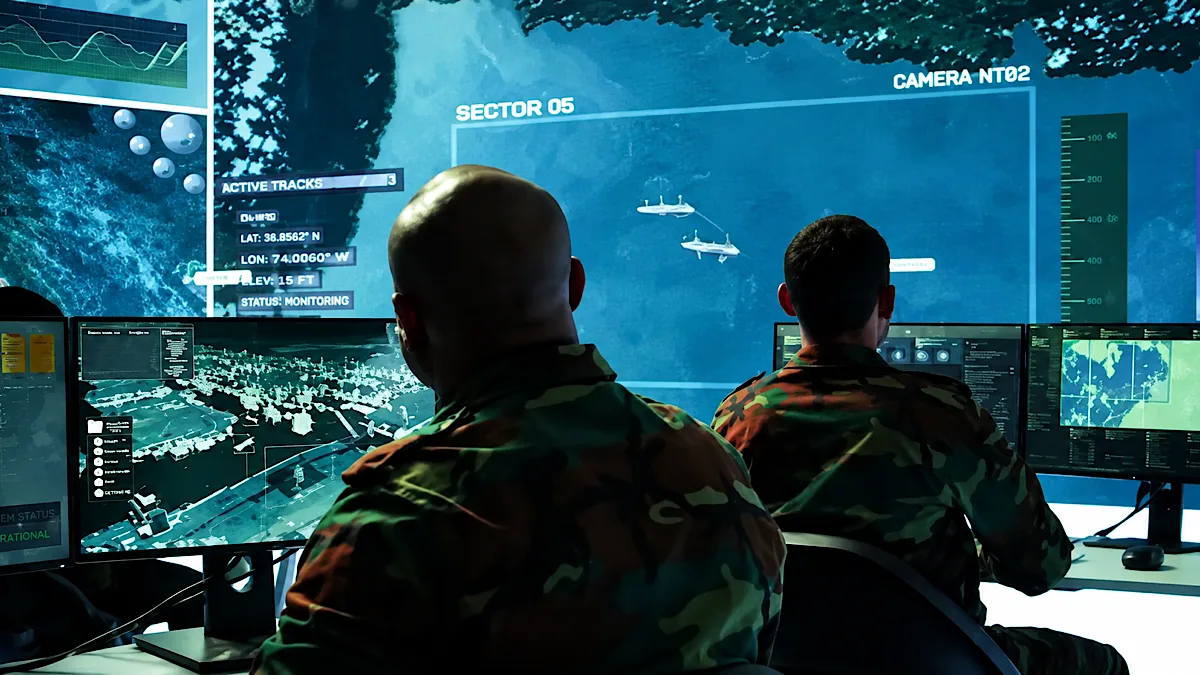
Photo:SNS
Recent conflicts have displayed two distinct characteristics. The first is a war between neighbouring countries primarily with territorial disputes while the second is when a state or an alliance, without a common border with the adversary, seeks to force it into submission or accept its terms. The Azerbaijan-Armenia war of 2020 and 2023 and the RussoUkraine conflict, into its fifth year, fall in the first category, while the US-Israel-Iran war comes in the second.
India has territorial disputes with two neighbours and any conflict with either would come in the first category. Wars in recent times have been influenced by technological changes, including AI. In the Azerbaijan-Armenia conflict, rockets, drones, missiles, EW and loitering ammunition were successfully employed for the first time. Armenia accepted a ceasefire because its forces were severely depleted because of coordinated strikes by Azerbaijan, utilizing T urkish UAVs and loitering ammunition. Technology has dominated the Russo-Ukraine conflict in far more imaginative ways. Russia was successful in the initial stages as Ukraine had yet to develop its UAV and counter-UAV capabilities.
Advertisement
As the war progressed, imaginative use of UAVs and commercial satellites made the battlefield transparent, while the inclusion of armed robots and UAVs alongside missiles added to destruction. Surprise was no longer possible nor was deployment and use of large-scale mechanized forces. As lessons emerged, Russian mechanized forces began to be equipped with counter-drone and loitering munition capabilities, while their tactics also changed. Capture of territory remains the primary intent; hence troops are deployed to gain or deny this despite challenges. Currently, progress is slow and the frontlines are largely frozen.
Advertisement
There are no longer large mechanized forces bunched together and breaking through, but smaller teams backed by firepower and UAVs. Ukraine has realized that despite its vast exploitation of UAVs and armed robots (to make up for a shortfall in troops), it cannot stop Russian advances without boots on the ground. Land forces remain essential in conflicts involving territorial disputes. Use of airpower has also changed. The Russian air force, far superior to Ukraine’s, changed its philosophy of operational employment once it encountered multi-layered Ukrainian air defences, resulting in heavy losses.
It began avoiding contested air spaces to prevent attrition and instead relied on its accurate long-range weapons, including cruise missiles and glide bombs, releasing them beyond the range of Ukraine’s air defences. This also affected close air support traditionally provided to ground forces in contact battle. Ground troops have to be self-reliant in defence as air support is only available from a distance. To target Ukraine’s industrial complexes, energy infrastructure and re-supply depots, Russia utilizes UAVs and missiles, fired from deep within. Ukraine’s ability to hit Russian air bases has forced Moscow to move its air power resources further back.
Troops on the frontlines are dependent on FPV (First Person View) drones and loitering munitions. These are utilized to monitor movements of the adversary and to target advancing troops. UAVs and ground drones are employed for re-supply and casualty evacuation. Drones are now modified with anti-jamming capabilities and anti-drone nets are common over defensive positions. Iran is a different kettle of fish and the war here cannot be compared to Ukraine. Neither the US nor Israel share a border with Iran and hence operations are based on US-Israel air power and Iran’s missile and drone power. India’s Operation Sindoor largely followed the Russo-Ukraine model.
With Pakistan possessing Chinese air defence systems, Indian air power exploited its long-range weapon systems and its loitering ammunition alongside Brahmos missiles fired from well within our own side, targeting Pakistan’s air defence systems and military bases. India’s S-400 anti-aircraft missile system achieved a record-breaking surface-to-air kill of Pakistan’s Airborne Early Warning and Control aircraft at a distance of 314 km. Air defences on both sides ensured air power stayed well within its own territory to avoid being targeted. This scenario will only get more complex in the future. Employment of air power close to the border or in enemy territory can only happen once air defence systems of the adversary are negated which is unlikely in short conflicts.
Air operations in Sindoor were different from Operation Bandar in 2019 targeting Balakote, where a dog fight resulted in air losses to both Pakistan and India. Simultaneously, Indian artillery fired precision-guided ammunition to degrade Pakistan’s terrorist camps and posts, which had supported movement of terrorists. The Indian army has since Sindoor gone in for induction of UAVs and loitering munitions from the battalion level upwards to enhance staying power of troops on the ground. It is also restructuring its firepower by inducting long-range weapons with precision targeting. The raising of Rudra brigades and Integrated Battle Groups is to offset presenting large mechanized forces. There are also reports of the army raising a rocket and missile force for targeting positions in depth and for defending its troops in a contact battle.
The artillery has adopted fire-and-scoot tactics to avoid being engaged by the adversary’s loitering munitions and counter-bombardment. The air force is enhancing its long-range strike capabilities. The ongoing/ planned induction of Rampage, Brahmos, and Crystal Maze missiles for air-to-ground targets, Gaurav, TARA glide bombs and SAAW (Smart Anti-Airfield Weapons) for the enemy’s strategic installations and Meteor, Astra Mk II, etc. for long-range air-to-air combat, apart from loitering munitions and smart drones, indicate that engagement in future conflicts would be from beyond the range of the adversary’s air defence systems. Future airspaces would be contested, dominated by air defence systems, and preventing traditional employment of air power.
This implies that close air support for the army, once contact battle commences, would flow from a distance exploiting accurate air-to-ground weapon systems. Hence, troops on the ground must possess the ability to identify threats and defend themselves with UAVs and loitering ammunition directly under their control alongside dedicated artillery and missile power. The airspace over the TBA (Tactical Battle Area) would be congested, being simultaneously utilized by multiple forces.
Expecting the airspace to be coordinated by a single agency, except by altitude, or UAVs being controlled by a specific service or command for better coordination of the airspace, will not be feasible in the future battlefield. Adding to the confusion would be intense Electronic Warfare actions aiming to disrupt command, control and communications. We need to find realistic solutions to manage the airspace if we are to fight the next war effectively.
(The writer is a retired Major-General of the Indian Army.)
Advertisement