Tucked in the midst of a busy market, the school isacal sanctuary. Students pass through the chaotic streets where vendors sell fresh vegetables, colourful fruits, and grains in bulk in the nearby Koley Market to study arithmetic calculations, poetry, English literature, and science in peace and perfect harmony at St. Paul’s Mission School, Sealdah. The foundation of the institute dates back to the 1880s when members of the Women’s Fellowship for Christian Services (WFCS), guided by Lady Carmichael, started a home for underprivileged girls with just five children in Sealdah.
Since its inception in 1884, St. Paul’s Mission School has been synonymous with being a centre of learning and inclusive education in Central Kolkata. In a candid conversation with Nishat Nizami, the principal of St. Paul’s Mission School, Sealdah, Mrs. Sanchita Biswas explains how the institute has been imparting quality education to thousands of children belonging to middle-class families in the area for generations.
Advertisement
Q St. Paul’s Mission School has b e en an active participant in the field of academics for well over a century. What is the secret behind the sustenance of an institute that has left such a lasting mark on the region?
Advertisement
A I think it is the balance we try to strike between tradition and innovation. We hold on to our ground rules, which are the basics of instilling compassion, humanity, and respect for culture, tradition, seniors, and elders. Alongside that, we have taken a lot of new initiatives. We move with the times; you cannot prepare children for tomorrow based on tools that were applicable yesterday.
Q How does the institution, the foundation of which was laid in 1884, equip its students with modern technology in academics?
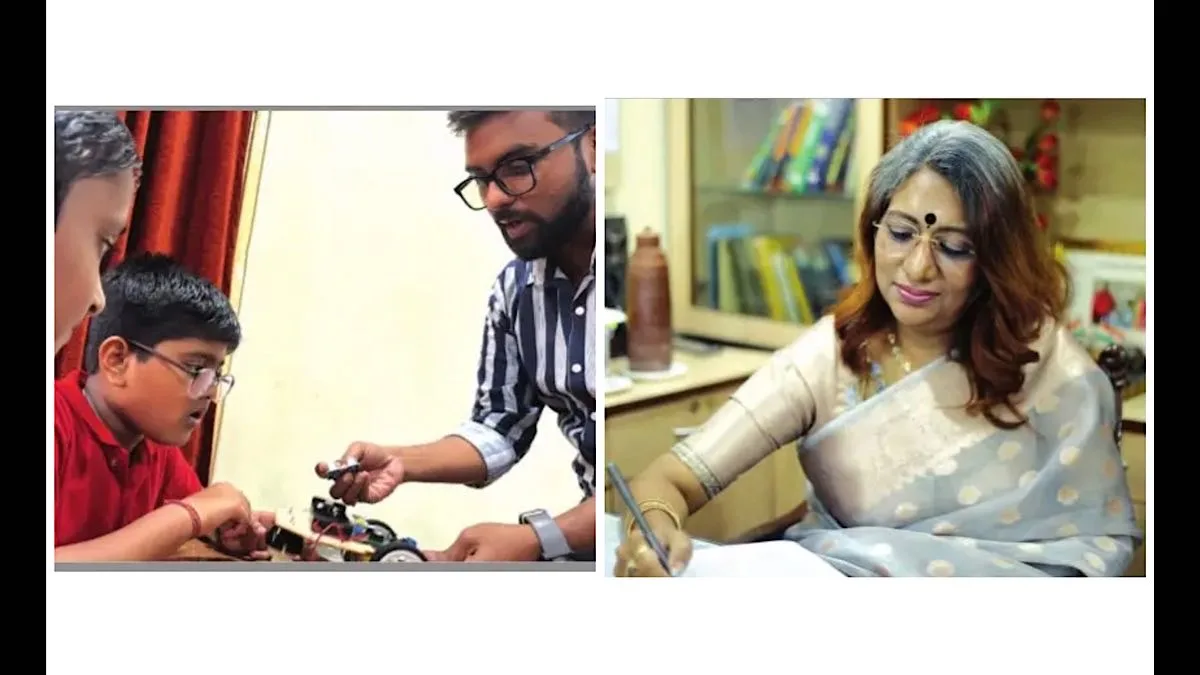
A We have introduced Robotics and Artificial Intelligences mandatory part of the curriculum from Classes III to VIII, and all of these are integrated into the regular timetable. Every single classroom is equipped with smart boards. Teachers can show PowerPoint presentations on various subjects, allowing students to learn through an engaging audio-visual experience. We also have clubs where we have introduced sports and other activities like Karate, Chess, Pottery, Art, and even Western Dance. Children here get to study, play, and cultivate hobbies through professional mentoring. This keeps them balanced in both studies extra – curricular activities, helping them lead a well-rounded life later on.
Q You have been associated with academics for a long time. What has changed about students when you compare those from 30 to 40 years ago to the ones today?
A In my opinion, nothing has changed. When we were in school, I am sure teachers and parents had complaints about us. Now that we have become teachers and parents, we have complaints about our students and children. Every generation is different, and we have to accept that. They are not bound to adapt to our generation; we have to adapt to theirs. We have to accept what they want and try to look at things from their perspective. Of course, we have experience. We have our grey hair. It is our job to guide them, but I personally feel it is unfair to say that a lot of things are going wrong with this generation. They are adapting to changing scenarios in their own way. There are a lot of distractions out there, but they know where those distractions should stop and at which point the real work starts. One has to trust them to be responsible. When you are able to convey this trust to them, they will do things on their own. As long as they are constantly instructed, they have a natural streak to do the opposite and resist conformity. I feel it’s okay, and sometimes even good, not to conform. Advancement, whether in culture, society, or technology, only happens when there are people who question and break the rules. I have great faith that this generation will take our world forward in leaps and bounds.
Q Are tools of modern technology like AI, ChatGPT, and social media a boon or a bane for students?
A I think this generation of students is incredibly smart. They think on their feet. They know exactly how much to do and when to do it, and you cannot take them for granted. We often think they are distracted, but they are not. They know what they want and will do exactly that, which is not necessarily a bad thing. They have a clarity of mind which was not present in our case. They have strong opinions, which I think is healthy. We didn’t have that; we were not explicitly taught to think on our own. This generation does not need to be taught how to think independently because they already know it. In many ways, we have the internet to thank for that.
Q What is the biggest challenge for teachers in present times?
A Our biggest challenge is that we were trained in the past, yet we are trying to execute that training in the present to prepare a generation for the future. With that kind of legacy learning, if we try to prepare the current generation for tomorrow, we will not be able to manage. Sometimes, as teachers, we think we know everything, which is an outdated concept. Unless we keep upgrading ourselves to understand what is expected in the future, we will not be able to do justice to this generation.
Q How does St . Paul’s Mission School train its teachers to upgrade them to modern tools and technology?
A We continuously send our teachers for subject- specific and holistic training workshops. For example, this year we held a workshop for our staff where experts from IIT Kharagpur helped them understand AI and how to use it as an active teaching tool in the classroom. Children relate to AI naturally. If teachers understand it, they can implement it smoothly, and students will enjoy learning it. We keep sending our teachers to similar workshops throughout the year.
Q What would be your message to students and parents in the current times?
A We want our children to realise that work is worship, and no work is superior or inferior. Every job deserves respect, and that respect has to come from within. We work together to ensure that children grow up with a deep sense of respect for themselves and for others so that there is true balance in society. To parents, I would say: please trust your children. Allow them to pursue the careers they genuinely want to take up. They are far wiser and more intelligent than we give them credit for.
Advertisement