Flash Droughts: Heat Waves Plus Rainfall Deficits
Life comes to a standstill in summer. Temperatures in parts of north and central India have already crossed 44°C in May 2026.
Borderline deficient in February. Clearly symptomatic by June. Summer heat, heavy sweating, and disrupted meals do the rest. Summer doesn’t cause iron deficiency. It exposes it. And the fix has been sitting in your kitchen the whole time.




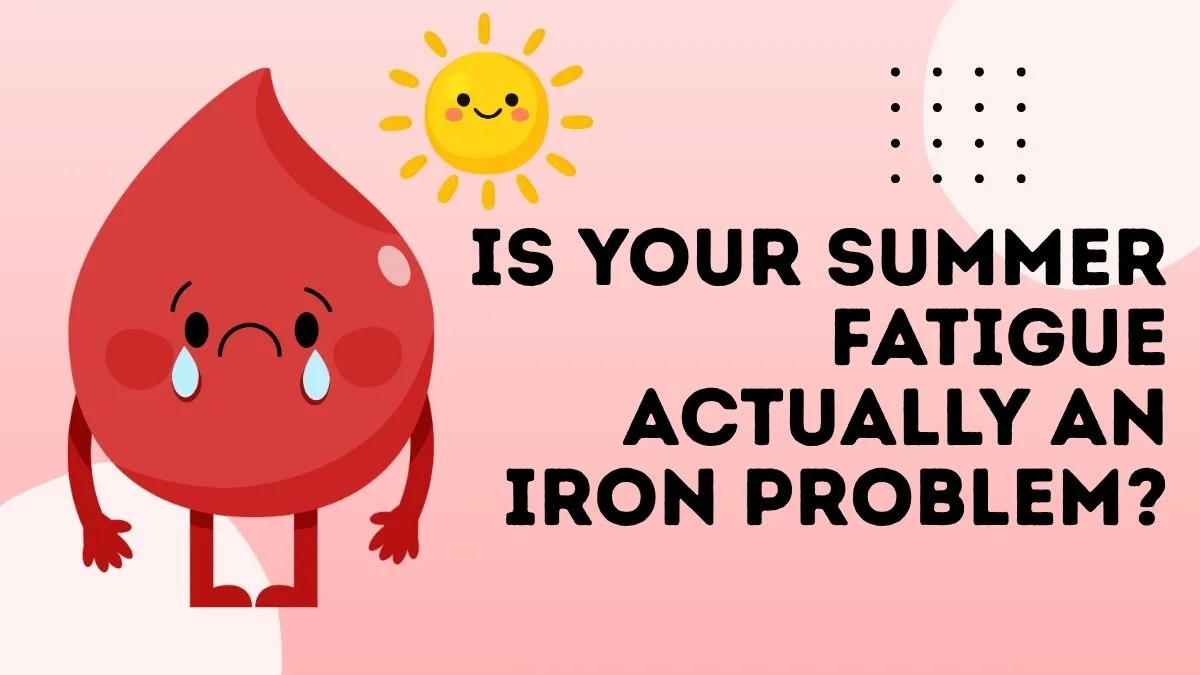
Low iron. High heat. Same story every June.
Come May, a familiar set of complaints starts doing the rounds. Headaches that won’t quit. A tiredness that sleep doesn’t fix. Dizziness when you stand up too fast. Most people blame the heat. Some blame the long working hours. Very few suspect their blood.
But there is a strong case that summer quietly makes iron deficiency worse, and that for a large chunk of Indians, June arrives with dangerously low iron stores.
Advertisement
The numbers are stark. According to the National Family Health Survey-5 (2019-21), 57% of women aged 15-49 and 67% of children under five in India are anaemic. Even among men, around 21% of adult males are anaemic.
Advertisement
Iron deficiency is the leading driver. Iron is a key component of haemoglobin, and iron deficiency is estimated to be responsible for half of all anaemia globally.
What makes India’s situation unusual is that even within the richest 20% of Indians, over half of women aged 1-–49 are anaemic. This is not just a poverty problem. It is a food and absorption problem, one that summer actively aggravates.
Heat does not directly drain iron from your blood. But it sets off a chain of events that makes the deficiency worse.
When temperatures climb, the body sweats heavily to cool itself down. Iron is lost through sweat. And in an Indian summer, where outdoor temperatures routinely cross 40°C in cities like Delhi, Nagpur, and Bhopal, that loss adds up across weeks.
Beyond sweat, there is the deeper problem of thermoregulation. People with anaemia have a reduced count of red blood cells to carry oxygen to their tissues, which leads to poor blood circulation. This makes it harder for their body to naturally regulate its own temperature. So someone already low on iron handles the summer heat worse than someone with healthy levels, and their symptoms (fatigue, rapid pulse, weakness) intensify in the heat, often without anyone connecting the dots.
If iron levels are low, the internal thermostat stops working properly. This impacts the body’s ability to react to external temperatures. The result is that an iron-deficient person in an Indian summer feels worse than the temperature alone would explain.
Here is where it gets complicated. India is not short on iron-containing foods. Dal, spinach, jaggery, ragi, sesame, the traditional Indian kitchen is full of them. The problem is that most Indians eat non-heme iron, which is the form found in plants, and this type absorbs poorly.
In Indian diets, up to 95% of the total daily iron intake comes through non-heme iron. Non-heme iron from plants is always harder for the body to absorb than heme iron from meat. But the Indian diet has additional absorption blockers built right into its everyday habits.
Tea. The most common one. One large cup (250 ml) of black tea can inhibit non-heme iron absorption by approximately 50% even when drunk one hour after consuming the meal. Most Indian households drink chai with breakfast and again after lunch, right around iron-rich meals.
Phytates. Iron-rich plant foods like beans, seeds, grains, and leafy greens often contain phytates, compounds that bind to iron and render it inaccessible to the body as it travels through the digestive tract. Dal and rotis — the core of most Indian meals — are high in phytates.
Calcium. Calcium-rich foods and high-dose calcium supplements may interfere with iron absorption in some people. Drinking milk or curd alongside an iron-rich meal can reduce what the body actually takes in.
Together, these form a daily absorption trap that most people don’t know they are in.
Women of reproductive age carry the heaviest load. Menstruation causes monthly blood loss, and with it, iron loss. The onset of the menstrual cycle and childbirth, both involving the loss of blood, are particularly associated with iron deficiencies in young women.
A systematic review published in 2023 found that the pooled prevalence of anaemia among adolescent girls in India was 65.7%. That is nearly two in three teenage girls walking around iron-deficient during their most physically demanding years.
Children under five are the other high-risk group. Iron deficiency in early childhood is especially detrimental due to increased mortality and its permanent impact on cognitive development, which leads to irreversible loss of productivity in adult life.
By June, after months of heat, reduced appetite, changed meal patterns, and continuous absorption losses, many people who were borderline deficient in February are clearly symptomatic.
The solution does not require supplements or expensive foods. It requires smarter pairing of what most Indian kitchens already have.
Drumstick (moringa) leaves. One of the most iron-dense greens available. Moringa leaves contain about 4–5 mg of iron per 100 grams and are also rich in vitamin C and antioxidants. The built-in vitamin C helps absorb the iron. Add them to dal, stir-fry with garlic, or dry and grind into powder for rotis.
Halim (garden cress) seeds. Underused and extremely potent. Just 100 grams of halim seeds provide around 12 mg of iron, along with folate and vitamin C. Soak overnight, eat with warm water in the morning, or add to laddoos. Traditional use among postpartum women had good reason behind it.
Ragi and bajra. Ragi has about 3.9 mg of iron per 100 grams, along with calcium, addressing two common deficiencies at once. Bajra is equally good. Ragi dosa, ragi porridge, and bajra rotis are all easy summer-friendly preparations.
Rajgira (amaranth). Both the grain and the leaf are useful. The high vitamin C content in rajgira helps the iron absorb better in the body. In summer, rajgira laddoos double as an energy snack and an iron fix.
Lentils. A cup of cooked lentils provides roughly 6-7 mg of iron. Rotating between masoor, moong, urad, and chana dal keeps intake varied without boredom.
Jaggery and dates. Two grams of jaggery after a meal or two to three dates as a snack are easy, accessible additions that add iron without any cooking effort.
Getting the pairing right is non-negotiable.
Eat vitamin C alongside iron. Pairing spinach with lemon juice or tomatoes can increase iron uptake. Squeeze lemon into dal. Add raw tomato to methi sabzi. Eat amla or guava after an iron-rich meal. This single habit makes a measurable difference.
Move the chai. Tea and coffee contain polyphenols that can reduce non-heme iron absorption when taken with or soon after meals. Have your cup an hour before or after eating, not with food.
Soak and sprout pulses. Fermenting, soaking, sprouting legumes and grains help reduce phytates which can inhibit iron absorption. Overnight soaking of chana or rajma before cooking is enough.
Cook in iron kadhai. Traditional iron cookware leaches small amounts of iron into food during cooking, particularly acidic dishes like tomato-based curries and tamarind sambar. This is a free, passive iron boost.
India has had national programmes targeting anaemia for decades: Anemia Mukt Bharat, iron supplementation in schools, fortified rice initiatives. Progress has been slow. NFHS data shows that the prevalence of anaemia in India actually rose between 2015-16 and 2019-21.
Public health campaigns can only do so much. What happens in individual kitchens, three times a day, across 52 weeks, matters more. Summer is the season when iron levels take the biggest hit, and also the season when most people are least likely to investigate why they feel so terrible.
The tiredness is not just the heat. Check your haemoglobin. Then check what is on your plate, and what you are drinking with it.
Advertisement