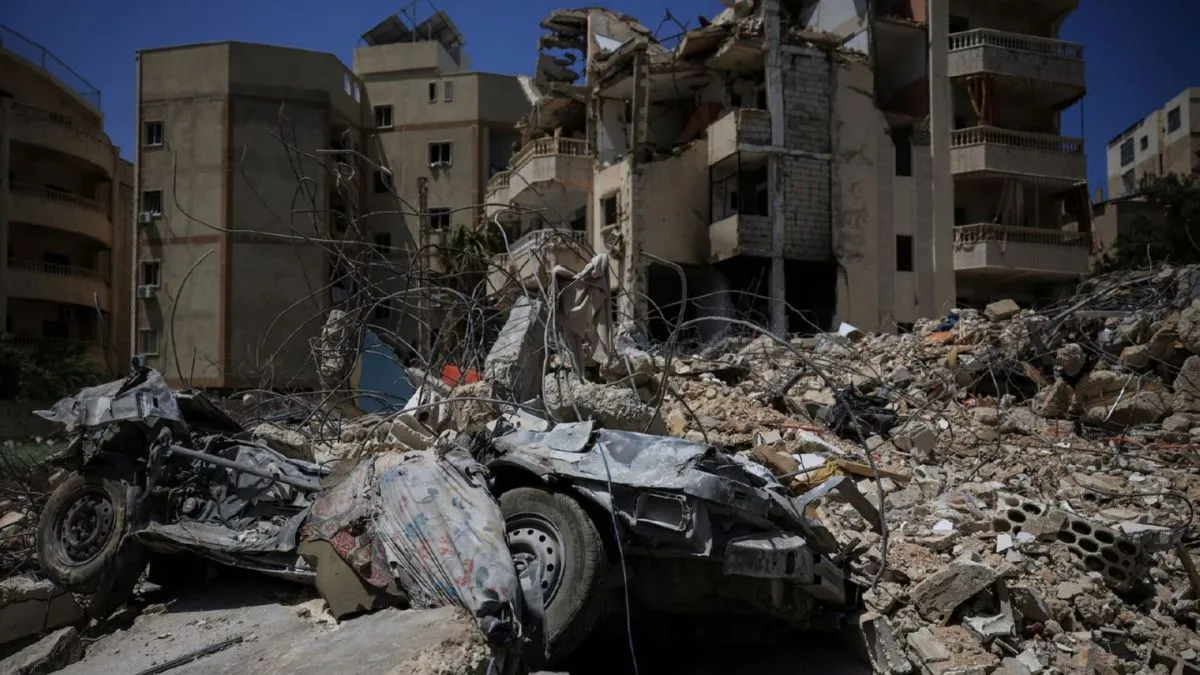
Pak’s ISI, terror outfits radicalising state’s youth: Uttarakhand Police
The Uttarakhand Police have stated that the state's youth are being influenced by Pakistan's ISI and other terrorist organisations across the border.
Bollywood has been making Partition films since 1973. As ‘Main Vaapas Aaunga’ arrives in June 2026, here is what 50 years of these films reveal — and who they are actually made for.




File Photo
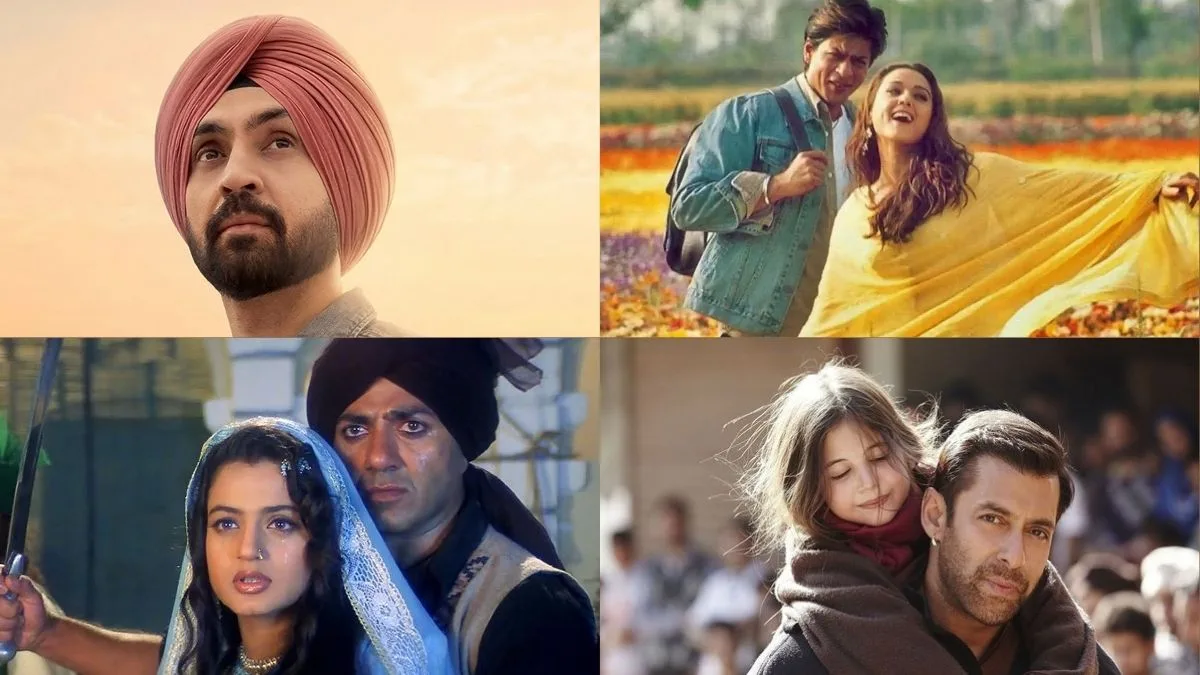
‘Main Vaapas Aaunga’, directed by Imtiaz Ali and releasing June 12, 2026, is the latest Hindi film to use the 1947 Partition as its emotional backbone. Diljit Dosanjh plays a man who travels to Pakistan to fulfil his dying grandfather’s last wish, to find a love lost across the border 78 years ago. The trailer has already moved audiences. But it has also reopened a question that comes up every few years in Indian cinema: why does Bollywood keep returning to the Partition?
The answer involves history, commerce, politics, and a wound that has never properly closed.
Advertisement
The Partition of British India in August 1947 displaced between 12 and 20 million people along religious lines and resulted in between 200,000 and 2 million deaths.
Advertisement
Sir Cyril Radcliffe, a British lawyer who had never visited India, was given just five weeks to draw the boundary between the two new nations. The Radcliffe Line was published on August 17, 1947; two days after both countries had already declared independence.
The new borders ran through the middle of villages, towns, and fields. The Sikh population in Punjab was cut in half. Nearly the entirety of the Sikh community ultimately fled to areas that would become part of India.
Between June and November 1947, an estimated 10 to 20 million people moved between the two new states, the largest forced migration in recorded history to that point.
This is what Bollywood keeps trying to film. And yet, it took Indian cinema 26 years to make its first serious attempt.
‘Garm Hava’ (1973) was directed by MS Sathyu and written by Kaifi Azmi and Shama Zaidi, based on an unpublished short story by Ismat Chughtai. Set in Agra, it followed a Muslim businessman and his family in the years after Partition, watching them face the choice of staying in India or moving to Pakistan.
Sathyu once said: “Can you imagine that our cinema did not make a single film on Partition for the first 25 years after it took place?”
The film was controversial from the start. The commercial producers backed out fearing public and governmental backlash. The Film Finance Corporation (now NFDC) stepped in with a funding of ₹2.5 lakh. Sathyu borrowed the remaining ₹7.5 lakh from friends. Because he could not afford recording equipment, the entire film was shot silent and dubbed in post-production.
Despite all of that, ‘Garm Hava’ won the National Film Award for National Integration, was nominated for the Palme d’Or at Cannes, and was India’s official entry for the Academy Award for Best Foreign Language Film.
It set the template. But it was not the commercial template.
The shift came in 2001. ‘Gadar: Ek Prem Katha’, directed by Anil Sharma, told the story of a Sikh truck driver named Tara Singh who falls in love with a Muslim girl from an aristocratic Pakistani family during the communal riots of Partition.
Made on a budget of ₹18 crore, ‘Gadar’ grossed ₹132.60 crore worldwide and was declared an all-time blockbuster. The film registered 5.06 crore footfalls, making it the third highest in terms of ticket sales in Indian cinema history at the time, behind only ‘Hum Aapke Hain Kaun’ and ‘Baahubali 2: The Conclusion’.
‘Gadar’ was not a nuanced film. It used Partition as the backdrop for a nationalist love story. Sunny Deol’s Tara Singh uproots a hand pump from the ground in one scene and beats Pakistani officers with it. The crowd loved it. That scene told Bollywood something important: Partition, framed the right way, sells.
Three years later came ‘Veer-Zaara’. Directed by Yash Chopra, the film starred Shah Rukh Khan as an Indian Air Force officer and Preity Zinta as a Pakistani girl. It earned over ₹97 crore worldwide in its first run and became the highest-grossing Indian film of 2004. At the 50th Filmfare Awards, it received 15 nominations and won 4, including Best Film.
‘Veer-Zaara’ took a softer approach. It argued for shared Punjabi culture and the humanity on both sides of the border. It was still a love story. The formula of love + Partition + a border that separates people who belong together, proved commercially durable across different tones.
Every Bollywood Partition film since ‘Garm Hava’ falls into one of two camps.
The first is the grief film. These are films that treat Partition as the central wound. ‘Train to Pakistan’ (1998), based on Khushwant Singh’s 1956 novel, showed a village on the border slowly consumed by violence. ‘Pinjar’ (2003), based on Amrita Pritam’s novel, followed a Hindu woman abducted by a Muslim man and the complicated life she is forced into. ‘1947 Earth’ (1998), directed by Deepa Mehta, was India’s official Oscar entry and depicted a love triangle destroyed by the riots in Lahore. These films were panned for not addressing the full political and religious complexity of what happened. Critics noted that Bollywood’s treatment of Partition has historically been less rigorous than the Jewish Holocaust’s treatment in world cinema, where hundreds of films have documented every conceivable aspect.
The second is the nostalgia film. These use Partition as a romantic backdrop rather than a political reckoning. ‘Veer-Zaara’, ‘Bajrangi Bhaijaan’ (2015), and now ‘Main Vaapas Aaunga’ fall here. The Partition creates the obstacle of the border, the separation, the unresolved longing, and the film’s emotional journey is about crossing it, literally or metaphorically. These films consistently outperform the grief films at the box office.
‘Bajrangi Bhaijaan’, starring Salman Khan, earned ₹918 crore worldwide. It did not directly depict Partition violence. Instead, it used the India-Pakistan border as a device to tell a story about kindness and shared humanity. The audience that wept at the credits was not watching a history lesson. They were watching a fairy tale built on top of one.
Scholars have argued that all Hindi cinema can be considered Partition cinema, because the central theme of almost every Bollywood film; lost and found, the separation of lovers, mirrors the central trauma of 1947.
That is a stretch. But it contains a truth. The Partition gave Indian popular culture its defining emotional grammar. Separation. Longing. The possibility of reunion. A home that no longer exists. These are not just political ideas. They are the architecture of the Hindi film industry’s most successful stories.
What the nostalgia Partition film does is extract the emotion while softening the politics. Gadar’s Tara Singh is a hero because he fights for his wife across the border. The rioters who separate them are the villains. The film does not ask why the Partition happened, who drew the line, or what responsibility the colonial administration and Indian political leadership bore. It gives audiences grief and resolution without demanding they sit with ambiguity.
‘Main Vaapas Aaunga’ appears to walk this same path. A grandfather longs for his first love across a border that didn’t exist when they were young. His grandson crosses that border to find her. The Partition is the wound. The film is the balm.
Sathyu designed ‘Garm Hava’ to show, in his words, “the games these politicians play” and “how many of us in India really wanted the partition.” That was the question the film asked. No major Bollywood Partition film since has repeated it.
The audience for the grief film, the politically uncomfortable, morally complex, artistically honest version of this story, has always been small. It watches ‘Garm Hava’ at festivals. It reads Ismat Chughtai and Saadat Hasan Manto. And, it is not the audience that filled 10 crore seats for ‘Gadar’.
The nostalgia Partition film is for everyone else. It is for the diaspora that grew up hearing stories of Lahore from grandparents who will never return. It is for the audience that wants to feel the grief of 1947 without being blamed for it.
Advertisement