The Horror Underground
Whether it was Hamas attack on innocent Israeli people at a party in 2023 or the subsequent bloody reprisal by IDF against Palestinians in Gaza, humanity suffered terrible shocks and descended to depths of hell.
Addressing a media briefing in New Delhi after the BRICS Foreign Ministers’ Meeting, Lavrov defended Iran’s position on the Strait of Hormuz crisis, rejected allegations that Tehran was responsible for disrupting maritime routes, and underscored Moscow’s growing partnership with India in trade, connectivity and diplomacy.




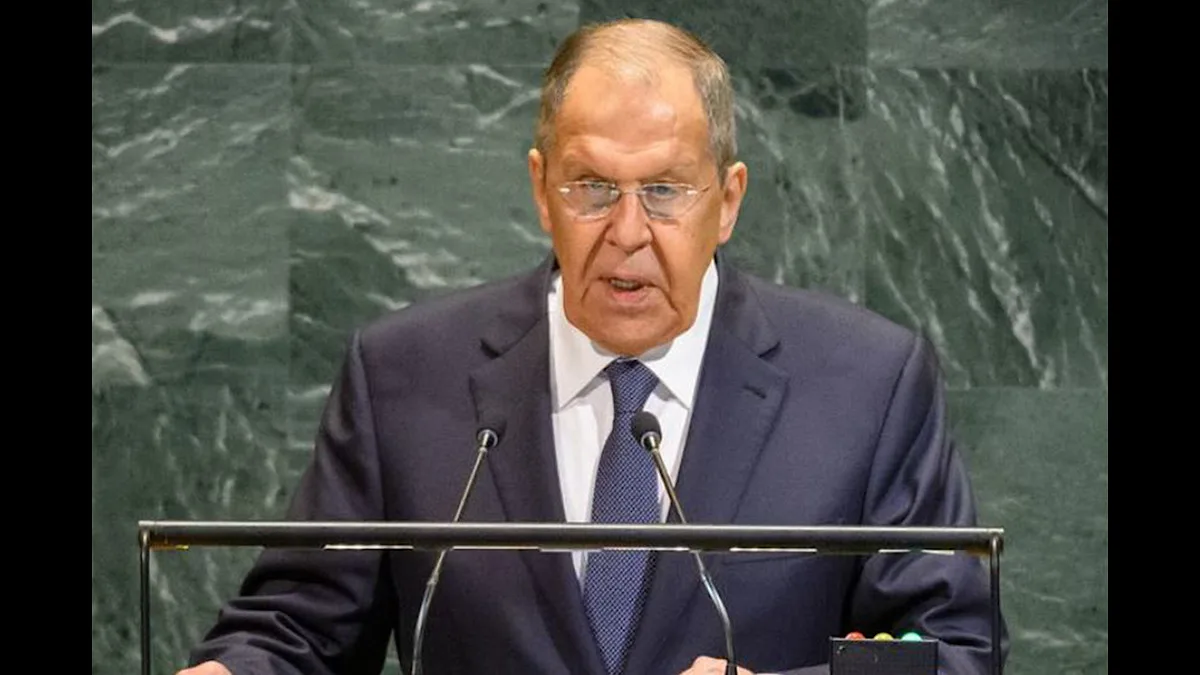
Russian Foreign Minister Sergey Lavrov (File photo:ANI)
Russian Foreign Minister Sergey Lavrov on Friday sharply criticised the United States and Israel over the escalating crisis in West Asia, accusing them of triggering instability in the region through “unprovoked aggression” against Iran, while simultaneously signalling a deeper strategic and economic alignment with India amid mounting global geopolitical tensions.
Addressing a media briefing in New Delhi after the BRICS Foreign Ministers’ Meeting, Lavrov defended Iran’s position on the Strait of Hormuz crisis, rejected allegations that Tehran was responsible for disrupting maritime routes, and underscored Moscow’s growing partnership with India in trade, connectivity and diplomacy.
Advertisement
#WATCH | Delhi: At a media briefing, Russian Foreign Minister Sergey Lavrov speaks on the West Asia crisis
Advertisement
Translating his words, a translator says, “There were certain contradictions between these two countries… We need to understand the root causes of every conflict, and we… pic.twitter.com/oK6MCk7bhl
— ANI (@ANI) May 15, 2026
Speaking on the escalating tensions in West Asia, Lavrov said the crisis around the Strait of Hormuz emerged only after military actions were launched against Iran.
Translating his remarks, an interpreter quoted Lavrov as saying, “We need to understand the root causes of every conflict, and we understand what the root cause here is — unprovoked aggression by the US and Israel against Iran.”
He argued that before the conflict escalated earlier this year, there had been no issue surrounding maritime movement through the strategic waterway.
“Everyone is now calling on Iran to open up the Strait of Hormuz. Before February 28, there was no problem with the Strait of Hormuz,” Lavrov said through the translator.
The Russian Foreign Minister further claimed that attempts were made to portray Iran as a destabilising force in the region in order to justify broader geopolitical objectives linked to energy interests.
In a notable diplomatic remark, Lavrov said Pakistan was currently helping facilitate dialogue between Washington and Tehran but suggested India could emerge as a long-term mediator due to its global diplomatic standing.
“Pakistan is helping establish dialogues between the U.S. and Iran to resolve urgent problems. If they seek a long-term mediator, this role could be played by India, considering its vast diplomatic experience,” the translator quoted Lavrov as saying.
Lavrov proposed India may invite Iran and UAE and hold talks on ending hostilities. He said, “The most important thing is to put an end to this… We discussed this during the ministerial Assembly. I don’t think BRICS should be the kind of organisation to mediate, but individual BRICS members, especially those who are interested in ensuring there are no problems with navigation in the Strait of Hormuz. For example, India, the BRICS President, is directly interested in receiving oil from this region… They could invite Iran and the UAE to have a conversation with one another to agree on avoiding hostilities…”
#WATCH | Delhi: At a media briefing, Russian Foreign Minister Sergey Lavrov speaks on West Asia crisis
Translating his words, a translator says, “The most important thing is to put an end to this… We discussed this during the ministerial Assembly. I don’t think BRICS should… https://t.co/jRP3IVcf51 pic.twitter.com/5dxVGueQjg
— ANI (@ANI) May 15, 2026
Lavrov also highlighted discussions held with External Affairs Minister S. Jaishankar and Prime Minister Narendra Modi during his visit to New Delhi.
He called the talks a part of efforts to strengthen the “privileged strategic partnership” between India and Russia despite increasing Western sanctions and economic pressure.
“During the talks with Foreign Minister Jaishankar and during a lengthy conversation with Prime Minister Narendra Modi, we discussed the key areas of our privileged strategic partnership,” Lavrov said.
#WATCH | Delhi: At a media briefing, Russian Foreign Minister Sergey Lavrov speaks on his visit to India
Translating his words, a translator says, “During the talks with the Foreign Minister of India Jaishankar, and during a lengthy reception and conversation with the Prime… pic.twitter.com/wCocIuJlv5
— ANI (@ANI) May 15, 2026
He added that both sides reviewed progress on long-term economic cooperation, including a target to raise bilateral trade to 100 billion US dollars by 2030 and expand connectivity through transport corridors.
On Russian crude exports, Lavrov said oil supplies to India had increased significantly and stressed that the demand was being driven by India’s requirements.
“The data shows that oil supplies to India have increased and it does not depend on us, but our Indian counterparts,” he said.
The two-day BRICS Foreign Ministers’ Meeting in New Delhi has been dominated by discussions around the West Asia conflict, maritime security, global energy supplies and emerging geopolitical alignments.
Advertisement