Mamata agrees to Firhad’s resignation as civic body mayor: Kunal Ghosh
Mamata Banerjee gave a nod to Firhad Hakim’s proposal to resign from the mayoral post claimed by TMC leader Kunal Ghosh today.
Among all the Assembly elections held in 2026, it was the results from Bengal that generated the greatest national curiosity.




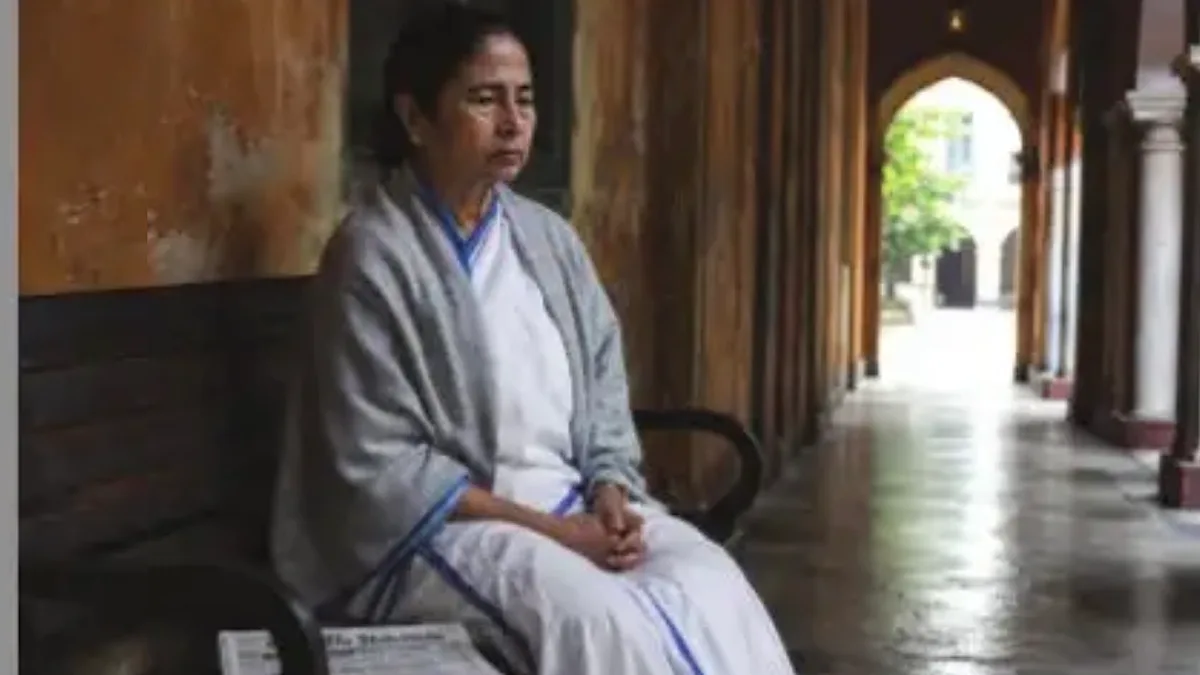
Photo:AI
Among all the Assembly elections held in 2026, it was the results from Bengal that generated the greatest national curiosity. From media to menfolk, the focus had gravitated to the Bengal results. In the eyes of the media, it was an impregnable fortress – one that seemed impossible to breach. In the eyes of people it was a battle of now or never. Yet, as the saying goes, those who sow the wind, reap the whirlwind. Indian politics has seen many such examplesbe it Lalu Prasad Yadav and his RJD government, or Arvind Kejriwal and his Aam Aadmi Party government. Mamata Banerjee, too, rose in Bengal’s politics in a similar fashion, and now she faces the biggest debacle of her political career.
Her invincibility and larger-than-life image have been cut to size by the same voters who once created it. It will also have a deep impact on coalition politics and the political bonhomie of the fragile INDI alliance. When she became the Chief Minister of Bengal, people believed she would find a resonance in the matriarchal society of Bengal and expected compassion, empathy, and generosity from its woman leader. However, what followed, was quite the opposite. She cultivated the image of a combative, irritable, and confrontational leader – one unwilling to listen or respond to concerns over deteriorating law and order, economic distress, illegal immigration from Bangladesh, extortion rackets, syndicate culture, and minority appeasement etc.
Advertisement
Surely, there is a vast difference between being an effective “street fighter” and a capable administrator which she was reluctant to accept. Perhaps she grew too comfortable with the “street fighter” image crafted for her by sections of the media and political circles – an image that thrived on confrontation rather than governance. Whether it was her political opponents, ordinary citizens seeking justice, constitutional authorities, the Election Commission, the ED, the CBI, or even the judiciary – none were spared by her defiance, anger, or resistance. Bengal is known for its emotional depth and intellectual sensitivity, represented by its bhadralok. When those in power chose to ignored these traits, the electorate responded through the ballot.
Advertisement
An extraordinary voter turnout of 90-92 per cent spoke volumes. The visible unease of Ms Banerjee and the heightened aggression of the TMC after the polls only reinforced this sentiment. The country was merely awaiting the results – which are now before us. An example from international politics helps illuminate this further. Winston Churchill once described Lenin as a “grand repudiator” – a man who repudiated God, King, Country, morals, treaties, debts, rents, interest, the laws and customs of centuries, all contracts written or implied, the whole structure – such as it is – of human society.
In the end he repudiated himself. Leaders driven by raw passion of confrontation rather than a constructive agenda will always remind us of this statement. In a democracy, if a leader doesn’t reinvent and revise himself or herself and continues to reject all established norms, expectations, values, and institutions, he or she will be eventually rejected by the people. Had Ms Banerjee and her party focused less on constant confrontation and attacks on the Centre, and more on aligning with broader public sentiment and fostering cooperative federalism in the state’s interest, the outcome might have been different.
Bengal, as a border state, plays a crucial role in India’s geopolitical landscape. Political instability in Bangladesh during the tenure of Muhammad Yunus, along with communal violence against Hindus, had implications for India’s internal security. The influx of Rohingyas and Bangladeshi Muslims into Bengal had become a matter of concern across the country – except for the state leadership, which dismissed these concerns as conspiracies against itself and minority communities. Leaders often forget that while they are given 1,825 days in office, the public settles accounts in just one day. On a personal level, Ms Banerjee may have maintained a life of simplicity and remained free from corruption, but she failed to keep her government and party insulated from it. She repeatedly shielded wrongdoing and continued with the politics of appeasement.
She became the first Chief Minister in the country to stage a sit-in protest to protect a tainted police officer, and even stormed an ED office, allegedly threatening officials and taking away files. The nation watched in disbelief. Such actions dealt a severe blow to the credibility of governance. In a democracy, mandates are not permanent, accountability is. The voters of Bengal assessed power on this very yardstick and chose change.
This verdict is not merely the defeat of a leader, but a clear expression of dissatisfaction with an insensitive style of governance. The leadership that emerges in the future will have to prioritize cooperation over confrontation, solutions over accusations, and good governance over emotional rhetoric – this is the essence of the mandate. Alongside the BJP’s political victory, this outcome is also a triumph of the aspirations and resolve of the people of Bengal. Surely, it’s a negative mandate for Mamata for a positive purpose.
(The writer is a senior academic, author and columnist.)
Advertisement