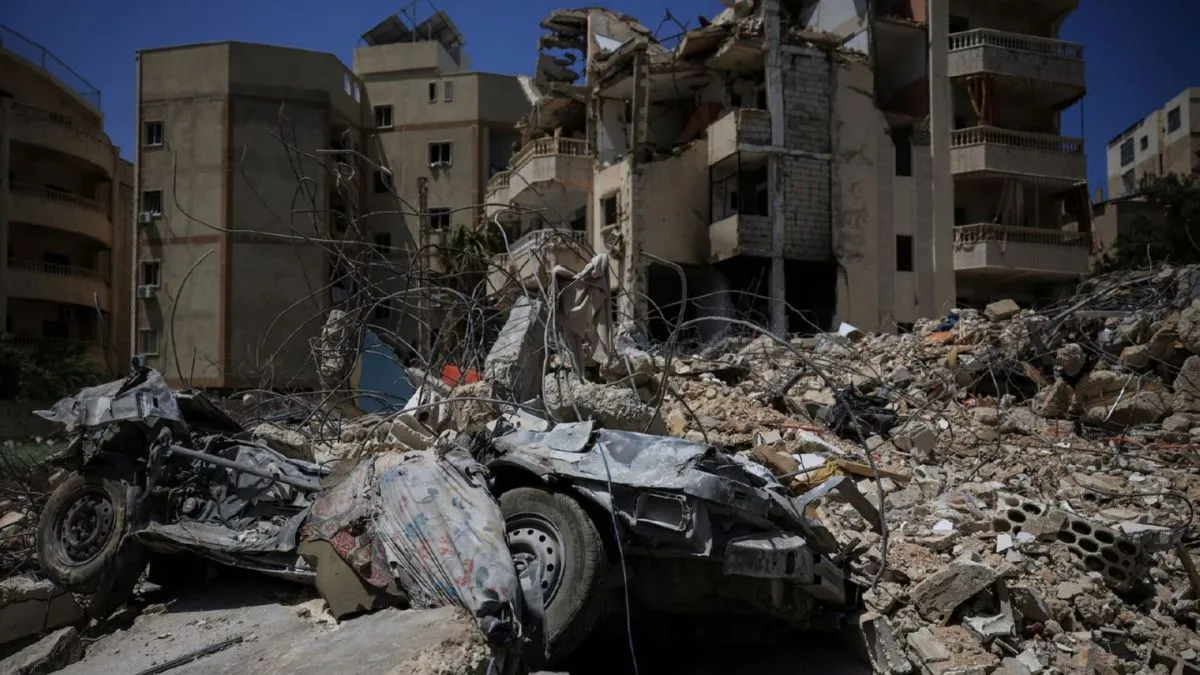
RudraM-II passes crucial test as India sharpens indigenous strike capability
The successful RudraM-II trials validated multiple critical systems and highlighted collaboration between DRDO laboratories, the Indian Air Force and industry partners.
From precision strikes and drone warfare to the Indus treaty freeze, Operation Sindoor marked a decisive shift in India’s response to Pakistan-backed terrorism.




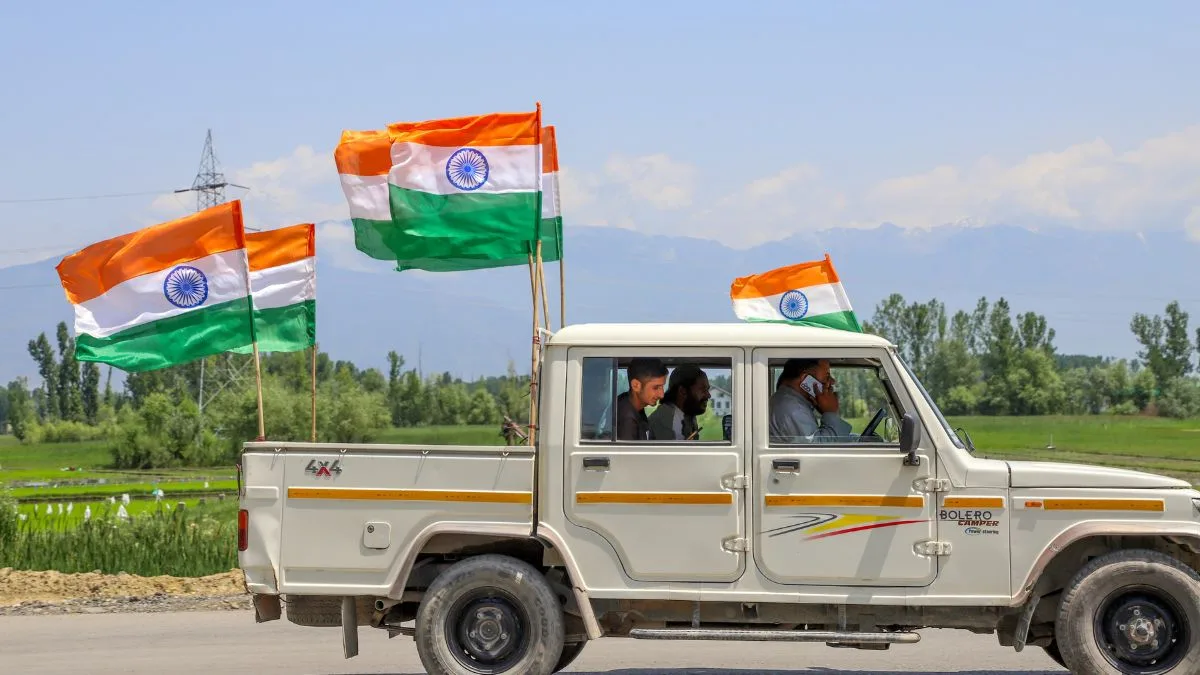
People take part in a Tiranga Rally from Srinagar to Baramulla in May 2025 following Operation Sindoor. (Photo: IANS)
One year after Operation Sindoor, the military operation launched in response to the Pahalgam terror attack is increasingly being viewed as a defining moment in India’s security doctrine.
The strikes carried out by Indian armed forces on May 7, 2025, were not just meant to avenge the killing of 26 civilians in Pahalgam. Officials, defence experts and former security officers now see the operation as the point where India formally moved away from the era of “strategic restraint” towards a far more direct and calibrated anti-terror response.
Advertisement
The operation also triggered wider changes beyond the battlefield. From tougher diplomatic signalling and suspension of the Indus Waters Treaty to rapid defence modernisation and stronger counter-drone preparedness, Operation Sindoor reshaped how India approaches Pakistan-sponsored terrorism.
Advertisement
India launched Operation Sindoor after the Pahalgam terror attack on April 22 last year, where 26 people were killed by Pakistan-backed terrorists. The Resistance Front, considered an offshoot of Pakistan-based Lashkar-e-Taiba, claimed responsibility for the attack.
Indian armed forces carried out precision strikes on terror infrastructure in Pakistan and Pakistan-occupied Jammu and Kashmir, targeting facilities linked to Lashkar-e-Taiba, Jaish-e-Mohammad and Hizbul Mujahideen.
Nine major terror launchpads were destroyed during the operation, including the Jaish-e-Mohammad headquarters in Bahawalpur and Lashkar-e-Taiba’s training facility in Muridke.
The strikes were followed by a four-day military confrontation after Pakistan retaliated with drone attacks and shelling.
Indian air defence systems neutralised incoming drones, while retaliatory strikes later destroyed radar installations in Lahore and facilities near Gujranwala. A ceasefire was agreed upon on May 10 after Pakistan’s Director General of Military Operations contacted the Indian DGMO.
Security officials and defence experts say the biggest shift after Operation Sindoor was doctrinal.
Officials cited by IANS said the operation delivered a clear message that every terror attack on Indian soil would be treated as an act of war. The operation also demonstrated India’s willingness to strike terror infrastructure deep inside Pakistan while maintaining what officials described as calibrated military targeting.
Former Jammu and Kashmir Director General of Police Shesh Paul Vaid said the operation elevated India’s global standing.
“What happened before the eyes of the entire world on the 7th, when India destroyed nine Pakistani terror training camps, was a precision attack with no collateral damage,” Vaid told ANI.
He said Pakistan was “brought to its knees” after Indian retaliatory strikes targeted multiple airbases.
“This isn’t just me saying this. International experts who monitor global conflicts are saying it. India’s stature as a superpower was established in the world,” he added.
Defence expert Lieutenant General Rakesh Sharma (Retd) also described the operation as a “stern message” to Pakistan.
“They dealt such a heavy blow that Pakistan was brought to its knees within just four days,” he told ANI.
Operation Sindoor also became one of India’s most significant demonstrations of modern drone and air defence warfare.
Officials said Pakistan launched multiple waves of drones during the conflict, including attempts to target civilian areas. India’s Integrated Air Command and Control System played a key role in intercepting those attacks.
The operation reinforced the importance of counter-drone systems and network-centric warfare in future conflicts.
Following the operation, the government approved emergency defence procurements, including replenishment of S-400 missile stocks, drones, loitering munitions, counter-drone systems and precision-guided weapons.
The Indian Air Force also began refurbishing Integrated Air Command and Control System equipment at several sites to strengthen operational reliability.
Defence Minister Rajnath Singh, marking the anniversary of the operation on Thursday, called it a “powerful symbol of national resolve and preparedness”.
“Their actions during the operation reflected unmatched precision, seamless jointness and deep synergy across services,” Singh wrote on X.
The impact of Operation Sindoor was not limited to military measures.
Following the Pahalgam attack, India suspended the Indus Waters Treaty, arguing that terror and cooperation could not continue simultaneously.
In his Independence Day speech in 2025, Prime Minister Narendra Modi had declared: “Blood and water will not flow together.”
Former diplomat Dilip Sinha told ANI that Pakistan had repeatedly adopted an “obstructive” approach under the treaty framework, making cooperation increasingly difficult.
Former Jammu and Kashmir DGP Shesh Paul Vaid also supported the move, saying water would increasingly become a strategic issue in the future.
The gates of the Baglihar Dam on the Chenab River in Ramban district remain closed even a year after the treaty was placed in abeyance.
The anniversary of Operation Sindoor has also revived debate around how India now views cross-border terrorism.
Government officials and military experts say the operation established a “new normal” where terror attacks would invite visible military consequences.
The operation also highlighted growing coordination among the Army, Air Force and Navy, alongside increasing reliance on indigenous defence systems under the government’s Atmanirbhar Bharat push.
Prime Minister Narendra Modi, marking the anniversary on Thursday, said India remained “steadfast” in its resolve to defeat terrorism and dismantle its support ecosystem.
A year later, Operation Sindoor is no longer being discussed merely as a military operation. It is increasingly being seen as the moment that redefined India’s security posture towards Pakistan and reshaped its anti-terror doctrine.
Advertisement