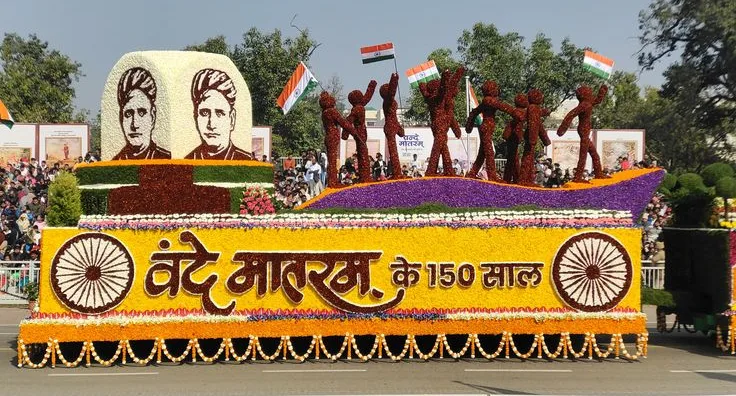
The Union Cabinet-chaired by Prime Minister Narendra Modi has approved a proposal to amend the Prevention of Insults to National Honour Act, 1971, granting our National Song Vande Mataram the same statutory protection as the National Anthem Jana Gana Mana.
Currently, under the Prevention of Insults to National Honour Act, 1971, insult to the Indian National Flag, Constitution of India and National Anthem is a punishable offence with the provision of imprisonment or fine or both.
Advertisement
As per the proposal put before the Union Cabinet, Vande Mataram would be included in this list, thus insulting the National Song composed by Bankim Chandra Chatterjee, a cognisable offence.
The development comes as India celebrates the 150th year of Vande Mataram, with the Central government announcing nationwide events to honour the National Song. A special discussion on the 150th anniversary of Vande Mataram was also held in Parliament.
Reacting to the development, BJP leader Anurag Thakur, who had raised the issue in Parliament during the Budget Session, said that it is a proud moment for every Indian who holds Vande Mataram dear.
“This has been a long-standing demand. I had also raised the issue through a Rule 377 notice in the Lok Sabha during the Budget Session, urging legal safeguards to prevent deliberate insults and protect our cultural heritage,” Thakur said.
The BJP leader also extended his gratitude to Prime Minister Narendra Modi, Union Home Minister Amit Shah and MoS Home Affairs, Nityanand Rai, for giving Vande Mataram the same statutory protection as the National Anthem.
Earlier in February this year, the Central government had laid down a formal code governing the use of Vande Mataram at official programmes, making its rendition compulsory at government functions and clearly defining how it is to be observed.
In a detailed directive, the Union Home Ministry had outlined the occasions on which the national song must be played, fixed its sequence in programmes that also feature the national anthem, and specified how those present are expected to conduct themselves.