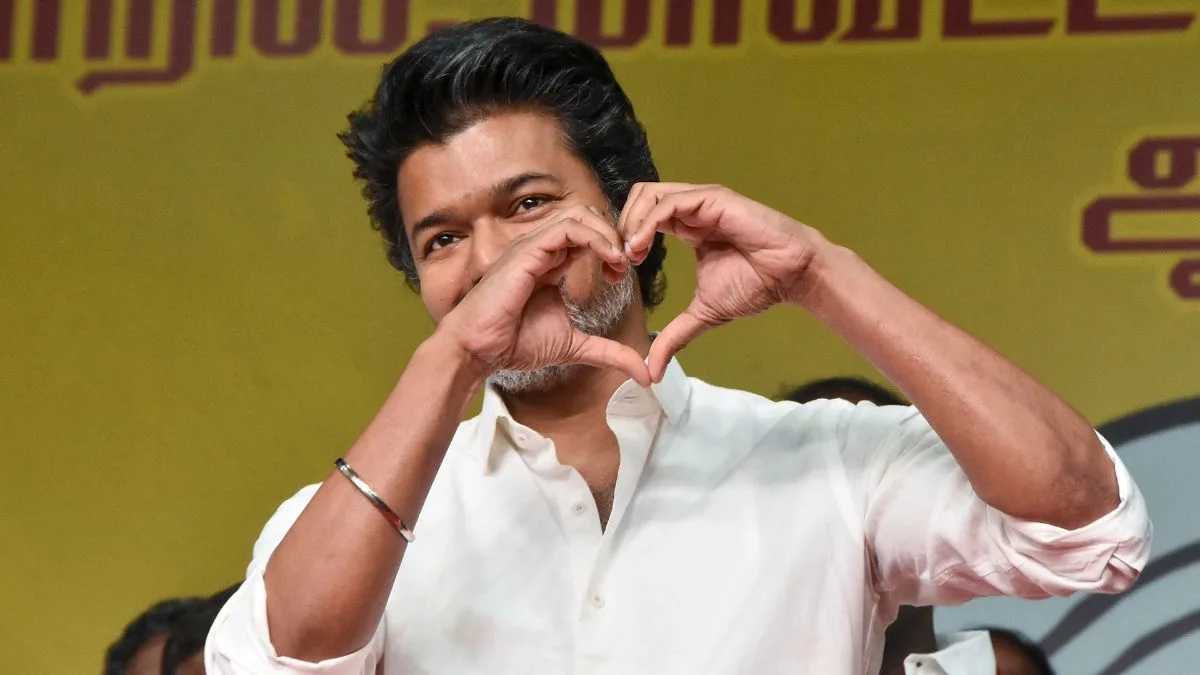
Tamil Nadu has thrown up a political shocker, and at the centre of it stands actor-turned-politician Vijay. On Monday, early counting trends showed his party, Tamilaga Vettri Kazhagam (TVK), racing ahead as the single largest force in the state, leading in more than 100 seats in the 234-member Assembly.
Vijay now finds himself in a real political test. His party is confident of forming a government on its own, but numbers suggest that the majority mark may still be just out of reach. If that happens, TVK will need support from other parties to take power in Tamil Nadu.
Advertisement
This unexpected situation has opened a fresh round of political calculations in the state, where alliances can change quickly and dramatically.
What makes this moment even more significant is TVK’s strong pre-election stand. During the campaign, the party clearly rejected any alliance with both the DMK and the AIADMK-led NDA. Vijay presented his party as a complete break from traditional Dravidian politics, promising a new direction and fresh leadership.
Despite that position, the current trends may force the party to reconsider its stand if it wants to form the government.
And, despite the excitement, a key question now dominates the discussion: what will Vijay do next? His campaign was built on a strong rejection of existing political alliances, but numbers may now push him toward difficult choices.
First possibility: Alliance with AIADMK
One option before TVK is a potential tie-up with the AIADMK. Interestingly, the two sides had earlier discussed an alliance before the elections, but talks broke down.
The main issues were TVK’s demand for a large share of seats, reportedly more than half of the 234 constituencies, and the insistence that Vijay be projected as the Chief Ministerial candidate.
Now, with election trends changing the power equation, the situation may look different. The AIADMK, which is trying to rebuild its strength, could reconsider working with TVK.
Such an alliance could help both sides stay relevant in the new political landscape.
Second possibility: Strong opposition to BJP and conditional politics
However, any alliance is not straightforward. Vijay has been openly critical of the BJP, calling it his party’s “ideological enemy.” He has also described the DMK as the “political enemy,” making his position very firm during campaigning.
In fact, Vijay accused both the DMK and BJP of being too close, even alleging “underground understanding” between them. He went further to claim that after elections, DMK leaders would approach the BJP leadership to avoid corruption-related pressure.
Because of this strong stand, any partnership involving the BJP appears highly unlikely. Vijay may even insist that the AIADMK break its ties with the BJP if it wants to work with TVK. But that demand could create another political challenge, since the BJP has played a role in bringing together fragmented AIADMK factions in the past.