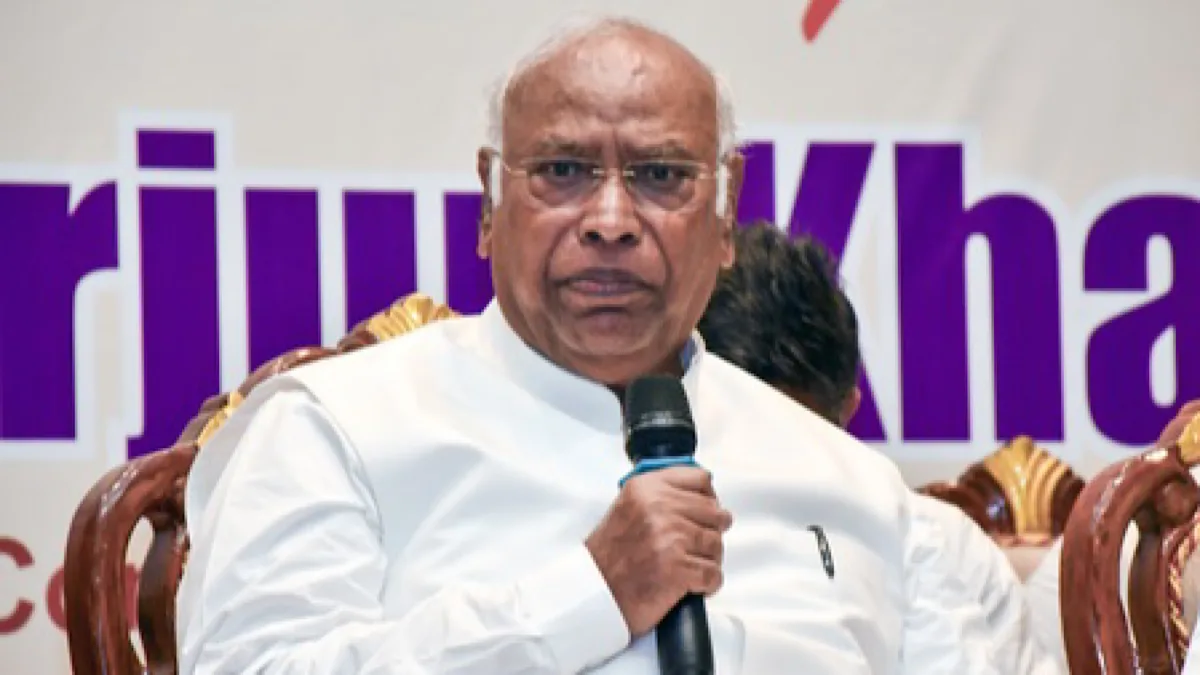
Congress president Mallikarjun Kharge on Sunday marked World Press Freedom Day with a sharp critique of the Centre, alleging a steady erosion of media independence and accusing the ruling dispensation of using legal and coercive means to silence journalists.
World Press Freedom Day, observed annually on May 3, celebrates the fundamental principles of press freedom, evaluates media independence, and honours journalists who lost their lives in the line of duty.
Advertisement
In a post on social media platform X, Kharge said India’s standing in the Reporters Without Borders’ World Press Freedom Index had “steadily declined” since 2014, claiming that the country had fallen to 157th place under the current regime. “A free press, in its truest sense, does not exist to amplify the government’s narrative or conceal its failures. It exists to question authority, to scrutinise power, and to hold those in office accountable,” he said.
Emphasising the role of journalism in a democracy, Kharge added that the media “preserves the democratic balance between power and the people” and described journalists as “custodians of public truth.”
Citing India’s first Prime Minister Jawaharlal Nehru, he said, “The freedom of the Press is not just a slogan but an essential attribute of the democratic process,” arguing that this principle now stands “gravely compromised”.
The Congress chief alleged that legal provisions were increasingly being “weaponised” to curb independent reporting. “Defamation laws, national security provisions, and sweeping criminal statutes are deployed not as instruments of justice, but as tools of intimidation,” he said, adding that several journalists had been arrested, detained, or interrogated in recent years, with some booked under stringent laws such as the Unlawful Activities (Prevention) Act.
Kharge also pointed to what he described as a “disturbing pattern” of violence against journalists, alleging that reporters investigating corruption and public interest issues had been targeted in multiple states. He named individuals including Raghvendra Bajpai in Uttar Pradesh, Mukesh Chandrakar in Chhattisgarh, Rajeev Pratap Singh in Uttarakhand, and Dharmendra Singh Chauhan in Haryana, calling them “grim reminders of the cost of speaking truth to power.”
The Congress leader further accused the government and the Rashtriya Swayamsevak Sangh of attempting to tighten control over digital platforms. “The message of the BJP-RSS is clear: independent journalism will be punished, and compliance will be rewarded,” he said, alleging that sections of the media had been reduced to echoing the ruling establishment while critical voices were “targeted relentlessly.”
Kharge called for “deep introspection by all stakeholders,” urging those in power to uphold democratic norms and institutional integrity. “Any deviation from these principles, if allowed to persist over time, risks becoming normalised and even accepted, causing lasting damage to democratic norms, values, institutions, and the people they serve,” he said.
The remarks come amid an ongoing political debate over media freedom and institutional autonomy, with the government maintaining that India’s press remains vibrant and free, and that legal action against individuals is undertaken in accordance with the law.