A cluster of deaths and disappearances involving US-based scientists linked to nuclear, aerospace and government research has set off alarm bells in Washington, with lawmakers now calling it a potential national security concern.
The issue has moved beyond isolated cases. With at least 10 scientists either dead or missing, many tied to sensitive research ecosystems, questions are now being raised about whether this is coincidence, a pattern, or something more troubling beneath the surface.
Advertisement
Why US lawmakers are calling it a national security threat
According to Fox News, House Oversight Committee Chair James Comer has flagged the developments as serious, warning that “there’s a high possibility that something sinister is taking place here.” He added that Congress is treating the matter as a priority.
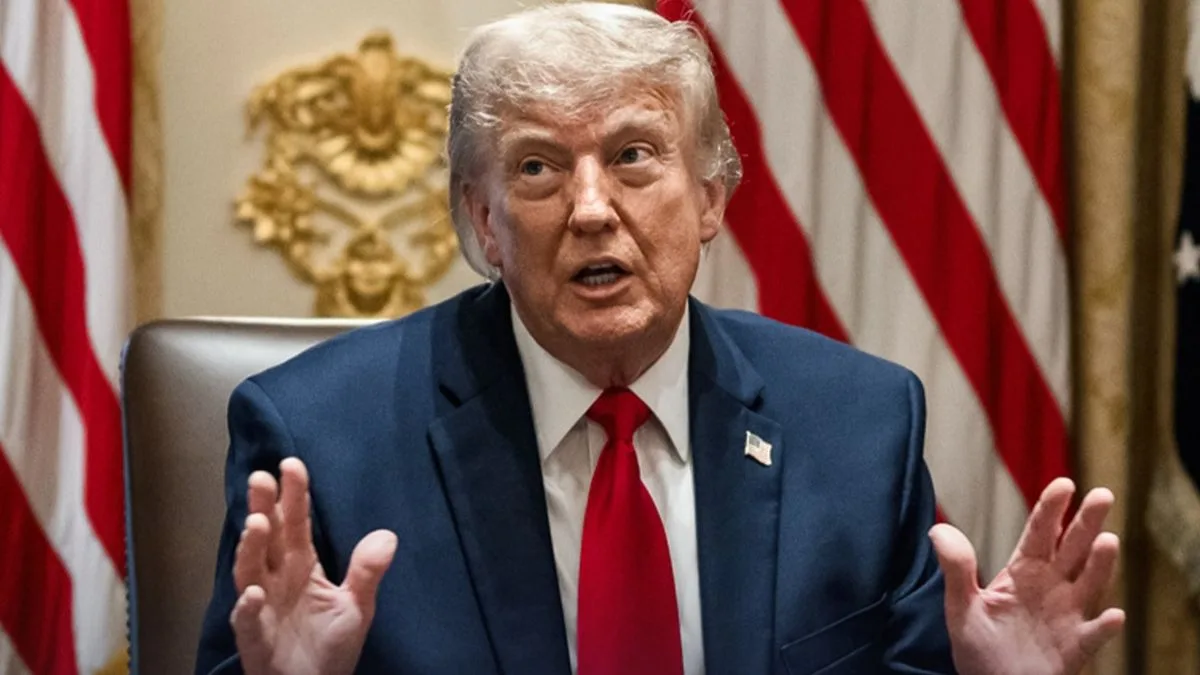
President Donald Trump has also acknowledged the situation, saying he expects more clarity in the coming days, while expressing hope that the cases may ultimately prove unrelated.
The individuals at the centre of the concern come from highly sensitive sectors. These include personnel linked to the Kansas City National Security Campus, NASA’s Jet Propulsion Laboratory, Los Alamos National Laboratory, and even former senior defence leadership.
The cases that are raising questions
Among the most recent is Steven Garcia, a government contractor with top security clearance, who went missing from Albuquerque on August 28, 2025.
NASA-linked researcher Frank Maiwald died on July 4, 2024, though no public cause has been disclosed. Another astrophysicist, Carl Grillmair, was shot dead outside his home earlier this year, with investigators linking the incident to a suspect who had previously trespassed on his property.
Michael David Hicks, also associated with NASA’s JPL and known for his work on asteroid research, died in 2023 under undisclosed circumstances.
The list extends further. Retired Air Force General William Neil McCasland, who oversaw classified space programmes, disappeared in February 2026. Aerospace engineer Monica Jacinto Reza vanished during a hike in 2025 and has not been found since.
Others include Los Alamos-linked employees Melissa Casias and Anthony Chavez, both of whom disappeared in 2025, as well as nuclear physicist Nuno Loureiro, who was shot dead later that year. A pharmaceutical researcher, Jason Thomas, was found dead in a Massachusetts lake earlier this year after going missing in 2025.
While some cases have partial explanations, including criminal links or personal circumstances, the clustering of incidents involving individuals connected to sensitive work has triggered unease in policy circles.
Pattern, coincidence or something else?
At this stage, there is no confirmed evidence publicly tying these cases into a single conspiracy. Investigators, in many instances, have pointed to separate reasons: a personal dispute here, a criminal angle there. On paper, they do not appear linked.
But it is the nature of the individuals involved that keeps the questions alive. These were not ordinary professionals. Many had access to classified systems, cutting-edge research, or technologies that countries guard closely.
That is where the conversation begins to shift from evidence to perception.
Why this story is echoing far beyond the US
For many observers, the current developments feel familiar.
For decades, a section of public discourse has held on to the belief that foreign intelligence agencies may have targeted strategic scientists. The name that comes up most often in that conversation is Homi J Bhabha, widely seen as the architect of India’s nuclear programme.
Bhabha died in 1966 in an Air India plane crash near Mont Blanc. While the official account attributes his death to the crash, alternative theories alleging sabotage have continued to circulate in public imagination, without conclusive proof in the public domain.
That distinction matters.
The current US cases and older suspicions elsewhere do not rest on the same evidentiary footing.
And yet, this is where the story begins to feel familiar in a wider sense.
Across the world, the deaths of scientists linked to strategic programmes have often sparked suspicion of covert operations. In some cases, those suspicions have gone beyond speculation.
In April 2026, the death of Chinese researcher Danhao Wang at the University of Michigan drew diplomatic attention. Beijing said he had faced “hostile questioning” by US law enforcement before his death and called for a full investigation, warning of a “chilling effect” on Chinese researchers. US authorities, however, are examining the case as a possible suicide.
In Iran, for instance, a series of killings over the past decade has been widely linked by officials and intelligence reporting to foreign operations, particularly those attributed to Mossad. Between 2010 and 2020, several nuclear scientists were assassinated in targeted attacks using methods ranging from magnetic bombs to remote-controlled weapons.
Among the most prominent names was Mohsen Fakhrizadeh, often described as the architect of Iran’s nuclear programme, who was killed in a highly sophisticated roadside attack in 2020.
Before him, scientists such as Masoud Alimohammadi and Majid Shahriari were killed in bomb attacks in 2010, while Mostafa Ahmadi Roshan was assassinated in 2012 when explosives were attached to his car.
Iran has repeatedly blamed Israel and the US for the attacks, though both have denied involvement.
These incidents are often cited as examples of shadow conflicts in which scientific expertise itself becomes the target.
When science meets geopolitics
In today’s world, shaped by nuclear power, space ambitions and an intense race for technological edge, scientists are no longer working in isolation. They are not just researchers in labs. They sit at the intersection of national power and global rivalry. They are strategic assets.
That reality makes every unexplained death or disappearance more than just a personal tragedy. It becomes a geopolitical question.
Right now, in the United States, that question is being asked within Congress itself.
For now, it is still unclear whether these cases are a series of coincidences, systemic gaps, or something more organised. What is certain, though, is that until clearer answers emerge, the questions around these scientists are only going to grow.