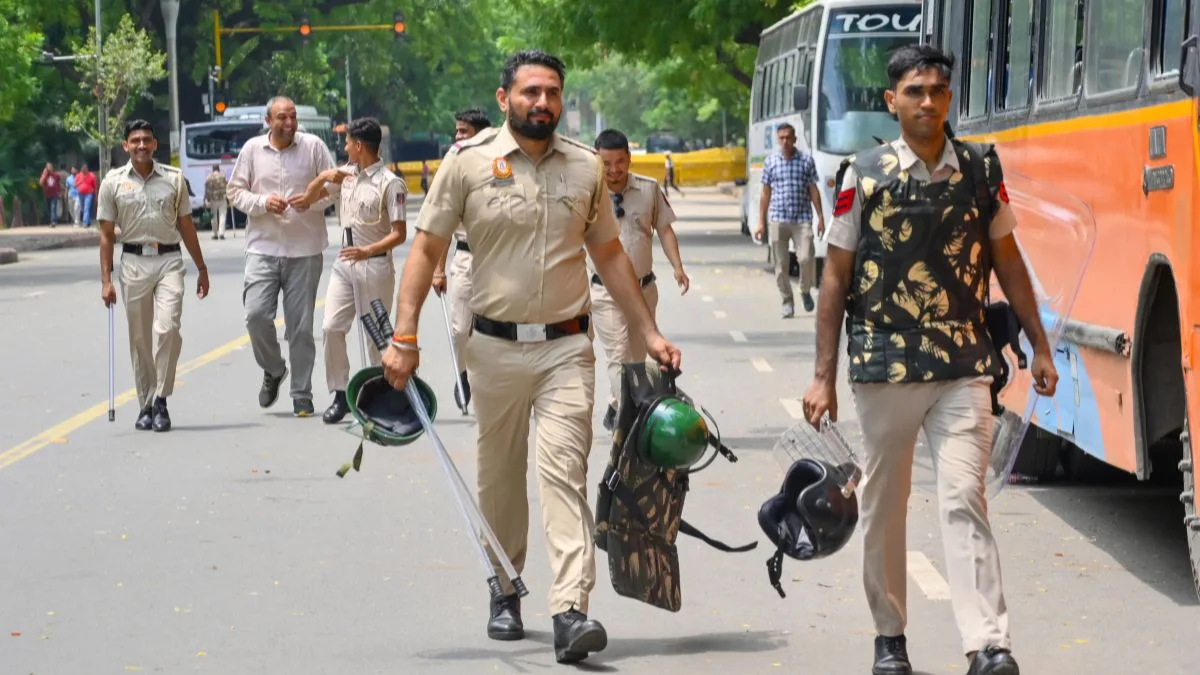
Tomatoes, eggs fly as BJP, Congress workers clash in Ranchi
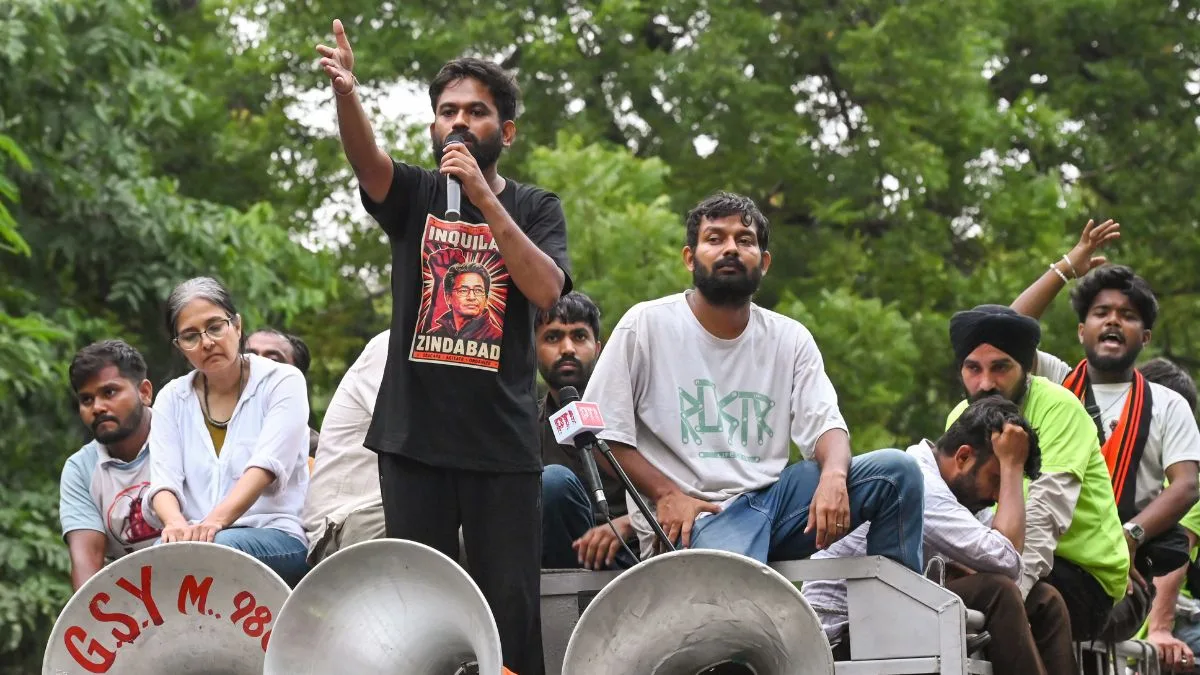
A Congress march against the alleged NEET paper leak and police action on protesting students turned into a political street showdown in Ranchi on Thursday.
In the run-up to polling in West Bengal, a constitutional paradox has quietly taken shape, one that exposes the limits of legal remedies when they collide with electoral time.





Supreme Court (Photo: IANS)
In the run-up to polling in West Bengal, a constitutional paradox has quietly taken shape, one that exposes the limits of legal remedies when they collide with electoral time. The Supreme Court has overseen an extraordinary clean-up exercise following large-scale deletions from the electoral rolls under the Special Intensive Revision. Judicial officers, assisted across state lines, have processed tens of lakhs of objections. Nineteen appellate tribunals now stand operational, tasked with reviewing an avalanche of appeals. On paper, the system is working.
But elections are not conducted on paper. With over 30 lakh appeals pending and polling dates already fixed, the central question is no longer whether justice exists, but whether it can arrive in time to matter. The Court has clarified that only those whose appeals are decided before specific cut-off dates ~ April 21 for deleted voters in phase I and April 27 for those in phase II ~ will see their names restored in the supplementary rolls. For the rest, even a successful appeal will come too late. The vote, once lost, is not retroactively recoverable. This is not a failure of intent. It is a failure of alignment between legal process and democratic function.
Advertisement
A doctrine, designed to protect democracy, can also produce exclusion when large-scale disputes emerge too close to polling. The present situation illustrates that risk in stark terms. The use of Article 142 of the Constitution of India with its promise of “complete justice” adds another layer of complexity. Here, it has enabled the creation of a comprehensive adjudicatory mechanism: tribunals, procedures, and safeguards intended to ensure fairness. And yet, completeness in design does not guarantee completeness in outcome. A remedy delivered after polling may correct the record, but it cannot restore participation. The deeper issue lies upstream.
Advertisement
Why was a revision of this scale permitted so close to an election? Why was adjudicatory capacity not built in anticipation of predictable disputes? The burden has now shifted to a tribunal system that, however diligent, cannot realistically process millions of cases within days. Institutions are doing what they can within the constraints they face. The judiciary has avoided halting the electoral process altogether, a move that would have carried its own democratic costs. The Election Commission of India has followed through on the revision exercise it initiated. Yet between them lies a gap, one measured not in law, but in time. That gap is where disenfranchisement occurs.
This moment forces a harder recognition: rights in a democracy are not secured merely by their formal availability. They depend on systems that can deliver them when they are needed. A vote is not an abstract entitlement; it is an event-bound right. Miss the moment, and the right dissolves into after-the-fact correctness. What emerges, then, is not institutional failure in the conventional sense, but a structural mismatch. A legal system designed for deliberation has been asked to operate at electoral speed. It cannot fully do so. And when time outruns justice, democracy pays the price.
Advertisement

![‘Beginning of accountability’: Sonam Wangchuk reveals 3 written assurances from Centre before ending fast [VIDEO]](https://www.thestatesman.com/wp-content/uploads/2026/07/Sonam-Wangchuk-1-1-300x200.webp)
![‘Beginning of accountability’: Sonam Wangchuk reveals 3 written assurances from Centre before ending fast [VIDEO]](https://www.thestatesman.com/wp-content/uploads/2026/07/Sonam-Wangchuk-1-1.webp)