India on Thursday (local time) voiced strong concern at the United Nations over attacks on commercial vessels in the Strait of Hormuz, warning that disruptions to maritime traffic directly threaten its energy and economic security, even as it urged all sides to step back from further escalation in the Gulf.
The intervention came during a UN General Assembly discussion under the Veto Initiative on the Middle East situation, held after Russia and China blocked a Security Council resolution seeking to halt Iranian attacks on shipping. With the Strait of Hormuz carrying nearly a fifth of global fossil fuel trade, any disruption has immediate implications for India and the wider global economy.
Advertisement
India raises alarm over maritime security and seafarer deaths
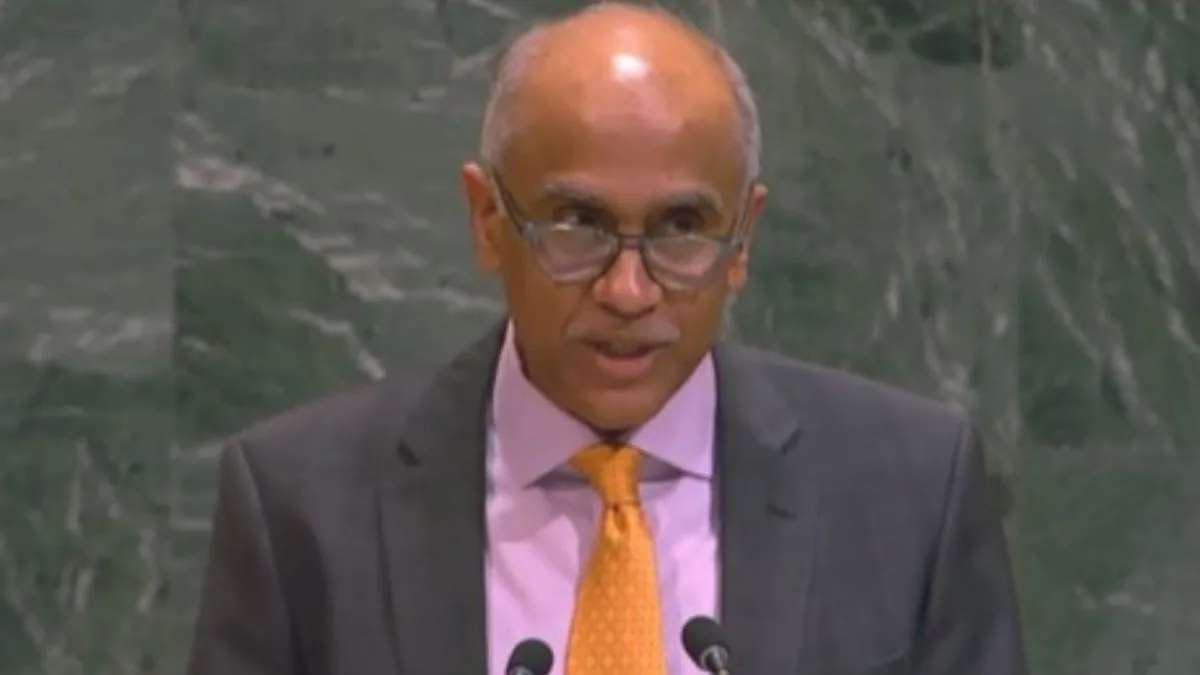
India’s Permanent Representative, Ambassador Harish P, highlighted the risks to commercial navigation, underlining that the crisis has already taken a human toll on Indian nationals.
“An aspect of particular concern for India, for its energy and economic security, relates to commercial shipping through the Strait of Hormuz. India has deplored the fact that commercial shipping was made a target of military attacks in this conflict,” he said.
He also pointed to the loss of Indian lives during the ongoing hostilities.
“The precious lives of Indian seafarers aboard ships have been lost during the course of the conflict,” he added.
Calls for international law, safe navigation, and de-escalation
India reiterated its position that attacks on civilian maritime activity are unacceptable and must stop immediately.
“We reiterate that the targeting of commercial shipping and endangering innocent civilian crew members or otherwise impeding the freedom of navigation and commerce in the Strait of Hormuz are unacceptable,” Harish said.
“International law in this regard must be fully respected. We strongly urge that safe and unimpeded freedom of navigation and global commerce through the Strait of Hormuz be restored at the earliest,” he added.
At the same time, India avoided taking sides on the veto controversy, maintaining a balanced diplomatic stance.
“We have urged all states to promote dialogue and diplomacy and de-escalation of tensions and to purposefully address underlying issues,” he said.
“We have also called for respect of the sovereignty and territorial integrity of all states.”
UN debate sharpens divisions over veto on Iran resolution
The General Assembly meeting was convened under a mechanism that requires permanent members of the Security Council to explain their veto decisions within 10 days.
On April 7, Russia and China vetoed a Bahrain-backed resolution that called on Iran to halt attacks on commercial shipping and ensure freedom of navigation.
While the United States, Israel, and several Gulf nations criticised the veto, Moscow and Beijing defended their move. Russia argued the draft resolution ignored actions by Israel and the US that led to the conflict, while China said it risked legitimising unauthorised military operations.
Representing Gulf states and Jordan, Kuwait described the veto as a setback in addressing “a clear and direct threat to international peace and security”, and indicated that a fresh draft could be introduced after consultations.
Strategic chokepoint under strain
The Strait of Hormuz remains a critical maritime corridor for global trade, handling around 20 per cent of the world’s fossil fuel shipments. Recent attacks and countermeasures, including Iran’s actions in the Strait and a US naval blockade of Iranian ports, have intensified fears of prolonged disruption.
For India, heavily dependent on energy imports, the stakes remain particularly high as instability in the region threatens both supply chains and economic stability.