In a significant development raising hopes of an early resolution to the West Asia crisis, US President Donald Trump on Thursday announced a 10-day ceasefire between Israel and Lebanon – a key condition of Iran to hold talks with Washington on ending the war.
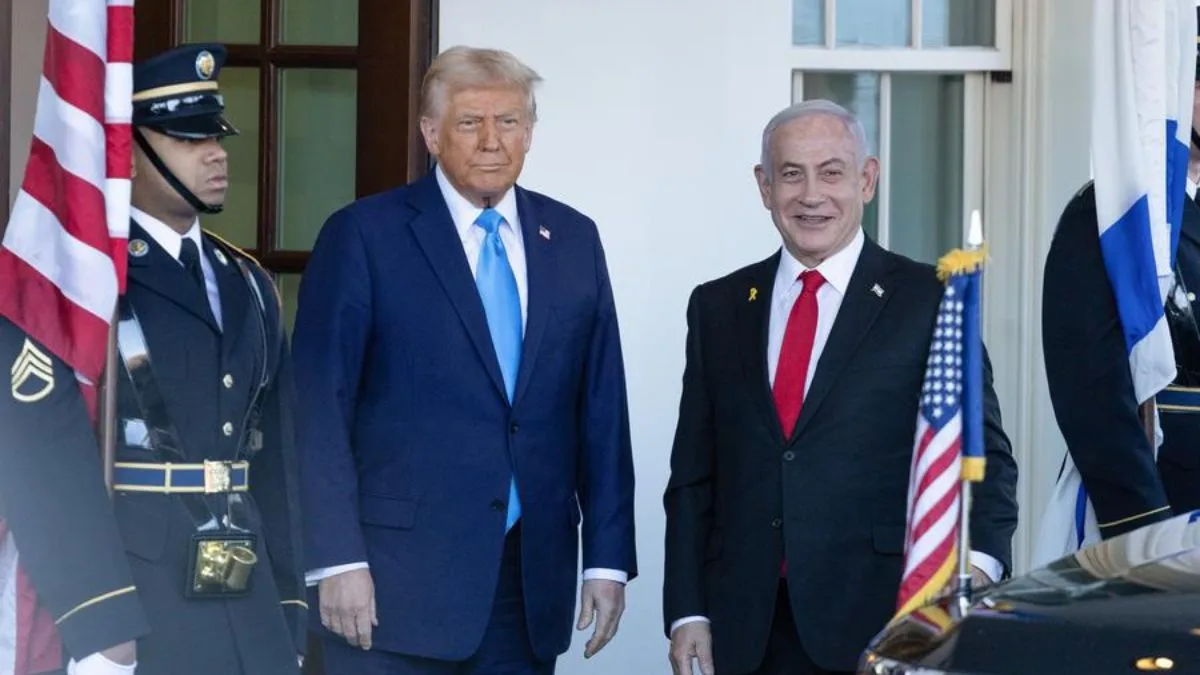
In a social media post on Truth Social, Trump announced that he held “excellent conversations” with his Lebanese counterpart Joseph Aoun and Israeli Prime Minister Benjamin Netanyahu, adding that both leaders have agreed to a ceasefire.
Advertisement
“I just had excellent conversations with the Highly Respected President Joseph Aoun, of Lebanon, and Prime Minister Bibi Netanyahu, of Israel. These two Leaders have agreed that in order to achieve PEACE between their Countries, they will formally begin a 10 Day CEASEFIRE at 5 P.M. EST,” Trump said.
He further stated that the two countries had met on Tuesday for the first time in 34 years in the presence of US Secretary of State Marco Rubio following his directions to work with Israel and Lebanon to achieve lasting peace.
Trump reiterated his claim of solving nine wars and said this will be his 10th. “It has been my Honor to solve 9 Wars across the World, and this will be my 10th, so let’s, GET IT DONE!”
In a separate post, Trump said that he will invite both Netanyahu and President Aoun to the White House for the “first meaningful talks between Israel and Lebanon since 1983.”
“Both sides want to see PEACE, and I believe that will happen, quickly!” he added.
Ceasefire in Lebanon was among the key Iranian conditions to hold peace talks with the United States after Israel refused to stop attacks on Hezbollah targets in the country despite the announcement of a temporary truce between Washington and Tehran.
Lebanon was part of the original 15-day US and Iran ceasefire. While announcing the truce, Pakistani Prime Minister Shehbaz Sharif had said that it would apply “everywhere, including Lebanon and elsewhere.”
However, Israeli Prime Minister Benjamin Netanyahu issued a contradictory statement, claiming the ceasefire did not include Lebanon.
As Israel continued to pound Beirut despite the ceasefire, Tehran warned that it could switch to full-scale defence at any moment if Israeli attacks on Lebanon are not stopped immediately.
The US also backed down, with Vice President JD Vance claiming a “legitimate misunderstanding” between Washington and Tehran regarding the ceasefire in Lebanon.
“I think the Iranians thought that the ceasefire included Lebanon, and it just didn’t. We never made that promise. We never indicated that would be the case. What we said is that the ceasefire will be focused on Iran and America’s allies, both Israel and the Gulf Arab states,” Vance had said before departing for Islamabad talks.
As Vance departs for Pakistan, Iranian Parliament Speaker Mohammad Bagher Ghalibaf threatened to pull out of the peace talks, saying that ceasefire in Lebanon and release of frozen Iranian assets were among the mutually agreed terms of the temporary truce.
“These two matters must be fulfilled before negotiations begin,” he had said.
The Islamabad talks failed to yield any positive result. However, there have been reports of fresh diplomatic efforts to hold another round of talks between the US and Iran later this week.
A Pakistani delegation visited Tehran to convince the Islamic Republic’s leadership for the second round of talks with the US. It is believed that Tehran pressed for a ceasefire in Lebanon before engaging in further negotiations to end the war.