Everyday language in India continues to reflect deeply embedded social hierarchies. What often appears as courtesy or cultural practice may, in fact, encode patterns of power, deference and social ordering. These linguistic norms are not confined to the private sphere; they are visible within public institutions, particularly in administrative settings, where they shape both behaviour and perception.
In government offices, the use of the word “Sir” has evolved into a convention that extends beyond simple politeness. It structures communication, frames interaction, and, at times, signals hierarchy. Its presence is routine; its absence is often noted and o ccasionally interpreted. What is expressed as respect may also function as a marker of unequal positioning, subtly reinforcing authority gradients within institutions. Language is not merely descriptive; it plays a constitutive role in shaping behaviour. The repeated use of hierarchical forms of address may discourage open expression and reinforce asymmetries in authority.
Advertisement
Over time, such practices can normalise deference and limit the scope for candid engagement. This is particularly relevant in administrative systems where effe c tive decision-making often depends on the free flow of information, feedback, and dissent. The origins of this pattern can be traced to India’s feudal past and its subsequent reinforcement during the colonial period. Administrative language historically served to maintain distance between authority and subject.
While the institutional framework has since undergone significant transformation, elements of this communicative culture have persisted. In contrast, several societies that inherited similar administrative traditions have gradually moved towards more egalitarian modes of interaction, reflecting broader social change. The implications extend beyond internal administrative culture. These conventions also shape how authority is perceived and exercised in interactions with citizens.
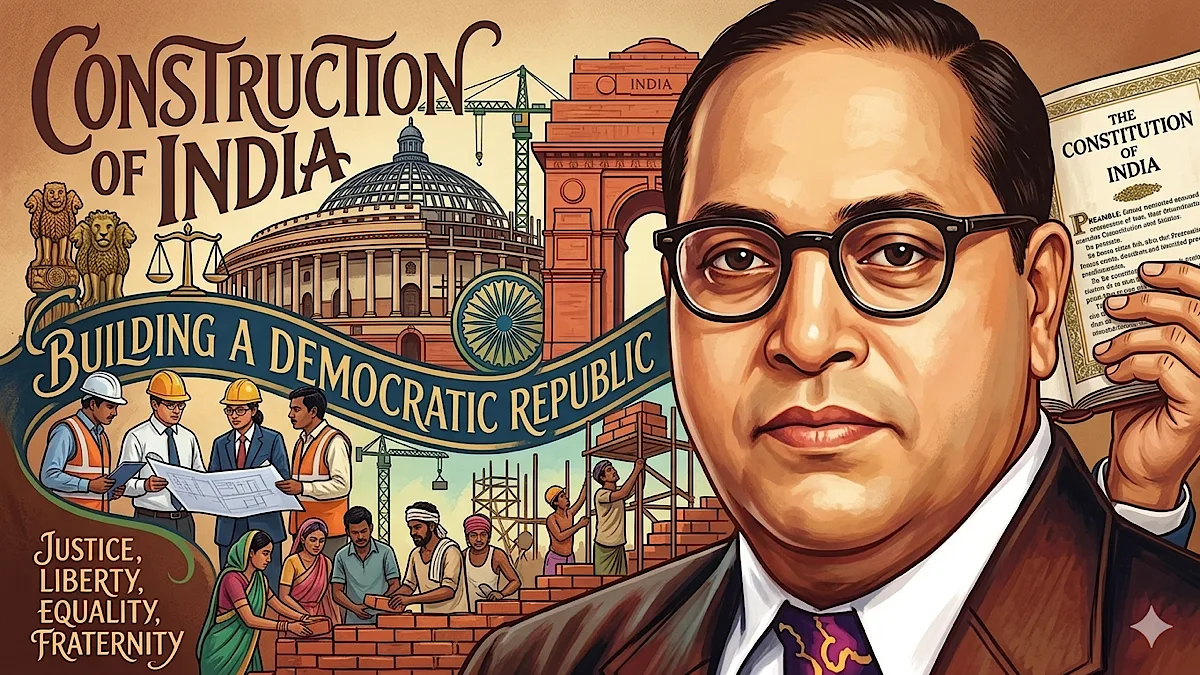
In many cases, routine interactions between citizens and public officials reflect implicit hierarchies, in which the relationship does not always align with the constitutional principle that public servants are accountable to the people. Language, in this sense, becomes a medium through which power is both expressed and internalised. This tension invites reflection, particularly on occasions such as Ambedkar Jayanti. B. R. Ambedkar consistently argued that political democracy must be accompanied by social democracy. The ideals of liberty, equality and fraternity, in his view, required expression not only in constitutional provisions but also in everyday social practices.
A related idea, drawn from his engagement with John Dewey, was that of “social endosmosis” – the free and natural flow of ideas and experiences across social groups. Such interaction is essential for the functioning of a democratic society. Where communication is structured by rigid hierarchies, this exchange may be constrained, limiting both par ticipation and mutual understanding. The role of language in this context is particularly significant. In many Indian languages, pronouns themselves signal gradations of status and respect. While such distinctions are historically rooted and culturally embedded, they may also reinforce social distance.
Ambedkar’s critique of caste as creating “water-tight compartments” offers a useful parallel. Hierarchical patterns in language, even in modern institutional settings, can contribute to similar forms of separation, albeit in more subtle ways. It is therefore pertinent to ask whether the deeper ethos of equality has been fully internalised. While constitutional safeguards and political representation have advanced significantly, social practices often evolve more gradually.
Everyday interactions may continue to reflect inherited hierarchies, even as formal structures emphasise equality and inclusion. This does not suggest that respect should be abandoned. Rather, it points to the need to reconsider how respect is expressed. It may be possible to foster forms of communication that are courteous without being overly deferential, and that enable openness without undermining institutional roles. A balance between civility and equality is essential for sustaining democratic engagement. Such shifts are unlikely to occur automatically.
They require conscious effort at both institutional and individual levels. Leadership plays a critical role in setting norms. In recent years, the emphasis on citizen-centric governance and administrative responsiveness under Narendra Modi has sought to reduce perceived distance between the state and citizens. Initiatives aimed at improving service delivery and direct engagement have, in effect, fostered more accessible and less hierarchical modes of interaction within governance. When those in positions of authority encourage open dialogue and reduce unnecessary hierarchies in communication, it can signal a broader commitment to participative governance.
Over time, such changes may contribute to more responsive and accountable administrative cultures. Ultimately, the character of a democracy is reflected not only in its formal institutions but also in its social practices. Language, as an everyday medium of interaction, offers an important site for such reflection. Moving towards more equal forms of communication, even incrementally, may help advance the broader ideal of an inclusive and democratic society. As Ambedkar reminded us, democracy is not merely a form of government but a mode of associated living. The persistence of hierarchical language sug gests that this transformation remains incomplete. Recognising and gradually reforming such practices may be one of the more practical steps towards realising the egalitarian vision that continues to guide India’s constitutional democracy.
(The writers are, respectively, a part-time Member of the Economic Advisory Council to the Prime Minister and a Professor of Finance, and a Deputy Commissioner of Police, Delhi.)