Why Industry Academia Collaboration Is No Longer Optional in India’s Education System
Every campus placement season, the same conversation plays out between recruiters and university leadership.
The increase in women’s participation in labour force is generally celebrated as an umbrella statement.




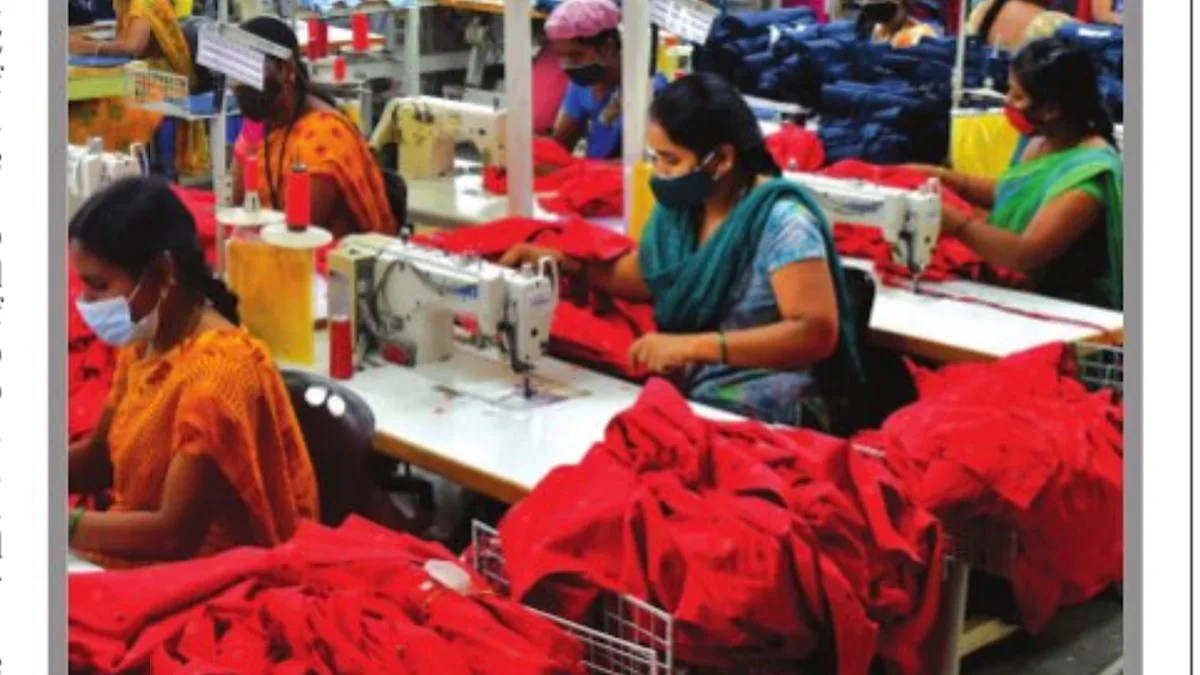
Photo:SNS
The increase in women’s participation in labour force is generally celebrated as an umbrella statement. According to the PLFS report, the labour force participation rate for urban women has increased from 22 to 22.2 per cent, and their worker population ratio has increased from 20.5 to 20.7 per cent. However, these statistics often do not get into the depth of how these numbers change across caste. Studies have previously shown how caste acts as an important pre-market, social identity which impacts labour market outcomes of the workers.
Since identities of caste have historically arisen through the division of labour, these outcomes can get more complicated when they intersect with the identities of gender. Often, we relegate the impacts of caste to a relic of the past. However, a nuanced analysis can reveal interesting insights into gender and caste, and whether meritocracy has indeed successfully replaced caste-based division of labour. Theoretically, labour markets are not unified spaces where workers compete on equal terms. Instead, they are divided into segments that differ in wages, job security, and mobility.
Advertisement
Entry into these segments is shaped not only by skills and education but also by social identity. In India , caste remains a key determinant along which such inequalities are organised. Research shows that caste and gender-based disparities persist in urban labour markets, influencing who accesses better jobs and who remains confined to precarious work. Data from the PLFS 2023-24 shows the continued relevance of these patterns. Urban women are concentrated in a limited set of industries, with ser vices and manufacturing accounting for the majority of employment. Nearly two-fifths of urban working women are employed in services, while about a quarter are in manufacturing.
Advertisement
Trade and allied activities, along with transport and communication, account for smaller but still significant shares. However, this concentration does not imply equal access within these sectors. A caste-disaggregated view reveals clear differences in how women are distributed across industries. SC women are more likely to be concentrated in sectors such as construction, which is typically associated with lower pay and higher precarity, whereas upper caste women are more prominently represented in services. These disparities extend to occupational distribution.
A large share of the urban working women is concentrated in lower-end roles. Elementary occupations, typically constituting low-skill, routine jobs such as cleaning, sweeping, and other basic service tasks, account for 23.26 per cent of employment. Service and sales roles account for another 18.5 per cent while 17.36 per cent of women are engaged in crafts and related trades. In contrast, about 18.25 per cent of women are employed as professionals, representing one of the more skilled segments of the labour market. Caste differences within these occupations are stark. Upper caste women, in particular, make up about half of the managers and professionals.
In contrast, SC women constitute only 8.32 per cent of managers and 9.71 per cent of professionals, highlighting their limited presence in these occupations and their disproportionate concentration in lower-paying roles. For instance, SC women constitute 30.5 per cent of those in elementary occupations, a category that already represents the largest share of women’s work. Education is often expected to equalise opportunities across social groups. While higher levels of education do improve access to better jobs for all women, they do not fully eliminate caste-based disparities.
Among graduate women, 56.25 per cent of upper caste women are employe d in professional occupations, compared to 41.87 per cent of SC women. These differences are even more pronounced in access to managerial roles. Among postgraduates, 10.82 per cent of upper caste women are employed as managers, compared to just 4.58 per cent of SC women. At lower levels of education, SC women remain significantly more concentrated in elementary occupations than their upper caste counterparts. This suggests that while education enhances labour market outcomes, it does not fully offset the influence of caste. Disparities also extend to the quality of employment.
Regular salaried jobs are those which are generally considered the best types of jobs. These typically come with some amount of security and regularity of income. While nearly half of urban women are engaged in regular salaried jobs, access to such employment varies significantly across caste groups. Upper caste workers have the highest share in regular employment (53.96 per cent) and are almost absent from casual labour (2.64 per cent), indicating strong concentration in secure forms of work.
In contrast, SC workers are significantly more likely to be engaged in casual employment (14.73 per cent), reflecting greater exposure to insecure and low-paying jobs. While urban India may appear more modern, its labour markets continue to reproduce old hierarchies in new forms. Caste continues to shape not only where women work, but the kind of work they access and the security it provides. Education improves outcomes, but it does not level the playing field. As a result, women from marginalised caste groups remain concentrated in lower-paying and precarious jobs, even within the same urban economy. In this sense, the promise of urban meritocracy remains unfulfilled.
(The writers are, respectively, a Master’s student and an Assistant Professor of Economics, Christ University, Bengaluru.)
Advertisement