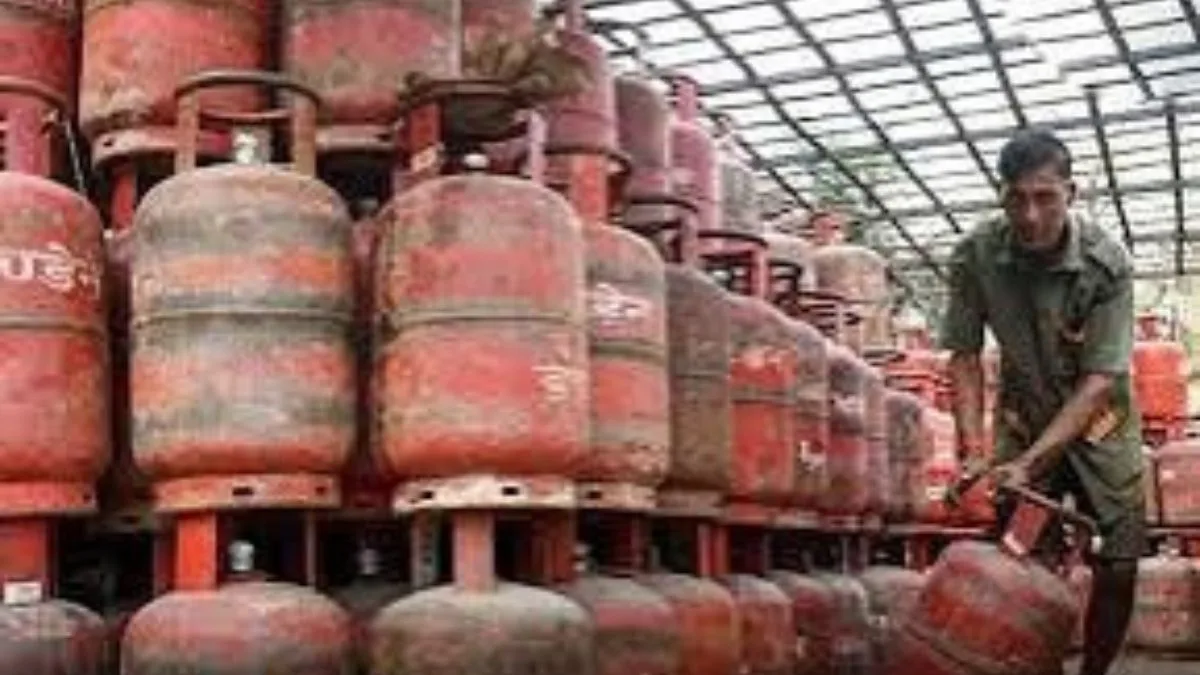
The crisis unfolding across India’s cities is not, at its core, about cooking gas. It is about the quiet architecture of exclusion that underpins urban growth. A disruption in liquefied petroleum gas (LPG) supplies ~ linked to tensions around the Strait of Hormuz ~ has done much more than inconveniencing households. It has exposed how precariously India’s migrant workforce is integrated into city life. For millions of low-income workers, access to cooking fuel is not guaranteed by formal systems but mediated through informal arrangements ~ small refill operators, shared cylinders, and neighbourhood brokers.
These networks function efficiently in normal times but collapse quickly under stress. When they do, the consequences are immediate and personal: kitchens go cold, food security falters, and the cost of daily survival rises sharply. What follows is not merely hardship but withdrawal. Workers begin to leave. This pattern should be familiar. During the Covid-19 lockdown in 2020, India witnessed a mass reverse migration that stunned policymakers and exposed the invisibility of urban labour. What is striking now is that a far less dramatic trigger ~ a supply bottleneck rather than a national shutdown ~ is producing a similar behavioural response. That suggests the underlying vulnerability has not been addressed. At the heart of the problem lies the conditional nature of welfare access.
Advertisement
Schemes designed to subsidise LPG or ensure food security remain tied to fixed addresses and local documentation. Migrant workers, who are by definition mobile and often informally housed, fall through these cracks. Economists have long argued for portability in welfare entitlements, yet implementation remains uneven. The result is a system where those who build and service cities cannot reliably access basic urban amenities. The economic implications are significant. India’s micro, small and medium enterprises depend heavily on migrant labour for sectors ranging from construction to textiles. As workers leave, production slows, costs rise, and recovery timelines extend. This is not just a labour issue; it is a demand shock in the making, as departing workers also withdraw their consumption from urban markets.
Equally concerning is the environmental regression. Faced with fuel shortages, households revert to firewood, kerosene, or coal ~ undermining years of progress under initiatives like the Pradhan Mantri Ujjwala Yojana. What was framed as a transition to clean energy risks becoming reversible under supply stress. The official position that supplies are adequate may well be accurate at a macro level. But availability is not the same as accessibility. A system can be well-stocked and yet functionally exclusionary. This moment, therefore, is less a supply crisis than a governance test.
It raises a fundamental question: can India’s cities sustain growth while treating a large share of their workforce as administratively temporary? Until access to essential services becomes portable, affordable, and independent of rigid documentation, each external shock ~ whether geopolitical or economic ~ will continue to trigger internal instability. The exodus of workers is not an overreaction. It is a rational response to a system that still does not fully recognise them as part of the city they sustain.