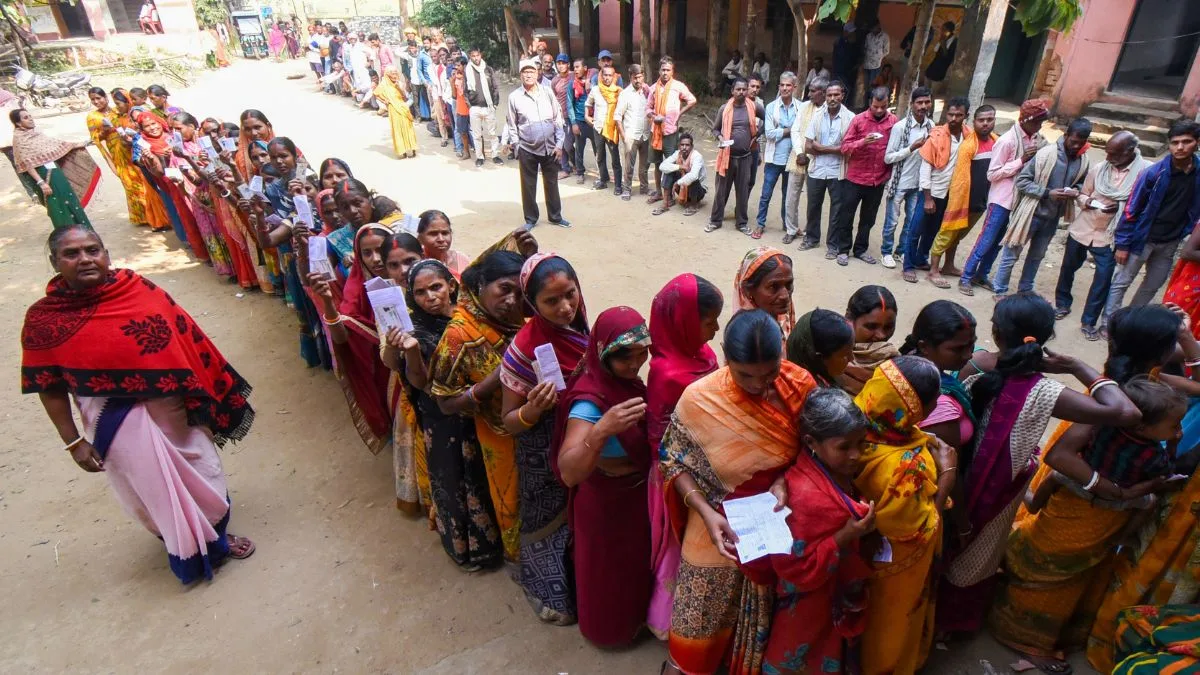
As West Bengal approaches the crucible of the 2026 Assembly elections, the familiar theatre of political contestation—replete with rhetoric, realignments, and recriminations—once again dominates the public sphere. Beneath this apparent turbulence, however, is a more subdued and powerful force: the women voters of Bengal. Over the past ten years, they have become the silent kingmakers whose decisions increasingly determine the fate of governments, no longer playing a supporting role in electoral calculus.
This transformation is neither accidental nor merely demographic; it is profoundly political, shaped by a changing agreement between the state and its female citizens. It is impossible to comprehend West Bengal’s current electoral landscape without looking at how gender and governance have interacted, particularly through a vast network of welfare programs that have altered both political allegiances and material realities.
The flagship Lakshmir Bhandar program, which was launched in 2021 and offers direct monthly cash transfers to women of all income levels, is at the heart of this transformation. With over 2.2 crore beneficiaries and an annual allocation running into tens of thousands of crores, the scheme has effectively placed disposable income directly in the hands of women, often for the first time in their lives. Riya Bhowmik, a potential voter of the Dum Dum Constituency added, “That amount may seem meagre to many, but it is of great help for many women like us. I am a homemaker, and my husband works in a small private company. That amount has reduced a significant amount of our worry.”
Advertisement
This is not merely an economic intervention; it is a socio-political recalibration. A woman’s bargaining power within the family, and consequently within society, changes subtly but profoundly when she has control over even a small but reliable source of income. The ballot, in such contexts, becomes not just a civic duty but an instrument of self-assertion.
However, it would be a grave misreading to reduce female voters to passive recipients of welfare. Bengal’s female electorate stands out due to their sophisticated political judgment. Their voting patterns do not strictly follow partisan allegiances or ideological dichotomies. Rather, it represents a practical assessment of stability, personal security, and governance. Concerns like inflation, family members’ employment prospects, healthcare access, and public safety have a significant impact on electoral decisions and are sometimes overlooked by traditional political analysis.
The notion of women as “silent” kingmakers is particularly apt in the Bengali context. Unlike the more visible mobilisation of identity-based politics, women’s political influence often operates beneath the surface. It manifests itself in family discussions, social networks, and the silent determination used in the seclusion of the voting booth. However, this invisibility should not be confused with passivity. Conversely, their collective voice has a decisive edge because of this subtle presence.
An excellent instance of this phenomenon was provided by the Assembly elections of 2021. It was widely accepted by analysts that women voters, who transcended caste, class, and religious boundaries, were crucial in determining the outcome. Their support was unquestionably significant, but it was neither uniform nor predictable. As the state now moves towards 2026, political parties are acutely aware that ignoring this constituency would be electorally perilous.
In response to this, the strategies of the campaign are undergoing a subtle but significant shift. The rhetoric is being recalibrated to engage with issues that have a greater resonance for women’s lived experiences. The focus is also being put on grassroots engagement, and the role of women cadres is being elevated in this process. Simultaneously, the symbolic representation of women in leadership roles is being foregrounded—an aspiration and a necessity.
However, this is also a space for some pertinent questions. Will the engagement of the campaign with women voters be limited to electoral expediency? Will the interventions be able to transcend the immediate and engage with some of the underlying issues such as violence against women, economic independence, and equitable opportunities? The answer to these questions will reveal the nature of the empowerment of the women voters and whether it is being done instrumentally or substantively.
Another dimension that merits attention is the intersection of gender with other socio-economic factors. For example, women voters in urban areas such as Kolkata might have different issues to address compared to those living in Purulia or Cooch Behar. This diversity within a specific voting block, therefore, calls for a more nuanced understanding of their interests and issues. A single approach, therefore, will not be enough to address a voting block that is not only large in number but also heterogeneous.
Moreover, the increasing political participation of women has broader implications for the democratic fabric of the state. Through their participation, they challenge entrenched hierarchies, thus leading to a more responsive approach to governance. This, in turn, enhances the quality of democracy, making it more vibrant and representative.
As the 2026 elections draw nearer, the spotlight will inevitably fall on rallies, alliances, and headline-grabbing controversies. However, there is another level at play here as well. At the grassroots level in villages and towns, in cities and semi-urban clusters, women voters will once again weigh their choices with deliberation and discernment. Their decisions, shaped by both personal experience and collective memory, will ultimately determine the contours of power in West Bengal.
Ultimately, in the context of Bengal’s elections, there is a growing narrative of Bengal’s women voters. They may not make headlines or speak from the most powerful platforms in Bengal’s political arena; however, their role is clearly visible. As silent ‘kingmakers’ in Bengal’s electoral arena, Bengal’s women voters represent a form of power that is both low-key and revolutionary—a reminder in a democracy that the most powerful voices are not always those that are heard most clearly.
Ultimately, when Bengal’s voters cast their votes in 2026, it is their silent assertion of power that will once again script the future of Bengal.