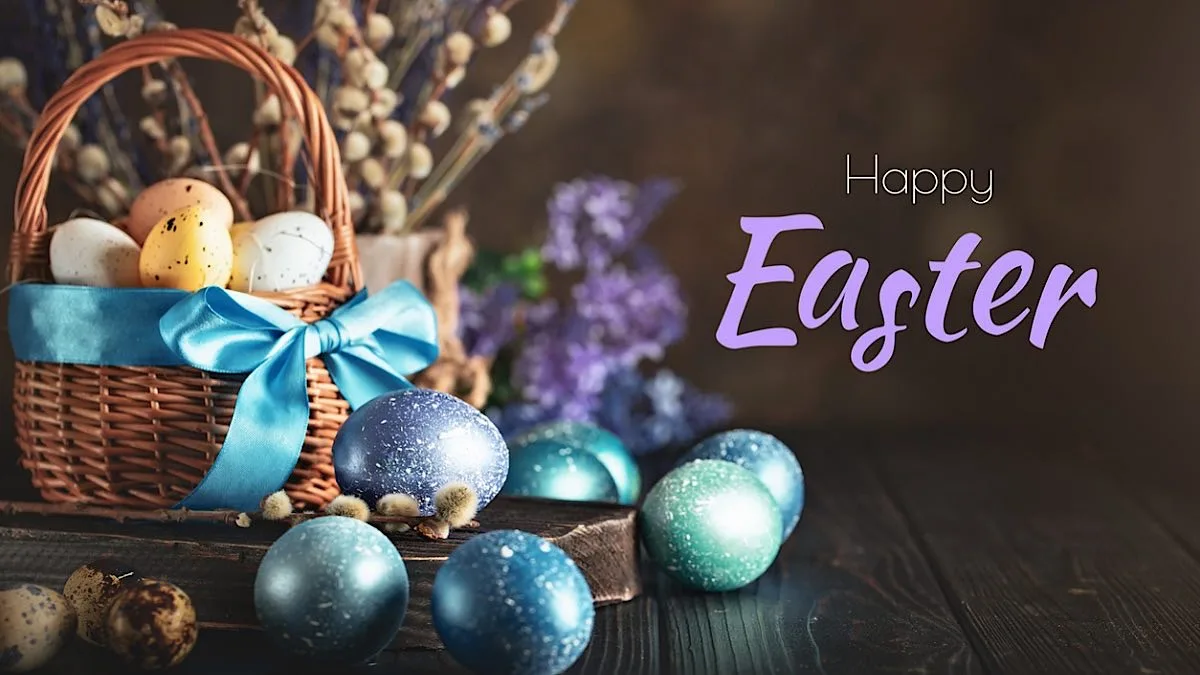
Children love food, especially sweets. Well, most of them do. At least I did when I was a kid many decades ago. And the only association Easter Sunday held for me was the colorful candies shaped like eggs that our schools gifted us before it closed for the long weekend starting Good Friday. We were also asked by our teachers to paint or draw designs or floral/fruity motifs on real, often boiled, eggs in our elementary art classes that would symbolize the arrival of the day Jesus was resurrected.
All I could think of was when do we get to eat these? The pink, purple, yellow, green, blue and red eggshells now embossed with flowers and fruits, trees and t’s (symbolizing the Cross) would eventually be cracked open and we would gleefully gobble up the contents inside.
Advertisement
Whether we came from Christian, Buddhist, Hindu, Jain, Jewish, Muslim or Sikh families, the devouring of Easter Eggs was accompanied by a lot of happiness and cheer amongst the children.
If we could capture, like a camera does a passing second in time, preventing it from slipping irrevocably into oblivion, or could bottle the moments of pure joy kids feel doing nothing except running merrily along life gobbling eggs, oblivious of the unfolding future, it would mean permanent peace.
In his iconic novel Catcher in the Rye, JD Salinger’s protagonist does something similar in his daydreams. He catches children before they can cross over to the other side of childhood. The idea is to hold onto the happiness. The theme of grabbing fleeting happiness before it changes into something else, something less is recurrent in prose and poetry alike. The two poems, Porphyria’s Lover by Robert Browning and Ode on a Grecian Urn by John Keats take us to the extreme breaking points of this impossible idea.
And pretty soon we learn that Easter is not at all just about candies and eggs. It is a day that is filled with the idea of the egregious proclivities of God’s creations which are driven by the need to silence those who speak the truth as did Jesus of Nazareth. It is a day which conjures up the brutality and barbarity that the brave was subjected to even in those days two thousand years ago. The idea of crucifixion horrified us. We read the Bible and we cried for the gentle soul of Jesus who was subjected to this terrifying form of torture. A history teacher told the class that that was a common method of punishment during that time. Jesus was not singled out for it. Small comfort that was.
But Easter Sunday did bring back some joy, because it celebrates the Resurrection of Jesus. Though like innocence shattered, we were no longer unaware of evil. We were made to learn that there was wickedness in the world and Jesus Christ took all the sinners’ sins and suffered alone on their behalf.
Children are no longer innocent. And it is indeed ironic that this Easter, the worst face of this lost innocence belongs to the children from that part of the world from where Jesus emanated.
A Whatsapp video showing the suffering of children in war torn Palestine and Iran has been passed around just before Easter Sunday.
Their eyes are not even teary. They cannot even afford the luxury of crying as they watch their houses crumble around them or their families disappear in the blinding, earsplitting explosions. They stare blankly.
Some have limbs blown off. With a surviving arm or a hand they extend a bowl towards the aid workers distributing food. Children love food.
The writer is Editor, Features