Lucknow University professor detained over harassment, paper leak allegations
A Lucknow University professor is under police custody after a student accused him of harassment and submitted alleged audio clips linked to an exam paper leak case.
In a new study, scientists from Lucknow University have issued a serious warning over the rapid melting of glaciers and the expansion of glacial lakes in the Western Himalayas, highlighting an increased risk of flooding and the urgent need for sustained monitoring.




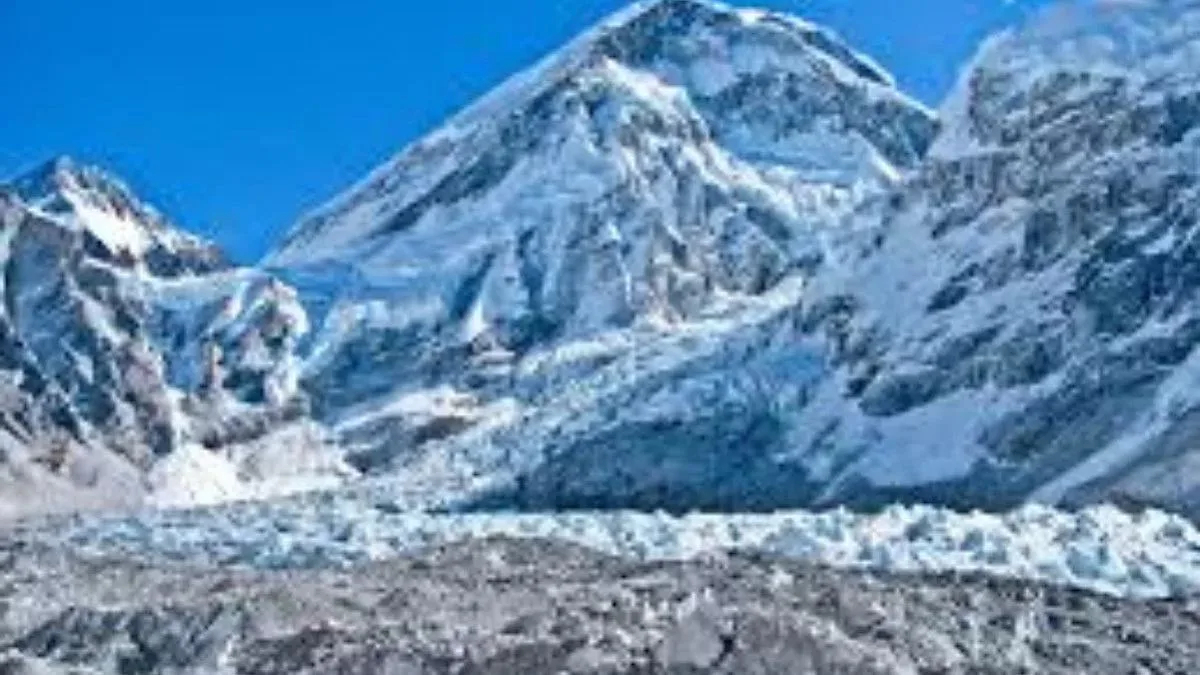
Photo:IANS
In a new study, scientists from Lucknow University have issued a serious warning over the rapid melting of glaciers and the expansion of glacial lakes in the Western Himalayas, highlighting an increased risk of flooding and the urgent need for sustained monitoring.
The research was conducted by Dr. Vineet Kumar, Associate Professor in the Department of Geology at Lucknow University and former Scientist-D at the Wadia Institute of Himalayan Geology, along with Dr. Manish Mehta and Dr. Ajay Singh Rana. The findings have been published in the international journal Progress in Physical Geography: Earth and Environment.
Advertisement
The study focused on the Padum Glacier in the Padum Valley of Zanskar and compared it with the neighbouring Natio Nala Glacier. Scientists found that the degradation of the Padum Glacier—connected to a glacial lake—is occurring at a significantly faster rate than the land-terminating Natio Nala Glacier. The study documented a steady retreat of the Padum Glacier between 1993 and 2022.
Advertisement
As a result, the glacier’s surface area has reduced substantially, while the Natio Nala Glacier has shown comparatively slower changes. A key finding revealed that the glacial lake at the terminus of the Padum Glacier, known as Padum Lake, has expanded by approximately 69 percent.
Researchers warned that such rapidly expanding lakes significantly increase the risk of Glacial Lake Outburst Floods (GLOFs)—sudden and potentially catastrophic floods that can cause widespread destruction in downstream regions. The study also noted that both glaciers are slowing down and losing ice mass, though differences were observed between lake-terminating and land-terminating glaciers.
According to Dr. Vineet Kumar, the findings underscore the severe impact of climate change on Himalayan glaciers. He stressed the urgent need for continuous monitoring of glaciers and glacial lakes to mitigate potential risks. He added that the study serves as a critical warning for communities in the Himalayan region, as the intensity and frequency of such natural hazards are likely to increase in the future.
Advertisement