Rajnath flags-in first-ever women circumnavigation expedition
Defence Minister Rajnath Singh on Monday flagged-in ‘Samudra Pradakshina’, the first-ever Tri-service all-women circumnavigation sailing expedition.
Opposition leaders, however, described the all-party meeting as “unsatisfactory” and demanded a full parliamentary debate.




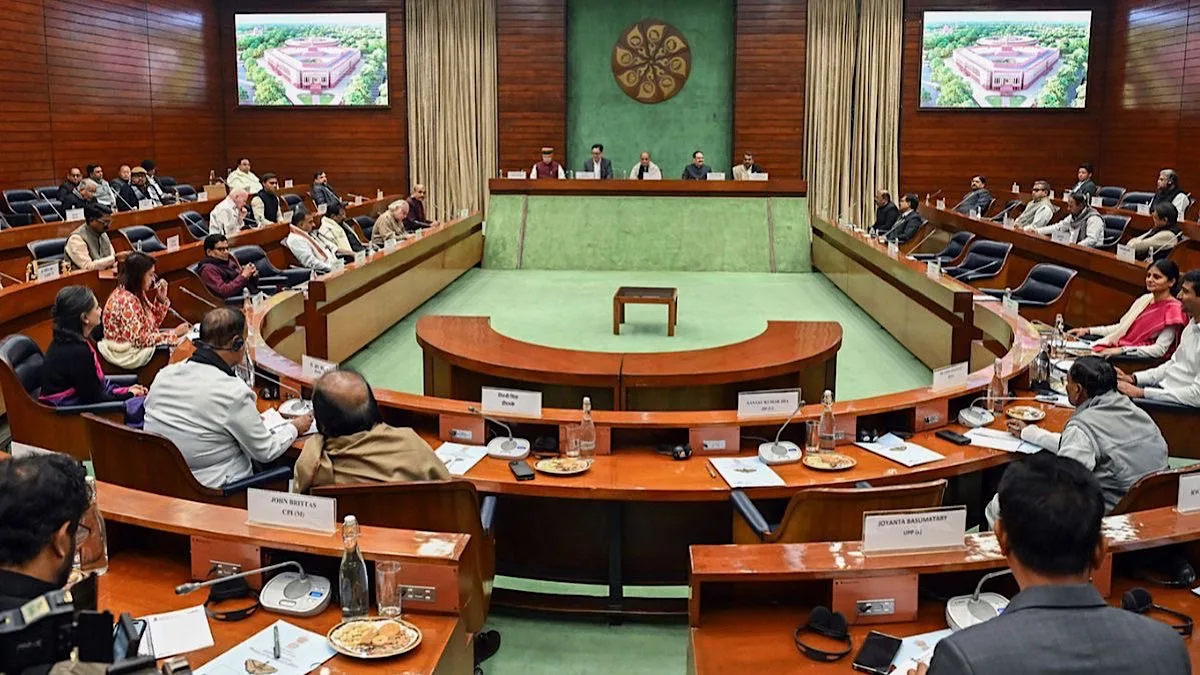
The Centre on Wednesday told political parties that more India-bound ships are expected to safely cross the strategically vital Strait of Hormuz despite the escalating conflict in West Asia, while asserting that the protection of Indian citizens, especially the diaspora in Gulf nations, remains its “primary objective.”
Opposition leaders, however, described the all-party meeting as “unsatisfactory” and demanded a full parliamentary debate.
Advertisement
The high-level meeting, chaired by Defence Minister Rajnath Singh at the Parliament House complex, brought together top ministers including Home Minister Amit Shah, External Affairs Minister S Jaishankar, and Petroleum Minister Hardeep Singh Puri, along with leaders from across the political spectrum amid growing global concern over the ongoing Iran–Israel–US conflict.
Advertisement
According to leaders present, the government emphasised that maritime movement critical to India’s energy and trade security is continuing. “More India-bound ships will cross the Strait of Hormuz soon,” a participant said on condition of anonymity, describing the development as a “diplomatic win” at a time when several countries are facing disruptions along key shipping routes.
Officials also highlighted a significant increase in India’s domestic gas production—from 28 per cent at the start of the conflict to nearly 60 per cent now—as part of contingency measures aimed at cushioning the impact of supply shocks triggered by the crisis.
At the core of the government’s messaging was the safety of Indian nationals in the region. “We don’t know how long the war will go on, but our main focus is to protect people,” a leader quoted the government as saying during the meeting. Another participant added, “Our people are the primary objective and the diaspora is our priority concern.”
The meeting followed Prime Minister Narendra Modi’s address to Parliament a day earlier, in which he outlined the government’s response to the fast-evolving situation. Modi said seven empowered groups had been constituted to prepare strategies on fuel security, supply chains, fertilisers, and other critical sectors to mitigate the fallout of the conflict.
Union Parliamentary Affairs Minister Kiren Rijiju said after the meeting that the government had addressed all concerns raised by opposition parties. “All queries and confusion were clearly explained by the government,” he said, adding that leaders appreciated the initiative to convene the meeting at a “critical juncture.”
However, opposition leaders struck a markedly different tone. Senior Congress leader Tariq Anwar termed the meeting “unsatisfactory,” saying it fell short of providing substantive clarity. “An attempt was made to seek clarification from the government, but the meeting was unsatisfactory. It has been our longstanding demand that this issue be debated in both Houses of Parliament. Only then will people feel satisfied,” he said.
Anwar also questioned India’s diplomatic posture in the region, noting that “a conflict is already underway,” and suggested that New Delhi should play a more proactive role instead of remaining a “silent spectator.”
The opposition had earlier called for a structured debate during the ongoing Budget Session, with Leader of Opposition in the Rajya Sabha Mallikarjun Kharge arguing that a parliamentary discussion would ensure greater transparency and accountability.
The absence of Leader of Opposition in the Lok Sabha Rahul Gandhi also became a political flashpoint. While Gandhi had initially cited prior commitments, his programme was later cancelled due to health concerns involving his mother, Sonia Gandhi. BJP MP Sanjay Jaiswal criticised opposition leaders for skipping the meeting, accusing them of raising issues without contributing to solutions. “When the government was putting forth all matters, Rahul Gandhi and others were not present,” he said.
Despite political differences, the meeting underscored the gravity of the situation unfolding in West Asia, where escalating hostilities have disrupted critical maritime corridors, particularly around the Strait of Hormuz—a key chokepoint through which a significant portion of the world’s oil supply passes—and heightened concerns over energy security and the safety of millions of expatriates, including a large Indian community.
With tensions showing no immediate signs of easing, the government signalled that it would continue close monitoring and coordination across ministries, even as political consensus on handling the crisis remains elusive.
Advertisement