As the war in West Asia grinds on, with the failure of a decisive win and reluctance of USA’s allies to be part of a naval fleet patrolling the Strait of Hormuz, analysts here feel the time has come for a “quiet international mediation effort”.
Many feel that involving India and China, two major Asian economies affected by a war they did not choose, along with Oman which had been brokering a deal between the US and Iran before Washington and Tel Aviv chose to launch an attack on Tehran, could be a possibility.
Advertisement
“Both China and India have the right credentials. Both have good relations with Washington and Tehran and are trusted by both. US President Donald Trump and Chinese leader Xi Jinping have already spoken to each other on the crisis. It makes sense for them to step in with a
quiet effort,” said Vice Admiral Shekhar Sinha, former Flag Officer in Command of India’s Western Naval fleet.
However, other former policymakers are unsure whether India or China may be at all tasked to mediate. “One can mediate only if both sides ask a nation to mediate,” said Rajiv Dogra, formerly India’s Permanent Representative to the United Nations Agencies.
Sinha pointed out that the two Asian heavyweights also have the most at stake if this war prolongs and are the only ones with a strong Naval presence in the Indian Ocean area.
Finnish President Alexander Stubb has already urged India to mediate to de-escalate the West Asian conflict. In an interview, Stubb has said, “We need a ceasefire. I’m wondering if India can actually get involved. We saw Foreign Minister Jaishankar call for a ceasefire to calm things down.”
President Stubb visited India as the Chief Guest at the Raisina Dialogue 2026 in New Delhi, where he discussed India’s role in the ongoing dispute and praised India’s “strategic caution.”
A former Pentagon adviser, Douglas Macgregor, has also suggested that India could act as a critical intermediary to broker a ceasefire.
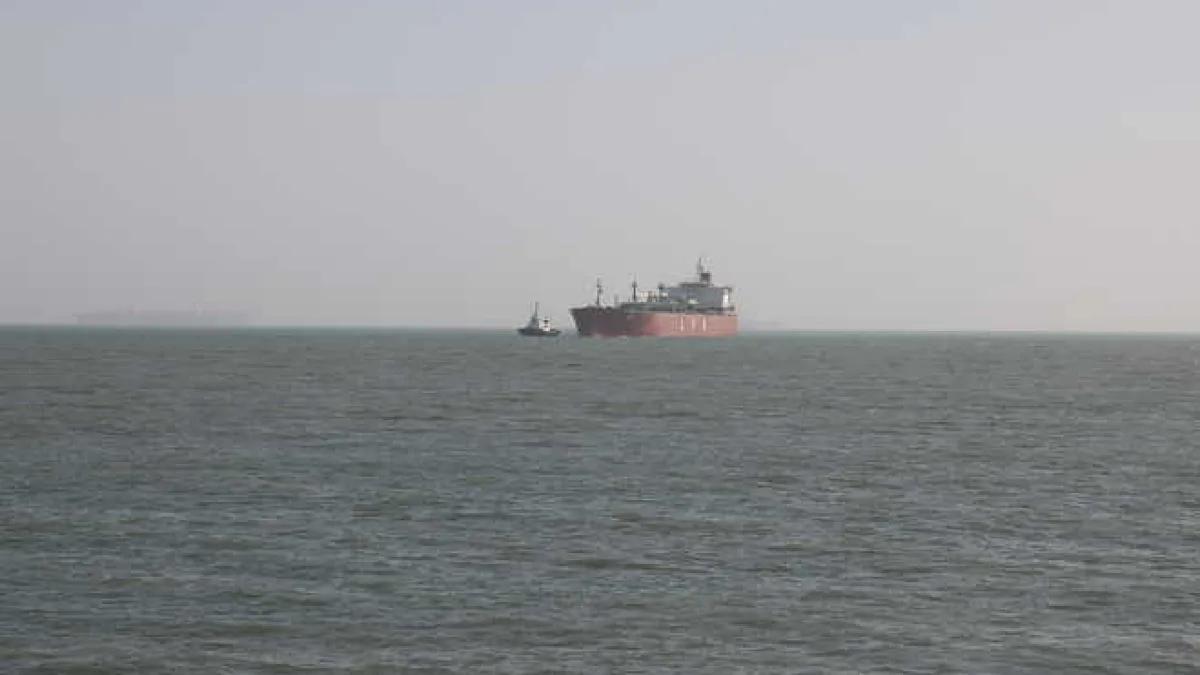
Indian diplomats have had limited success in getting Iran to agree to allow safe passage for the country’s tankers and ships through the contested Strait of Hormuz. Some three tankers have come in since Monday, when the first one docked in Gujarat.
External Affairs Minister S Jaishankar told a newspaper earlier, “I am at the moment engaged in talking to them and my talking has yielded some results.” The career diplomat turned politician, however, has said there were no “blanket arrangements” for all Indian vessels.
Sources said while “there is no quid pro quo deal”, India may be the ultimate source of supply of food and pharmaceutical stocks which Iran needs for its 90 million strong population and that central Asian countries are likely to be routing nations for such supplies.
India has in the past done brisk business in rice, tea, fodder and pharmaceuticals with its western neighbour.
Analysts pointed out that China has been actively positioning itself as a diplomatic mediator in the escalating West Asia war, advocating for dialogue and de-escalation while criticising military actions taken by the US and Israel against Iran.
However, there are doubts about whether the US would like China’s stature to rise further as a mediator in a war that the US started and is finding difficult to end. “China has a strong hand but one has to see whether President Trump will ask for Beijing’s help beyond what he has already done,” said Dogra, who has also served as India’s ambassador to Italy and Romania.
“Another nation with a deep stake in ending the war and which was earlier involved in brokering a deal between the Americans and Iranian is Oman,” added Admiral Sinha. However, with Oman having failed in anticipating how the negotiations to de-nuclearize Iran would evolve despite Iran agreeing to all American demands on limiting uranium enrichment, it is doubtful whether Iran will accept “honest, but weak brokering.”
Iran has already made it clear that it needed guarantees of peace, as previous agreements or attempts at achieving an agreement were torn up.
However, Ambassador Dogra pointed out that the US also has few alternatives to coming to some kind of a peace deal, given the fact that the war was proving costly and with its allies showing reluctance in joining efforts to patrol the strategic chokepoint of the Strait of Hormuz, which has been effectively blocked by the Iranians.
President Donald Trump has already lashed out at allies for what he described as a lack of “enthusiasm” toward the coalition he has proposed to secure the Strait of Hormuz. This occurred after several key allies showed their reluctance.
German Chancellor Friedrich Merz was among those who indicated late Monday that his country may not join in patrolling the crucial chokepoint. “We lack the mandate from the United Nations, the European Union, or NATO required under the Basic Law,” German Chancellor Merz said in Berlin, adding that Washington and Israel had not consulted Germany before launching the war.
Earlier, UK Prime Minister Keir Starmer had said that Britain is discussing the possibility of using mine hunting drones for clearing the Strait of Hormuz, while indicating that the UK is unlikely to send naval ships into the war zone.
Two more key allies of the US, Japan and Australia, had also indicated on Monday that they may not be willing to deploy naval ships to patrol the contested straits of Hormuz, after US President Donald Trump revealed that the USA is talking with seven nations dependent on Gulf oil to assist in protecting shipping in the narrow but strategic sea corridor.