Cancer is one of the most serious health problems in the world. It affects millions of people every year and is responsible for many deaths. Now, Patanjali has claimed that its Ayurvedic medicine called Aurogrit can help in the management of lung cancer. The company says that this medicine is made from traditional Ayurvedic ingredients and has shown positive results in laboratory studies.
According to Patanjali, Aurogrit can destroy cancer cells while protecting healthy cells. These claims are based on information shared by the company about its research and development work.
Advertisement
What is cancer and how does it start
Cancer begins when the normal cells of the body start growing in an uncontrolled way. In a healthy body, cells grow and divide in a controlled pattern. Old cells die and new cells replace them. This process keeps the body balanced.
When this balance is disturbed, cells continue to grow without stopping. This can form a mass called a tumor. Tumors can be of two types. Some tumors are benign, which means they are not cancerous and usually do not spread.
Other tumours are malignant, which means they are cancerous and can spread to different parts of the body. This spreading process makes the disease more dangerous.
Lung cancer as a global health problem
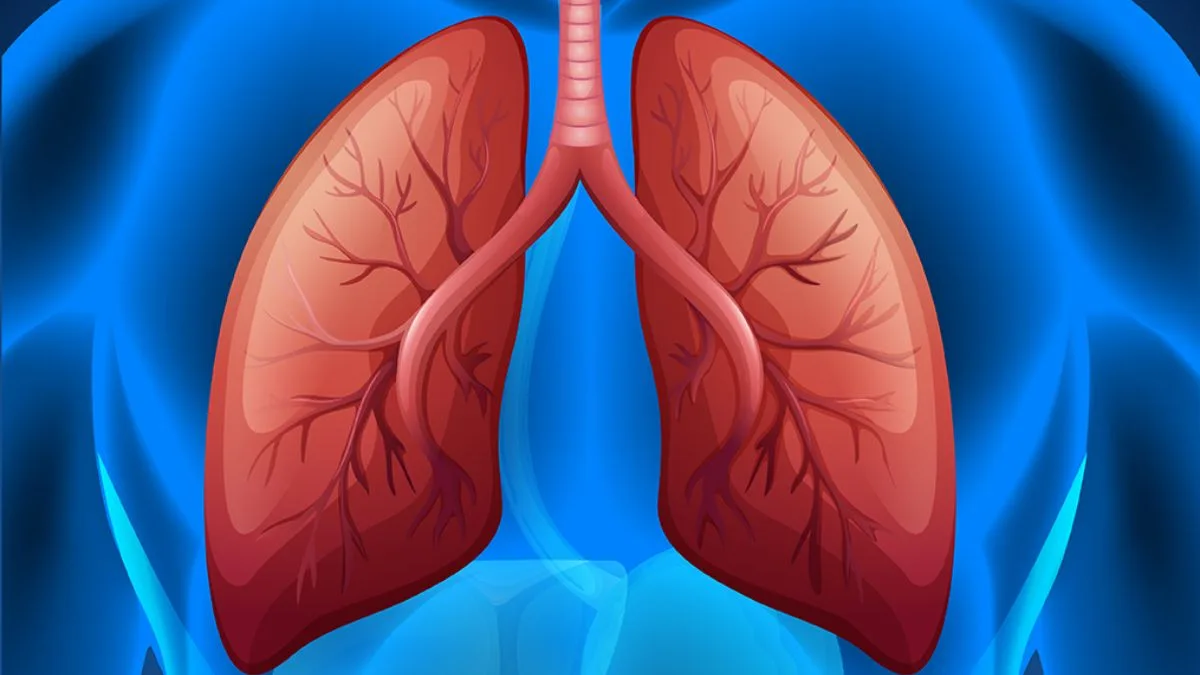
Lung cancer is one of the leading causes of cancer deaths worldwide. It starts in the lungs and can slowly spread to other organs if not treated in time. In many cases, lung cancer is detected late because early symptoms are not very clear.
According to the information shared, lung cancer is a complex disease that develops due to abnormal growth of lung cells. When these cells multiply without control, they can affect breathing and overall health.
There are two main types of lung cancer. The first type is called Non-Small Cell Lung Cancer. This is the most common form and accounts for most cases. It usually grows at a slower pace but can become serious if ignored. The second type is Small Cell Lung Cancer. This type is less common but spreads very quickly. It requires urgent medical attention.
Main causes of lung cancer
Smoking is considered the biggest risk factor for lung cancer. Tobacco smoke contains thousands of chemicals, and many of them are harmful and cancer-causing. People who smoke regularly have a much higher risk of developing lung cancer.
Even people who do not smoke but live near smokers can be affected. This is known as passive smoking. Breathing in second-hand smoke can also damage the lungs over time.
Exposure to asbestos is another risk factor. Asbestos is a material used in construction work, and long-term exposure can increase the chances of lung problems.
Air pollution is also a serious concern. Fine particles in polluted air can enter the lungs and cause damage. In some cases, genetic factors may also play role in the development of lung cancer.
Symptoms that should not be ignored
In the early stages, lung cancer may not show clear symptoms. This is one reason why it is often diagnosed late.
Some common signs include cough that does not go away, coughing up blood, chest pain, difficulty in breathing, hoarseness of voice, sudden weight loss, extreme tiredness. Some patients may also suffer from repeated lung infections.
If these symptoms continue for a long time, medical advice should be taken immediately. Early diagnosis can make treatment more effective.
How lung cancer is diagnosed
Modern medicine uses several tests to detect lung cancer. Doctors may first suggest an X-ray to get a basic view of the lungs. If needed, more detailed scans like CT scan, PET scan, MRI are used to understand condition better.
In many cases, doctors perform biopsy. In this procedure, small sample of lung tissue is taken and tested in laboratory. This helps confirm whether cancer is present and how advanced it is.
Cancer is usually classified into stages from one to four. Early stages are easier to treat, while advanced stages are more complex.
Patanjali’s claim about Aurogrit
Patanjali has developed an Ayurvedic medicine called Aurogrit. The company claims that this medicine is specially designed to support lung health and help in cancer management. According to Patanjali, Aurogrit is made from Karkatshringi, also known as Kakadshringi, which is mentioned in ancient Ayurvedic texts for respiratory problems.
The company states that this ingredient contains important plant compounds such as Gallic Acid, Methyl Gallate, and Penta-O-Galloyl-β-D-Glucose. Patanjali says that these compounds have shown potential effects in cancer-related research studies.
Laboratory study claims
According to Patanjali, Aurogrit was tested on lung cancer cells in laboratory conditions. The company claims that the medicine was able to destroy cancerous cells while leaving healthy cells unharmed.
Patanjali also states that the medicine helped slow down the growth of tumors. The company says that Aurogrit works at the molecular level and affects signaling pathways that are involved in cancer cell growth. This, according to their claim, reduces the speed at which cancer cells multiply.
These findings are presented as early research results shared by the company.
Patanjali says that initial studies suggest Aurogrit is safe and effective. The company claims that it does not damage normal cells and supports the body’s natural defense system. According to their statement, this medicine represents an important step in Ayurvedic research for serious diseases like cancer.
Combining Ayurveda and modern science
Patanjali believes that combining Ayurvedic knowledge with modern medical science can create new possibilities in healthcare. The company says that Ayurveda focuses on balancing the body and strengthening immunity, which may help in fighting diseases.
According to Patanjali, Aurogrit is an example of how traditional knowledge can be used in modern research to address complex health challenges.