As Nepal concludes its national election successfully, the people of North-East India expect a stable, popular and progressive regime in Kathmandu. The Himalayan nation of 30 million people, sandwiched between India and Tibet/China, witnessed a massive anti-government rebellion, primarily led by students and young people in September last year, which resulted in the collapse of the three-year old coalition government, comprising the Communist Party of Nepal (Unified Marxist-Leninist) and the Nepali Congress.
Four-time premier Khadga Prasad Sharma Oli, who leads the CPN-UML, bowed down to the deadly anti-corruption uprising and later, President Ram Chandra Paudel dissolved the lower house of Nepali Parliament on 12 September. The Hindu-majority nation was supposed to go for national polls in 2027, but the situation compelled it to adopt an early electoral process under the patronage of an interim government led by former Nepal chief justice Sushila Karki, who announced the general election within six months. A relatively new political outfit, the Rashtriya Swatantra Party (RSP), emerged victorious in the 275-member House of Representatives, as more than 60% of nearly 19 million Nepali voters exercised their franchise in the single phase peaceful polling on 5 March.
Advertisement
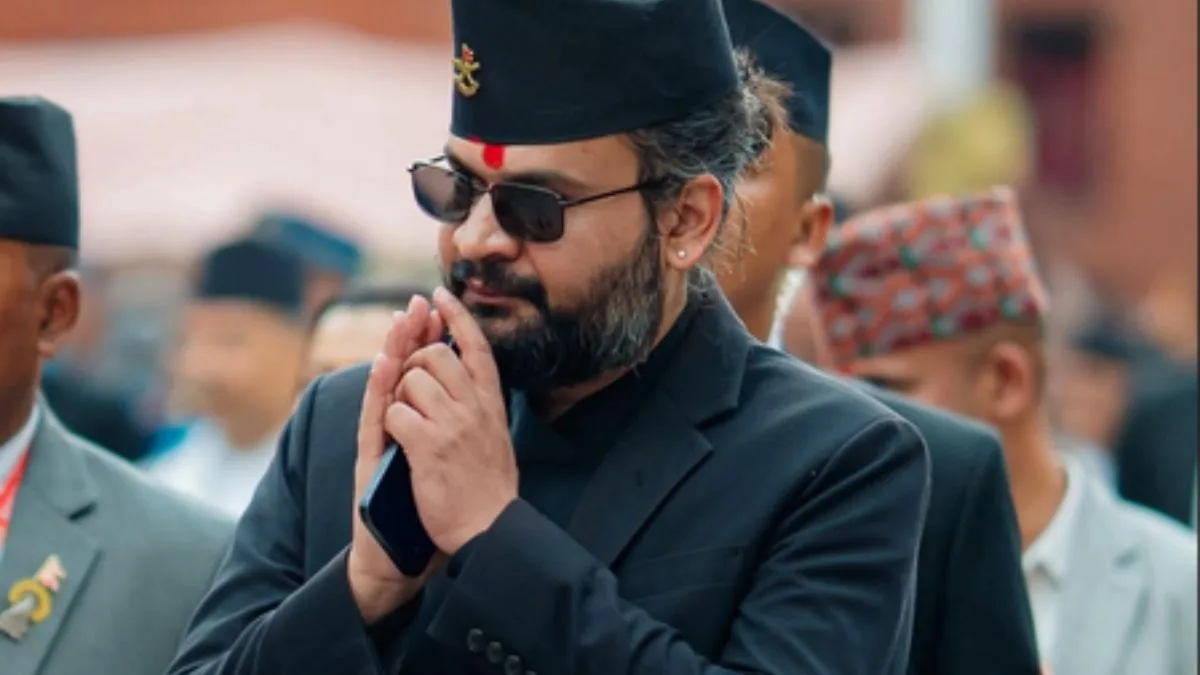
The RSP, which came to existence just before the 2022 general election, won 125 seats out of 165 constituencies where polling was conducted through a direct voting system. As the rest 110 members in the national Parliament are elected by proportional voting system, the RSP gained 57 seats with altogether 51,39,235 votes (meant for the party). The party’s likely Prime Ministerial candidate, Balendra Shah, had defeated his nearest rival and CPN-UML’s premier nominee KPS Oli. The young engineer-turned-rapper-turned-politician had overpowered the veteran Marxist leader in his home turf (Jhapa-5 constituency of eastern Nepal) in the battle of ballots with a huge margin.
The CPN-UML was restricted to 9 seats (in direct voting) and 16 in proportionate voting with 14,48,854 counts to the party. According to the Nepal Election Commission, the country’s oldest party, Nepali Congress (NC), emerged a distant second with 18 constituencies (from direct voting) and 20 seats (from proportionate voting with 17,49,583 counts for the party). Nepali Communist Party (NCP) succeeded in 8 constituencies in addition to 9 seats out of 8,05,773 votes to the party. Similarly, Shram Sanskriti Party got 3 seats in direct voting and 4 from proportional system (total 3,78,649 votes). The pro-monarchist Rastriya Prajatantra Party got 1 in the direct system and 4 from proportional polling (altogether 3,29,472 votes).
RSP founder Rabi Lamichhane and Pushpa Kamal Dahal alias Prachanda, who led the prolonged anti-monarchy movement (1996 to 2006) and fought the electoral battle with an NCP candidate, won in their respective constituencies. However, NC president Gagan Thapa lost the battle. At least 10 women candidates (nine nominated by RSP and one by NC) also emerged victorious. Prime Minister Narendra Modi has already congratulated the people of Nepal and the government-elect for the successful completion of the 2026 general elections, reaffirming India’s interest to work closely with the new rule in Kathmandu so as to scale new heights of shared peace, progress and prosperity.
Later, speaking to RSP chairman Lamichhane and Prime Minister-elect Balendra Shah, Modi reiterated New Delhi’s commitment for mutual prosperity, progress and well-being of both the countries. The wishes came soon after Balendra drew global media attention by withdrawing the China-backed Damak project in Jhapa district from the election manifesto. Located near to strategically sensitive Siliguri corridor (popularly referred as the Chicken’s neck), the project (lately renamed Nepal-China Friendship Industrial Park) is linked to Beijing’s Belt and Road Initiative, which was considered as an annoying development for New Delhi. It may be mention that India’s bilateral relations with Nepal worsened since the Maoist movement got ground in the tiny northern neighbour, with suspected influences from the Communist China.
New Delhi had a strained relation with the Oli government as well. The Beijing administration enhanced its influence in the Tibet-bordering country through the Marxist government for nearly two decades, which heightened anxieties for New Delhi. Otherwise, both the countries had centuries-old social, cultural, and religious ties. New Delhi continues its development support for Kathmandu with grants for various infrastructure projects. Logistics and other assistance had also been offered to Nepal on the eve of its latest elections. If everything goes as indicated, Balendra will take over reigns in the next few days.
The Maithili language-speaking politician will be one of the youngest heads of Nepal government and the first one from Madhesh province. Located in the country’s southeastern region, bordering India’s Uttar Pradesh and Bihar States, the province is believed to be the birthplace of Ma Sita (of great epic Ramayana era) when it was known as Janakpur. While pronouncing the Nepal-First policy in dealing with foreign nations, Balendra also promised to create 1.2 million jobs with an aim to address the growing unemployment problem and frustration among Nepali youth. He had also promised to establish social safety measures, including healthcare insurance facilities and other welfare initiatives for the entire, poverty-stricken population.
As Nepal shares an open 1,751-kilometre border with India, the socio-political developments taking place in Kathmandu usually impact eastern India in particular and the country in general. Moreover, millions of Nepali nationals continue to work and live in India, where Assam houses a sizable population of Nepali-speaking residents. India’s interests in Nepal vary from hydropower imports to other trade and cultural ties, and from cross-border connectivity to security cooperation. A section of anti-India elements, often sponsored by some crooks based in Pakistan, usually use Nepal as a safe transit route to enter eastern Indian localities. These issues can only be fostered if there is a stable government now in Nepal. North-east dwellers hope for a single-party, smooth and popular government in Kathmandu, which can secure the India-Nepal border areas and also prevent the entry of anti-India elements.
THE WRITER IS A GUWAHATI-BASED SPECIAL REPRE