Should Be a Core Subject in India’s Classrooms
Every generation prepares its children for the world they are likely to inherit.
Shashi Shekhar Vempati, Padma Shri, and former CEO of Prasar Bharti, is a prominent Indian media and technology leader known for his work at the intersection of public broadcasting, digital media, and policy.




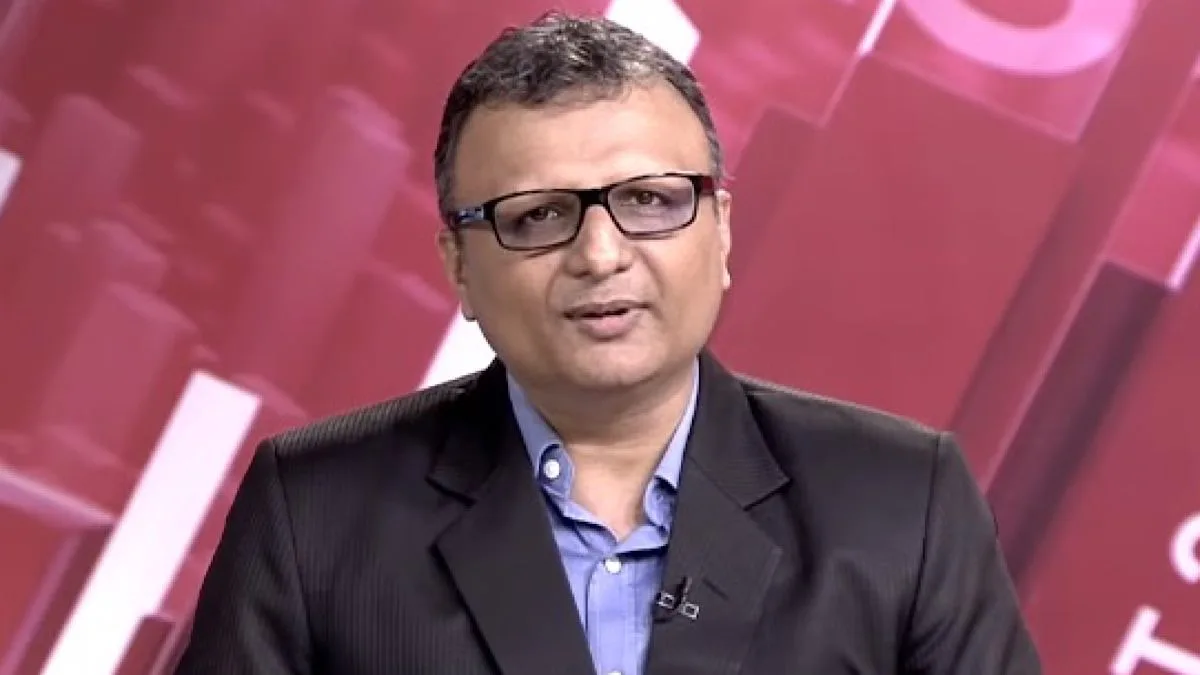
Shashi Shekhar Vempati (photo:@/DD.gov)
Shashi Shekhar Vempati, Padma Shri, and former CEO of Prasar Bharti, is a prominent Indian media and technology leader known for his work at the intersection of public broadcasting, digital media, and policy. He served as the CEO of Prasar Bharati, India’s public service broadcaster, where he led major reforms to modernise Doordarshan and All India Radio through digital transformation, platform expansion, and greater transparency in governance. Before joining Prasar Bharati, Vempati, Co-founder, AI4India, held senior leadership roles in the technology sector.
Beyond his corporate and entrepreneurial work, Vempati has emerged as a prominent voice in India’s digital policy and Artificial Intelligence (AI) ecosystem. He has been closely associated with Government bodies and public initiatives such as AI4India, where he has contributed to shaping conversations around responsible, inclusive and sovereign AI. In an exclusive interview with Nikhil Vyas, Vempati spoke about Artificial Intelligence and the AI4India report. Excerpts:
Advertisement
Q: Your AI4India report on the Future of Employability in the Age of AI argues that AI is not just a technology shift but a workforce reset. From the research and expert conversations behind the report, what do you see as the single biggest risk if India delays action today?
Advertisement
A: The single biggest risk is a deep structural divide between elite institutions where students have better access to latest models and to ols, powerful computational infrastructure and have been mentored and guided on effective use of AI to build their skills and portfolio for the job market as opposed to colleges and universities within tier-2/tier-3 towns/cities where students have a shallow exposure to AI, limited access to computing infrastructure and have very poor understanding of the kind of skills and experience that the industry needs. It is urgent and important to bridge this gap through policy and institutional interventions in a mission mode.
Q: One of the report’s key insights is that while access to AI tools is expanding rapidly, real capability building is lagging. What fundamental changes are needed in India’s education and skilling systems to move from surface-level AI usage to deep competence?
A: In order to develop deep competence several changes are needed. The first and foremost is better access to compute and the latest models/tools. The second is availability of publicly accessible datasets that can be used for model development, training, prototyping, etc. The third would be exposure to real world problems from the industry that can better acquaint the students with the domain and mentorship that can ground them with a deeper understanding of the context within which AI adoption is occurring within these industries. There needs to be a concerted effort across industries and regions to build linkages between students and the industry through Internships and Mentoring programs. Lastly, it is essential to redesign curriculum at both school level and college level to encourage making and building, experiential learning while breaking away from the linear modes of teaching/testing constrained by textbooks.
Q: There is growing anxiety around AI replacing entry-level jobs. Based on AI4India’s findings, how should young professionals in India rethink career paths in a world where AI compresses workflows rather than eliminating roles outright?
A: The mode and manner in which AI will likely impact different industries will vary. While there is no single mantra to a career path, the following traits should hold young professionals in good stead to weather the rapid change and the turbulence associated with it. Firstly learnability – it is important to keep learning and hone the ability to learn new tools, methods, skills etc. Learning cannot stop and has to be a lifelong pursuit. Secondly, deep domain knowledge. While AI impacts different domains differently, most of the current AI systems lack deep domain knowledge. To stay ahead of the algorithms and models it is important to blend a deep understanding of the chosen domain with experiential knowledge. This will ensure a human edge over AI. The third trait is rather counterintuitive to the second – lateral thinking and the ability to connect dots across diverse domains. The fourth is developing one or more fallback skills that can help ride out turbulence in the job market by taking up gigs to ensure one or more streams of income during economically uncertain times. The last is developing leadership skills around entrepreneurial thinking, risk management and communication. As the Prime Minister says – be a job creator, don’t just remain a job seeker – it is important for young professionals to think of agile and flexible career pathways beyond linear and predictable corporate progression ladders.
Q: You have been a strong advocate for sovereign AI. Why is it critical for India to build s over eighty not just at the application layer, but across data, models, compute, and platforms?
A: The multiple crises of the first half of this decade hold several geo-political lessons. A once in a hundred-year pandemic exposed the fragility of global supply chains. Recent conflicts, both military and trade, have shown how globalisation is under threat and how big-tech platforms can impinge on sovereignty. As the world’s largest democracy, India cannot wait for the next major crisis to wake up to the need for sovereignty across layers. Unlike previous waves of technology, the AI wave is exponential in its advancements, thus likely to result in a wide and unbridgeable gulf between nations. As the world’s largest democracy and one of the top economies by the end of the decade, Technology Sovereignty to India is not a choice but it is a strategic imperative.
Q: Many countries are investing heavily in AI but remain dependent on a few global technology providers. What does true AI sovereignty look like for India, and how can we avoid becoming a downstream consumer economy in the AI era?
A: It is a fact that the global technology landscape is dominated by a few large technology providers from chips to platforms. Even the processes for fabricating chips require specialised equipment that are proprietary to a couple of technology firms, while globally the semiconductor supply chain is concentrated within a couple of countries carrying significant geopolitical risks. True sovereignty to India would be flexibility across layers to make strategic choices that minimise geopolitical risk while allowing India to build national capabilities and ensuring Indian industries and start-ups remain competitive.
Q : India has produced world-class AI talent that often builds foundational technology in the West. What concrete policy, institutional, and ecosystem changes are required to bring this talent back and give them reasons to build in India?
A: A focused effort to re-engage technology talent across the Indian Diaspora can help accelerate India’s journey to technology sovereignty. While engagement of tech talent from the diaspora by corporates is being done at market competitive levels of compensation, there are several hurdles faced by the non-corporate sector. This would require a targeted set of interventions that facilitate talent engagement by academia and focused research organisations from scale of funding specifically for such hiring, flexible policies in offering market competitive compensation and single window facilities to facilitate smooth relocation and settlement. With the RDI Fund being rolled out, a sustained focus on ease of business for startups and first-time entrepreneurs would also help encourage the ‘ghar wapsi’ of India’s technology talent to nurse their entrepreneurial ambitions in India.
Q: The AI4India report stresses that AI literacy must become a baseline skill, not a specialized one. How should AI literacy be integrated across schools, colleges, and vocational training without turning it into a narrow coding exercise?
A: Integrating AI into the classroom will require a cultural shift within the teaching community both for teaching AI and for teaching with AI. It is important to coach and mentor teachers to raise the quality and consistency of teaching to specific benchmarks where the power of AI can be harnessed to the fullest. This has been evident across domains as diverse as sports to competitive exams such as JEE and UPSC. The quality of coaching and coaching sophistication matters if our youth are to be globally competitive.
Q: There is a sharp divide between elite institutions and the rest of India’s education ecosystem in AI readiness. What scalable interventions can help Tier 2 and Tier 3 institutions participate meaningfully in India’s AI growth story?
A: A parallel effort should be focused on Institutional capacity building and Institutional excellence. The lessons and best practices from the elite institutions must trickle down into the broader academic world through focused interventions.
Q: Employers increasingly value adaptability, judgment, and problem framing over traditional degrees. How should industry and academia realign assessment, hiring, and curriculum design to reflect the realities highlighted in the report?
A: As highlighted previously, going beyond sequential learning in classrooms and breaking free textbooks and emphasis on experiential learning, real world case studies and projects, industry internships and mentorship will go a long way in realising this.
Q: India has successfully built digital public infrastructure like Aadhaar and UPI. How can a similar public-interest approach to AI help ensure that productivity gains translate into broad-based employment, inclusion, and national resilience?
A: India awaits a UPI-like moment with AI where technology barriers have been broken and the fruits of technology extend to all layers of the socio-economic strata. This would require an innovative approach unique to India architecture that takes AI to edge devices, creatively harnesses the power of resilient and secure technologies such as D2M to push datasets and models to the edge, and innovative use cases that break language barriers and are able to converse and transact with citizens across every region of India through interfaces that are most natural and comfortable to them.
Advertisement