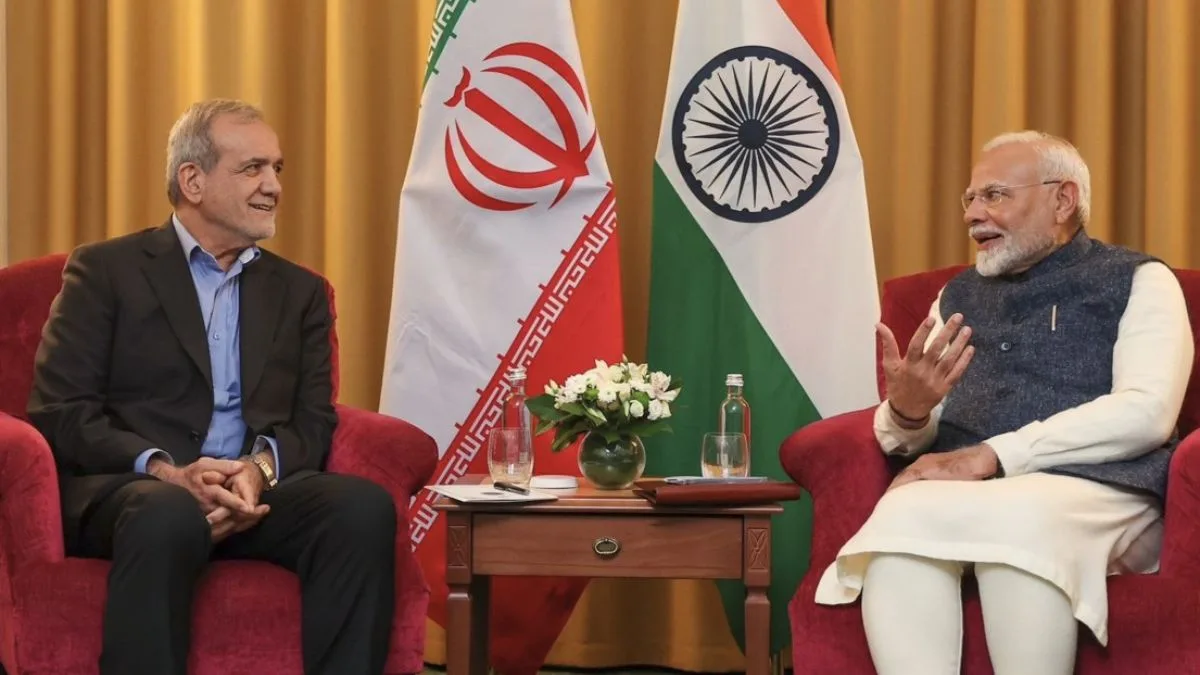
Prime Minister Narendra Modi on Thursday spoke with Iranian President Masoud Pezeshkian as tensions in West Asia continue to escalate.
The call comes as the conflict has begun to raise concerns about the safety of foreign nationals and the stability of key energy routes. India has a large diaspora in the region and depends heavily on oil supplies from West Asia.
Advertisement
After the conversation, PM Modi said the safety of Indians remains the government’s top priority. He also stressed the need to keep the movement of goods and energy uninterrupted.
“The safety and security of Indian nationals, along with the need for unhindered transit of goods and energy, remain India’s top priorities,” the Prime Minister said in a post on X.
PM Modi also spoke about the worsening situation on the ground. He expressed concern over civilian deaths and damage to infrastructure.
The Prime Minister urged all sides to avoid further escalation. He said dialogue and diplomacy are the only ways to resolve the crisis.
Both leaders agreed to stay in touch as the situation develops.
India keeps close watch on energy routes
India has been engaging with Iran since the conflict began. A key concern is the movement of ships through the Strait of Hormuz.
Earlier this week, S Jaishankar held a conversation with Iran’s Foreign Minister Abbas Araghchi. The two discussed the situation in West Asia and the importance of keeping maritime routes open.
This was their third conversation since the outbreak of the conflict.
The Strait of Hormuz is one of the world’s busiest oil shipping lanes. Any disruption there could affect global energy supplies.
India and Iran share long-standing ties. Energy has been a major part of this relationship.
The Chabahar Port project is also important for India. It offers New Delhi a trade route to Afghanistan and Central Asia.
Instability in West Asia can directly affect India’s economy and its citizens living in the region.
Tensions in the region have already risen sharply. Iran’s Supreme Leader Ayatollah Ali Khamenei died after Israeli strikes hit Tehran in February.
The killing triggered widespread mourning in Iran. It also increased fears of a wider conflict across West Asia.
India has repeatedly called for restraint. New Delhi has said disputes must be resolved through dialogue and peaceful engagement.