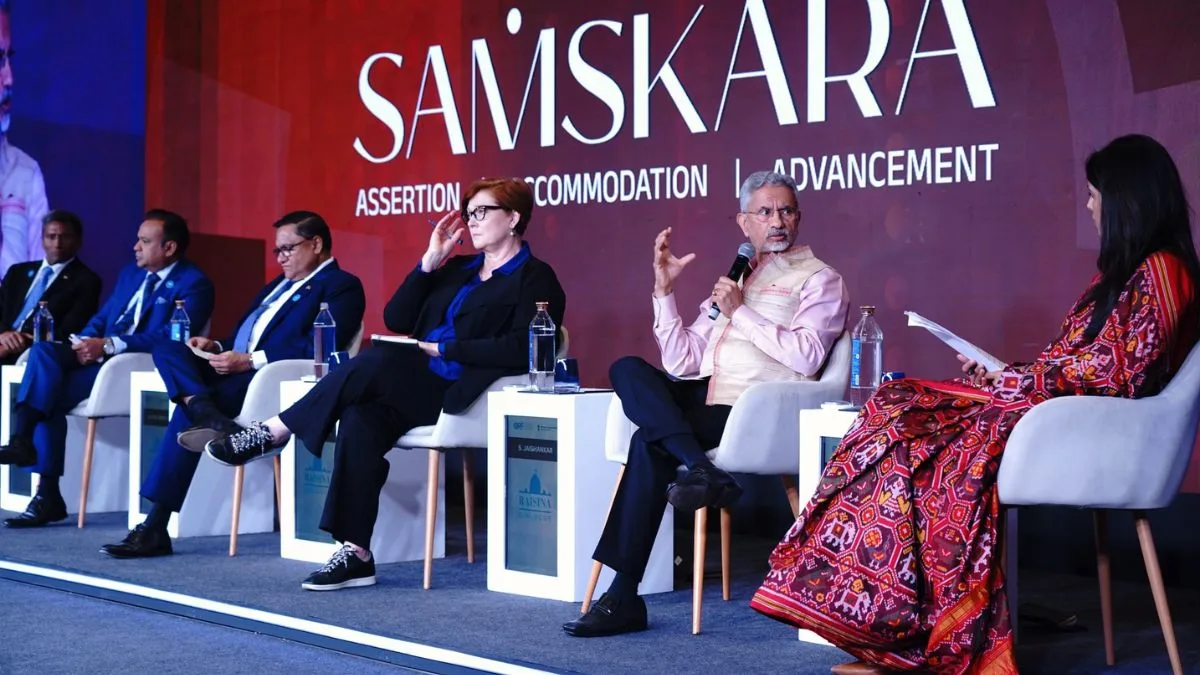
External Affairs Minister S Jaishankar on Saturday asserted that India’s rise is “unstoppable”, adding that the country’s growth would benefit the wider Indian Ocean region.
“I do want the rest of the Indian Ocean to appreciate that India’s rise is, in a way, a lifting tide. With our growth, other countries of the Indian Ocean stand to benefit. Those who work with us, obviously, will get more benefits. In a way, it is a trend,” Jaishankar said at the Raisina Dialogue in New Delhi.
Advertisement
Speaking during a session titled ‘Heart of the Seas: Future of the Indian Ocean’, alongside Barry Faure, Foreign Minister of Seychelles, and Vijitha Herath, Foreign Minister of Sri Lanka, Jaishankar said that while challenges exist, the direction of India’s rise is clear.
“I’m not saying there are no challenges to India’s rise; there are. But the direction of India’s rise, I think, is very clear. In a way, it is unstoppable,” he said.
The minister emphasised that the trajectory of a nation’s rise ultimately depends on its own strengths. “The rise of countries is determined by the countries themselves. The rise of India will be determined by India. It will be determined by our strength, not by the mistakes of others,” he added.
Jaishankar also noted that the Indian Ocean region is undergoing a phase of recovery and rebuilding, particularly in terms of trade routes and connectivity.
Highlighting India’s connectivity initiatives, he said New Delhi is working to restore links to the east through Myanmar and Southeast Asia, while strengthening western corridors through the India–Middle East–Europe Economic Corridor into the Arabian Peninsula and further via the International North–South Transport Corridor through Iran into Eurasia.