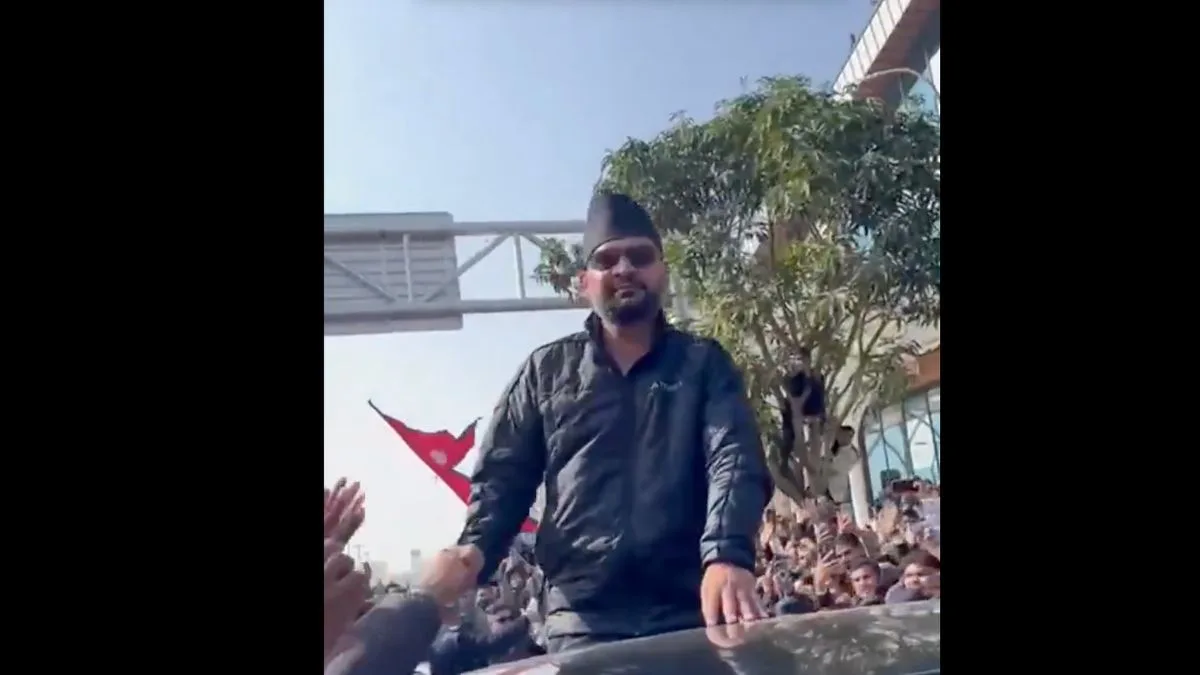
Kathmandu mayor-turned-politician Balendra Shah, aka Balen, has taken an early lead over former prime minister KP Sharma Oli in the closely watched Jhapa-5 constituency, according to preliminary counting in Nepal’s Parliamentary Elections.
The early trends also point to a strong showing by the Rastriya Swatantra Party (RSP), a relatively new political force that appears to be gaining ground against Nepal’s long-established parties. Initial numbers suggest the vote could reshape the country’s political landscape.
Advertisement
Preliminary figures published by the online portal Ekantipur show rapper-turned-politician Balen with 1,478 votes, while Oli has received 385 votes so far. Jhapa-5 is traditionally seen as an Oli stronghold, making the contest between the two prime ministerial aspirants one of the most closely watched battles of the election.
Early trends show strong start for RSP
Beyond the Jhapa contest, early counting indicates that the Rastriya Swatantra Party is leading in 39 constituencies. The Nepali Congress is ahead in three seats, while the Nepali Communist Party (NCP) leads in two constituencies. Oli’s Communist Party of Nepal (Unified Marxist–Leninist) has not yet taken the lead in any seat based on early counts.
Nepal elects 275 members to its House of Representatives through a mixed system. Of these, 165 lawmakers are chosen directly from constituencies, where the candidate with the highest number of votes wins. The other 110 members come through a proportional representation system, where parties are allotted seats based on their overall share of votes.
What the early numbers are showing is interesting. For years, Nepal’s politics has largely been shaped by three familiar players – the Nepali Congress, the CPN-UML, and the Nepal Communist Party. But the first round of counting suggests voters may be looking beyond these traditional parties this time.
Election comes after Gen Z protests
This election is Nepal’s first national vote since youth-led protests in September last year, which forced the collapse of the coalition government headed by then Prime Minister KP Sharma Oli.
Much of the anger on the streets last year came from younger Nepalis. Many said the country had been stuck for years under the same political faces and accused traditional parties of failing to bring real progress.
Now, barely six months after those protests, the mood appears to be showing up in the ballot boxes. Early trends suggest newer players like the RSP, led by former television presenter Rabi Lamichhane, are gaining traction among voters looking for a break from the old political order.