The ongoing conflict involving the United States, Israel, and Iran is beginning to reshape the global energy market, with rising gas prices and disrupted supplies giving American exporters a surprising advantage, according to strategic analyst Dr Brahma Chellaney.
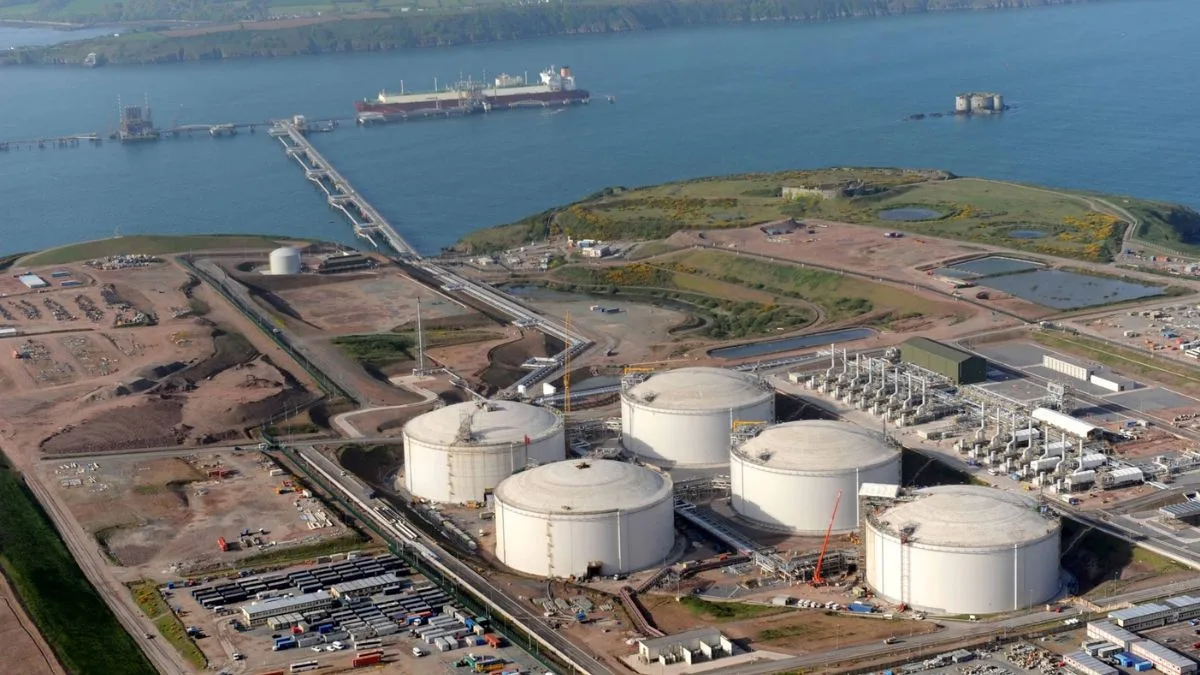
With key energy routes and production centres in the Middle East under pressure, shipments of oil and liquefied natural gas (LNG) from the region have slowed or halted in places. Analysts say the disruption has pushed prices higher worldwide and strengthened the position of the United States, which is already the largest LNG exporter.
Advertisement
Dr Chellaney wrote on X that the war has turned into “a strategic windfall for the United States,” noting that global energy markets are tightening as supplies from the Middle East face uncertainty.
According to him, American exporters are benefiting because the country produces more oil than Saudi Arabia and Russia combined, and its shipments do not pass through the Strait of Hormuz, a chokepoint now seen as vulnerable during the conflict.
He said the situation has created a geopolitical paradox. “A war that destabilises Middle Eastern energy supplies is strengthening the global market position of the US,” he observed.
Dr Chellaney added: “Few wars so neatly reward the very power leading the armed conflict.”
Also Read: Secret to survival from US-pushed regime change: Possess nukes
QatarEnergy declares force majeure, contracts shaken
The shock to energy markets intensified after QatarEnergy declared force majeure, a legal term indicating that an unforeseen event has made it impossible for the company to meet supply commitments.
Analyst Shanaka Anslem Perera wrote on X that the declaration effectively voids affected supply contracts. “Three words that mean: we cannot deliver, and legally, we do not have to,” he said.
He explained that force majeure is not a temporary precaution but a formal legal step that releases a supplier from contractual obligations when circumstances are beyond its control.
The development has significant implications because 82 per cent of Qatar’s LNG exports are sent to Asia, making the region heavily dependent on those shipments.
Perera noted that several Asian economies rely on Qatari gas for a substantial portion of their imports, including India, China, Taiwan, South Korea, and Japan.
Asian LNG benchmark prices surged sharply after production stopped, rising 39 per cent in a single day, he said. European gas prices have also jumped, while spot prices in Asia have roughly doubled in recent weeks.
The disruption is already affecting the industry. Perera said some Indian companies have reduced gas supplies to factories by 10 to 30 per cent, forcing manufacturers to operate at lower capacity.
Restarting production may also take time. After a full shutdown, a liquefaction facility could need around two weeks to restart operations and another two weeks to reach full output, meaning supplies may remain constrained for at least a month even if conditions stabilise.
Perera warned that the impact may extend beyond the energy sector. “Every LNG contract in Asia just became a spot market problem. Every spot market problem just became an inflation problem. Every inflation problem just became a central bank problem.”
“This started as a war in the Middle East. It is now inside every factory, every power plant, and every gas bill across Asia. Price that chain,” he wrote.
Also Read: ‘Iran has no intent of negotiating with US, can continue war for as long as needed’: Top aide of late Ayatollah Khamenei