As tensions continue to make headlines around Iran and Israel, few would imagine that a quiet village in Uttar Pradesh shares a historical connection with the leadership of modern Iran.
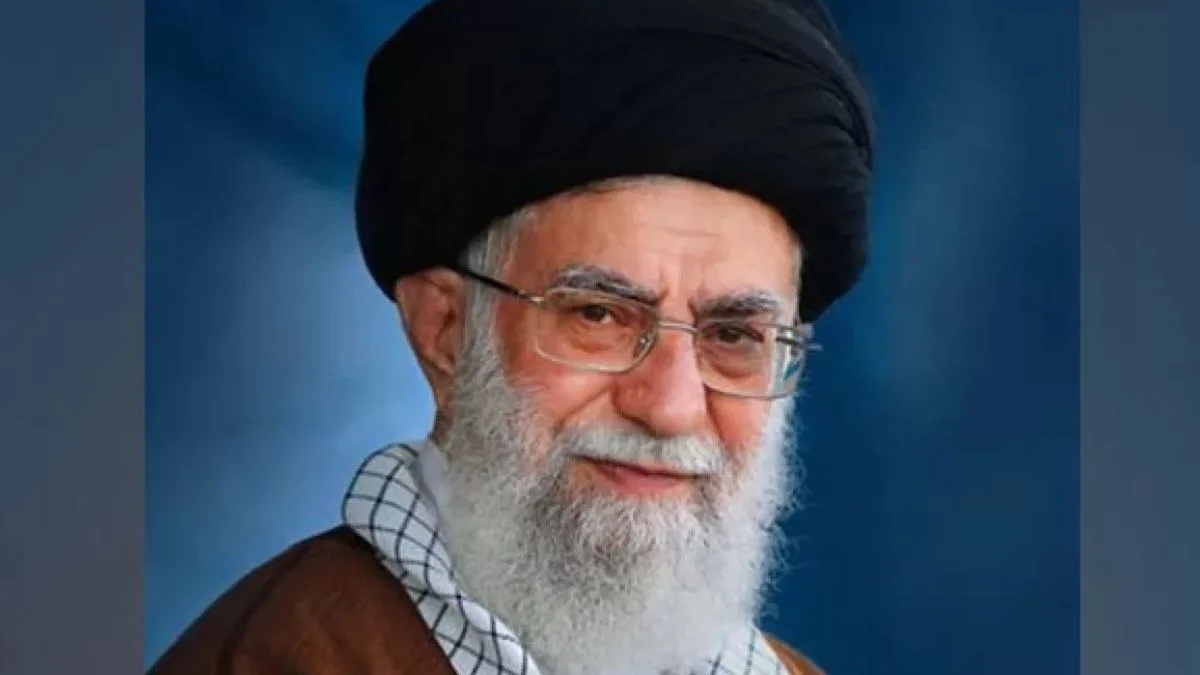
Kintoor, a modest settlement in the Barabanki district, adjoining the state capital of Lucknow, is widely regarded as the ancestral home of the lineage that produced both Ayatollah Ruhollah Khomeini and the current Ayatollah Ali Khamenei, who has been assassinated during the ongoing war war with the US and Israel.
Advertisement
What links this Indian village to Tehran is not contemporary politics, but a two-century-old story of faith, migration, and enduring identity.
The connection dates back to 1790, when Syed Ahmad Musavi was born in Kintoor. A respected religious scholar, he embarked on a pilgrimage to Iraq in 1830 alongside the Nawab of Awadh. What began as a spiritual journey eventually led him farther west into Persia, present-day Iran. He settled in the town of Khumein, where he established his family and scholarly legacy. Despite relocating permanently, Musavi never forgot his origins. To honour his birthplace, he adopted the suffix “Hindi,” becoming known as Syed Ahmad Musavi Hindi — a lasting acknowledgment of his Indian roots.
Generations later, that lineage would play a defining role in global history. Musavi’s grandson, Ruhollah Khomeini, emerged as the central figure of the 1979 Iranian Revolution. Leading a sweeping popular movement, he overthrew Mohammad Reza Pahlavi, the last Shah of Iran, and established the Islamic Republic, becoming its first Supreme Leader. His leadership reshaped Iran’s political and ideological landscape, influencing regional and international dynamics for decades. The present Supreme Leader, Ayatollah Ali Khamenei, is also understood to descend from the same Musavi lineage, extending the historical thread from Kintoor into Iran’s contemporary governance.
In an ironic chapter of history, opponents of Khomeini once attempted to discredit him by highlighting his Indian ancestry, branding him an “Indian agent.” Rather than diminishing his influence, the claim failed to gain traction and instead added to the narrative of resistance that defined the revolutionary movement.
Back in Kintoor, the connection is remembered with quiet pride. Residents speak of the shared heritage as a cultural and spiritual bond rather than a political affiliation.
Village representatives often emphasise that their loyalty remains firmly with India, yet they acknowledge the emotional resonance of watching developments in Iran knowing that a part of that nation’s leadership lineage traces back to their soil. Some families in the village claim descent from the same Musavi line, preserving oral histories that connect their present lives with events that transformed a distant nation.
Barabanki , is a Shia dominated Muslim area, has given several prominent leaders in the country including Congress leader Mohsina Kidwai.
However, Kintoor today remains peaceful and largely unchanged by the geopolitical currents it is indirectly linked to even as Lucknow was boiling with Shia protest.
Still, its story serves as a reminder that history does not always unfold within neat national boundaries. The journey of one scholar from northern India to Persia nearly two centuries ago created a legacy that would one day influence the direction of an entire country. In an era defined by global conflicts and shifting alliances, this unlikely connection highlights how deeply intertwined human histories can be, often in ways that only time reveals.