The killing of Iran’s Supreme Leader, Ali Khamenei, in a joint US-Israeli military operation marks a turning point for the Islamic Republic. After nearly four decades at the helm, his death leaves the country facing an urgent and deeply consequential question: who will become the next Supreme Leader?
The succession process is overseen by the Assembly of Experts, a clerical body tasked under Iran’s Constitution with appointing and supervising the Supreme Leader. In practice, the decision is shaped by a mix of religious authority, political influence, and the backing of key institutions — particularly the Islamic Revolutionary Guard Corps (IRGC).
Advertisement
Here’s a look at the main figures seen as potential successors:
Mojtaba Khamenei
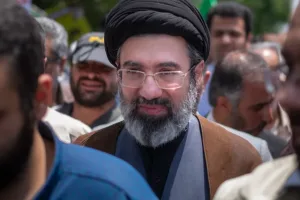
Born in Mashhad in 1969, Mojtaba is the second-eldest son of Ali Khamenei. He is known to have strong links with the Islamic Revolutionary Guard Corps (IRGC), the most powerful military body in the country, and its Basij volunteer paramilitary wing. During his father’s rule, he played a commanding role in the Office of the Supreme Leader.
Alireza Arafi
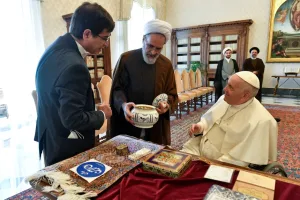
A senior cleric with deep institutional roots, Arafi has built his career across several key state bodies.
He currently serves as the deputy chairman of the Assembly of Experts and as head of Iran’s seminary system. He is a former member of the Guardian Council, which vets election candidates and laws passed by parliament.
Arafi has taken hardline stances, including harsh rhetoric against anti-government protesters, reinforcing his credentials among conservative factions. He once promised “death” to protesters who flip the turbans of Iranian clerics. “Those who attack the turbans of the clergy should know that the turban will become their shroud,” he said.
Mohammad Mehdi Mirbagheri
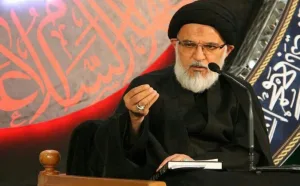
Mirbagheri is a hardline cleric and a member of the Assembly of Experts since 2016. He also sits at the helm of the Academy of Islamic Sciences of Qom, which promotes the development and promotion of “Islamic sciences”.
As a member of the Assembly, Mirbagheri contends that the Assembly’s role must be supporting the Supreme Leader, not supervising him as the Constitution dictates.
He always strongly supported Khamenei’s absolute authority under the doctrine of Vali-ye Faghih (Guardianship of the Islamic Jurist).