From February 23 to 26, Gulmarg’s snow-laden meadows transformed into a high-altitude arena for the sixth edition of the Khelo India Winter Games. While established names once again dominated familiar slopes, the larger story was the emergence of a new generation of Indian winter athletes, drawn from regions and backgrounds once considered far removed from snow sport.
They arrived with borrowed equipment, southern accents, paramilitary discipline and outsized ambition. By the time the Games concluded, they had signalled a quiet but decisive shift in India’s winter sporting landscape.
Advertisement
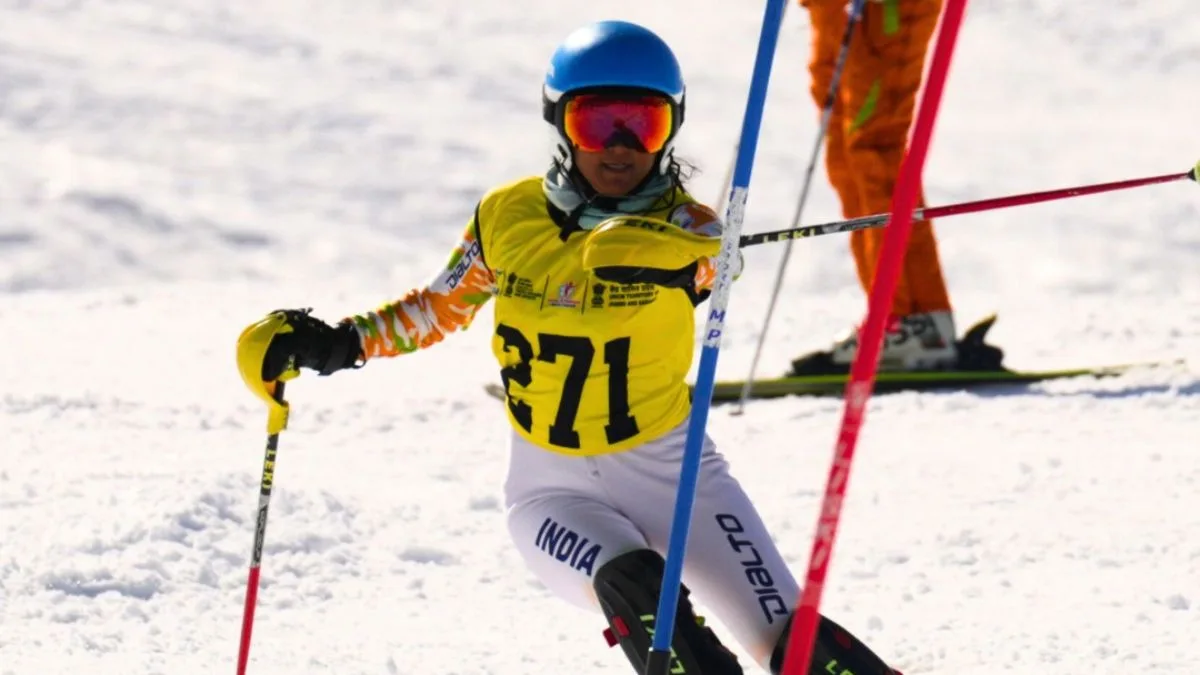
Among the most closely watched was 17-year-old Jiah Aryan from Bengaluru. Competing in Alpine skiing, she secured two bronze medals in Slalom and Giant Slalom, performances defined less by podium colour and more by composure and attacking intent. “I have been into winter sports since I was 10,” she said.
Jiah began her journey at the Jawahar Institute of Mountaineering and Winter Sports (JIM&WS), where she first trained on snow. Recognising her potential early, her parents later sent her to the Kron Platz Racing Centre in Italy to gain exposure to European competition and coaching standards.
Being from Bengaluru, she jokes, she was drawn to winter sports because “the grass is greener on the other side.” Her progress has not gone unnoticed. Jiah, along with five other female winter athletes, recently secured sponsorship support from the Reliance Foundation.
“The Reliance Foundation provides us with a physiotherapist, a sports psychologist, and a nutritionist besides equipment, training, and financial support,” she says.
Currently in Class 12 at the National Institute of Open Schooling (NIOS) Regional Centre, Bengaluru, she balances academics with competitive training. The only child of Aryan I C, who runs an old-age home, and Janvi Aryan, an IBM professional, Jiah credits her family’s encouragement for her growth. Her ambition is clear.
“I want to be the first Indian female winter sports athlete to win a gold medal,” she says. “I will train hard and do whatever it takes.”
If Jiah represents structured, long-term development, Renu Danu embodies rapid ascent. The CRPF athlete encountered snow for the first time only two years ago. In Gulmarg, she claimed three silver medals — in the Nordic 15-km, Nordic 1.5-km Sprint and the Ski Mountaineering Relay, compressing what is typically a multi-year progression into just 24 months.
Kaamya Karthikeyan, 19, added another milestone. The Maharashtra athlete clinched gold in Ski Mountaineering, marking her state’s first title in the discipline at the Winter Games. Her victory underscored a growing trend: winter sports in India are no longer confined to traditional mountain strongholds such as Jammu and Kashmir, Himachal Pradesh and Ladakh.
The CRPF’s Kajal Kumari Rai, 25, from Meghalaya, secured two gold medals in the women’s 15-km and 10-km Nordic sprint events, showcasing strength and endurance in disciplines that demand tactical pacing. Veteran Aanchal Thakur, 29, of Himachal Pradesh, claimed her first gold in Giant Slalom in Alpine skiing, blending experience with renewed purpose.
For the host region, Zubair Ahmad Lone delivered Jammu and Kashmir’s only gold of the edition, topping the podium in Snowboarding Giant Slalom.
Union Sports Minister Mansukh Mandaviya placed the event within a broader national framework. He reiterated that by 2047, India aims to become a “Viksit Bharat”, a developed nation, with sport positioned as a key driver of that ambition.
“The young athletes competing here will carry that mission forward,” Mandaviya said.
Prime Minister Narendra Modi has expressed intent to bring the Olympic Games to India in 2036. Under the proposed “Khelo Bharat Niti,” sports infrastructure and athlete development are being treated as long-term investments.
Winter sport in India remains at a formative stage. Unlike established winter nations such as Norway or Austria, where snow sport is embedded in culture, India’s ecosystem is still evolving. Yet events such as the Khelo India Winter Games are gradually building a pathway, providing competition exposure, professional support systems and broader geographic participation.
For four days in Gulmarg, athletes from Bengaluru raced alongside paramilitary personnel who discovered snow as adults. Competitors from Meghalaya, Maharashtra and Kashmir shared podium space. Support staff, physiotherapists, psychologists and nutritionists were visible parts of the ecosystem. The message was unmistakable — India is no longer merely participating in winter sport. It is beginning to prepare for it in earnest.