Losing Goa
For decades, Goa occupied a singular place in the global imagination. It was not merely a beach destination, but a cultural mood ~ inexpensive, unhurried, and faintly detached from the commercial anxieties of modern tourism.
When Goa announced its entry into the world of Formula 4 racing, it was easy to dismiss the move as a glamorous diversion.




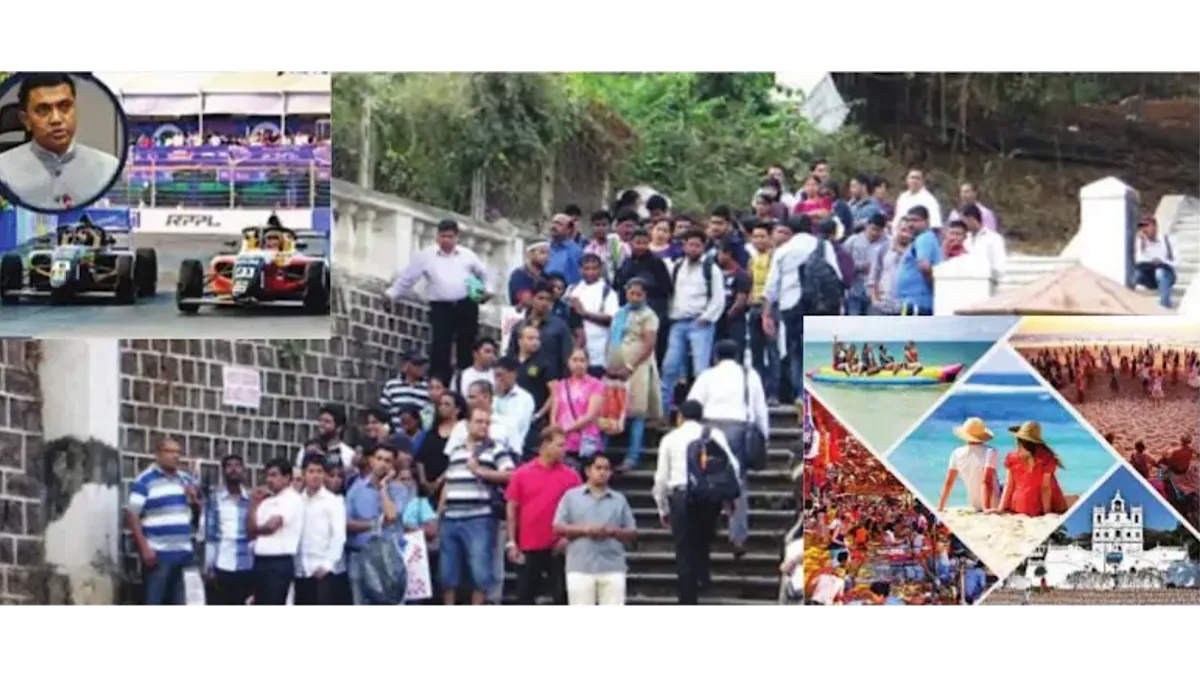
Photo:SNS
When Goa announced its entry into the world of Formula 4 racing, it was easy to dismiss the move as a glamorous diversion. But beneath the roar of engines lies a carefully calibrated economic strategy. With Rs 57 crore committed by the state government to host South Asia’s first oceanfront street circuit in Mormugao, and parallel plans for a permanent FIA-compliant track at Mopa, Goa is positioning motorsport as a new pillar of its economy.
This is not just about speed ~ it is about jobs, skills, and industrial diversification. Goa’s economy has long leaned on tourism. In 2025, the state welcomed 1.08 crore tourists, including over 5 lakh foreign visitors, marking its highest footfall ever. Tourism contributes nearly 30 per cent of Goa’s workforce, but this dependence has left the state vulnerable to seasonal fluctuations and global shocks. At the same time, Goa faces a youth employment challenge. The state’s unemployment rate hovers around 8-9 per cent, with educated youth disproportionately affected.
Advertisement
Motorsport offers a new industrial pillar ~ one that integrates tourism, technology, and global visibility. The employment potential of Goa’s Formula Racing project is both immediate and expansive. On the ground, the most visible opportunities will emerge in the direct organization of the races themselves. Track operations, logistics coordination, and safety management will demand a new cadre of professionals trained to international standards. Event management, too, will become a thriving sector, as Goa positions itself to host not just races but the full spectrum of motorsport-linked festivals, exhibitions, and fan experiences.
Advertisement
Alongside these, the hospitality sector will see a surge ~ ticketing, merchandising, and guest services will require skilled hands, while technical roles in engineering, mechanics, and race analytics will open doors for young Goans to work with cutting-edge automotive and data technologies. Yet the ripple effects extend far beyond the track. The indirect opportunities are equally transformative. A surge in demand for hotels, restaurants, and transport services is inevitable, as racing weekends attract visitors from across India and abroad. Media and broadcasting will flourish, with digital platforms and content creators finding new avenues to showcase Goa’s racing culture to global audiences. Even more importantly, the project will catalyze the expansion of training academies dedicated to motorsport engineering and management.
These institutions will not only prepare local youth for jobs linked to racing but also equip them with transferable skills relevant to the broader automotive and technology sectors. In short, the Formula Racing initiative is not a one-off spectacle. It is a carefully designed ecosystem that creates direct jobs on the track, indirect opportunities across tourism and media, and long-term skill-building platforms that will empower Goa’s youth to participate in industries far beyond motorsport. Global evidence is revealing. The global motorsport market was valued at USD 9.5 billion in 2024, with projected growth at 8.1 per cent CAGR through 2034.
The Singapore Grand Prix has generated $1.5 billion in tourism receipts since 2008, creating thousands of jobs in hospitality and logistics. The UK motorsport sector contributes £9 billion annually, sustaining over 40,000 jobs, with 70 per cent of firms exporting globally. There are Indian parallels as well. The Hyderabad E-Prix (2023) boosted local employment in hospitality and logistics, while showcasing India’s capacity for electric racing. The Irungattukottai track near Chennai has nurtured engineers and mechanics who transitioned into global automotive firms.
The true power of motorsport lies not only in the thrill of competition but in the vast ecosystem it catalyzes. Every race car on the track is the tip of an iceberg of industries, skills, and opportunities that ripple outward into the economy. On the upstream side, motorsport demands precision engineering and advanced manufacturing. Automotive component makers, from engine specialists to tire manufacturers, find new avenues to innovate and expand. The production of safety equipment and racing gear ~ helmets, suits, and protective technologies ~ creates specialized manufacturing clusters that can serve both sport and broader industrial needs. Even the digital backbone of racing, with telemetry and performance analytics, opens doors for IT firms and data scientists to apply their expertise in real-time monitoring and predictive modelling.
Downstream, the benefits are equally compelling. Tourism stands to gain enormously, as hotels, restaurants, and transport services experience surges in demand during race weekends. Media and entertainment industries thrive on the spectacle, with broadcasting rights, sponsorship deals, and digital platforms amplifying Goa’s presence on the global stage. Education, too, becomes a beneficiary: universities and training institutes can introduce motorsport engineering and management courses, equipping young Goans with skills that are transferable to the automotive, aerospace, and technology sectors. In essence, motorsport is not a siloed activity ~ it is a catalyst.
It stitches together upstream industries that build and innovate, with downstream sectors that host, broadcast, and educate. For Goa, this means the racing project is not just about cars speeding down a track; it is about weaving a new industrial fabric that connects local communities to global supply chains and knowledge networks. Goa’s entry into Formula racing is not happening in isolation. It builds on the state’s unique strengths and amplifies them in ways that promise lasting impact. First, there is the synergy with tourism. Goa already attracts more than 1.08 crore visitors annually, a mix of domestic travellers and over half a million foreign tourists. Racing events will add a new layer to this profile, drawing high-value international visitors who come not just for leisure but for the spectacle of motorsport.
This diversification ensures that Goa’s tourism economy is no longer tied solely to beaches and nightlife, but also to global sporting prestige. Second, the project offers a direct channel for youth engagement. Motorsport academies, internships, and training programs will open pathways for local talent to enter technical and creative careers. From engineering and mechanics to event management and digital content, young Goans will gain exposure to industries that are both aspirational and globally relevant. Third, the initiative strengthens Goa’s global branding. For decades, the state has been synonymous with sun, sand, and sea. With racing, it adds speed, innovation, and high-tech glamour to its identity. This dual image ~ leisure and cutting-edge sport ~ will appeal to a broader audience, positioning Goa as a destination that blends tradition with modernity.
Finally, the infrastructure legacy cannot be overlooked. Roads, utilities, and safety systems built to meet international racing standards will benefit everyday citizens long after the races are over. Improved connectivity, upgraded facilities, and enhanced public safety measures will ripple outward, raising the quality of life for local communities. Taken together, these advantages show why Goa is uniquely placed to leverage motorsport. It is not just about hosting races; it is about weaving them into the state’s economic and social fabric, ensuring that the benefits extend far beyond the track.
The numbers are revealing. Rs 57 crore investment by the state for the racing project. 1.08+ crore tourists in 2025, with foreign arrivals crossing 5 lakh+. Global motorsport market: USD 9.5 billion in 2024, projected 8.1 per cent CAGR growth. Singapore GP: $1.5 billion in tourism receipts since 2008. UK motorsport: £9 billion annual contribution, 70 per cent export-oriented. The Goa Formula Racing Project is not a diversion ~ it is a development strategy. By embedding motorsport into its economic fabric, Goa can create thousands of jobs; equip youth with globally relevant skills; stimulate upstream and downstream industries, and reinforce its position as India’s premier tourism and innovation hub. This is not just about speed on the trackit is about accelerating Goa’s future.
(The writer is an author and a technocrat. He can be reached at charudutta403 @gmail.com)
Advertisement