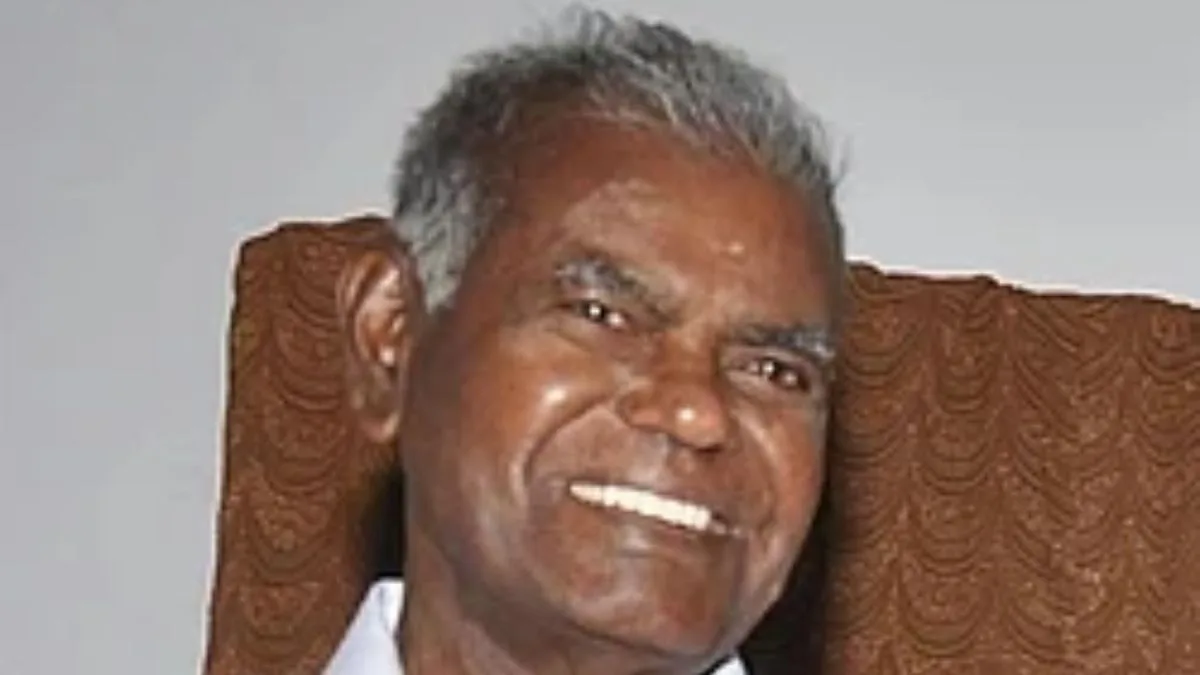
When the Communist party becomes weakened and presents no threat to the status quo, its leaders, who have shed their sweat and blood, are accommodated and turned into a toast of the political class. Battle-scarred dhoti clad spartan, CPI stalwart R Nallakkannnu, who passed away on Wednesday after prolonged age-related illness, perfectly represents this.
Affectionately called RKN and among the last of the freedom fighters, he was 101 and is survived by a daughter. The end came at around 2 pm at the Government Rajiv Gandhi General Hospital in Chennai, where he was admitted on February one. After the demise of Marxist veteran N Sankariah, he was the last surviving centenarian communist leader of Tamil Nadu.
Advertisement
Born on December 26, 1925, coincidentally when the CPI was founded, as the third son of his middle-class peasant parents Ramasamy and Karupayee. He went to school in his native Srivaikuntam in Thoothukudi district and then to Hindu College, Tirunelveli where he was rusticated for organising student protests against British rule. With his anti-colonial political consciousness getting shaped and drawn by left wing idealism, he joined the CPI in 1943. Participating in the Quit India movement as a student leader, he was arrested.
When the CPI was banned 77 years ago in 1948 for its engagement in armed struggle, 23-year-old Nallakannu was arrested from Puliyoorkurichi, an agrarian hamlet near Nanguneri, in connection with the Tirunelveli Conspiracy Case and lodged in the Nanguneri sub-jail and then at Madurai Central Prison in 1949. The torture during incarceration made him to give up sporting a moustache, typical of Tamils and south Indians. For, a jail official burned his moustache with cigarettes and plucked the chest hair, leaving scars as a memento. The police officer, Krishnamurthy, who used to tie RKN’s hands at 2 am in the night would untie them only at 10 am. He was released in 1956.
Right from the beginning, his party work was in organising landless agrarian workers. Even earlier, he took a firm stand against caste discrimination and casteist hegemony. When there was food scarcity with World War II raging, a food committee was formed in Srivaikuntam by dominant caste landholders with the exclusion of a Dali member. At this, RKN intervened and ensured that the Dalit member was included and seated as an equal, antagonising the dominant castes. CPI(M) Politburo member G Ramakrishnan credits RKN as one of the key leaders who built the landless farmers’ movement in southern Tamil Nadu and this has been recorded by P Sainath in his book, ‘The Last Heroes: Foot Soldiers of Indian Freedom. Comrade RNK, as he was fondly called by the people, remained an embodiment of integrity and selfless service for nearly eight decades he had spent in political limelight.
Though not at his oratorical best unlike those of the Dravidian stock, he spoke the language of the masses. Stories of his selflessness and spartan lifestyle are countless, on his 80th birthday, the party collected and presented him with Rs one crore but the returned the same to the party. When the DMK government of Stalin honoured him with the ‘Thagaisal Tamizhar’ (Honourable Tamil) award, with a Rs 15 lakh cash component, he added Rs 5,000 and gave it to the CM’s relief fund. Sad that his tribe is dwindling.