On Tuesday, multiple Bharatiya Janata Party leaders including Anurag Thakur, Gaurav Bhatia and Bansuri Swaraj took to the mic to slam Congress leader Rahul Gandhi over a variety of issues, including the shirtless protest by members of his party’s youth wing at the recent AI Impact Summit, followed by his statements against Prime Minister Narendra Modi.
Observers note that the coordinated and relentless attack against Rahul Gandhi reflects more than a mere reaction. It underscores the ruling party’s political strategy of directly taking him on whenever he adopts an aggressive stance against Narendra Modi. At the same time, it may also signify underlying unease over the impact of what the Congress leader has been saying publicly.
Advertisement
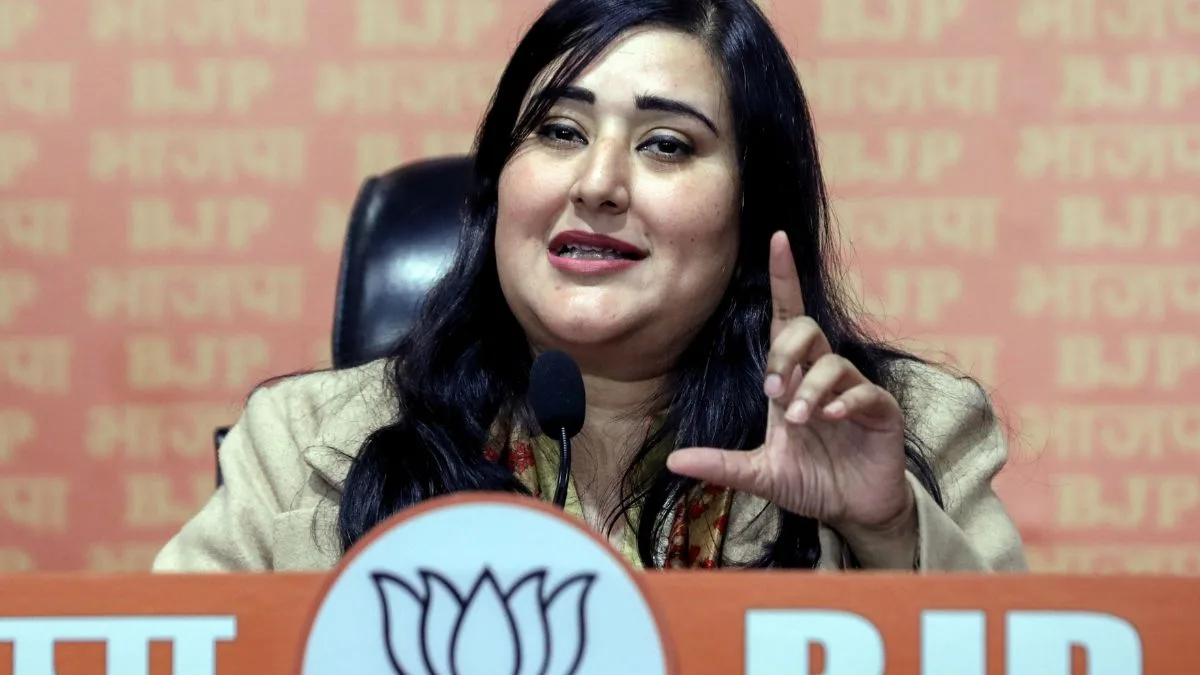
BJP MP Bansuri Swaraj slammed the Leader of Opposition in the Lok Sabha over his remarks against the PM in Bhopal. She said that, as a five-time MP, Gandhi should be considered a veteran of Indian politics, but listening to him, he appears more like an ignorant, naïve, and stubborn child.
“Given the accusations he levelled against this country and its prime minister, I want to ask: Has he become a mouthpiece for anti-India forces?”
“Rahul Gandhi can continue with his petty politics, he can incite party workers to behave indecently, but India will continue to fly high in the world of AI and technology. In all the upcoming Assembly elections, the people of India will once again give a befitting reply to Rahul Gandhi and the Congress,” she said.
According to some analysts, the BJP’s escalated attack against Gandhi also indicates that the ruling party now sees him as the principal face of the Opposition and, therefore, its primary political target, though the immediate trigger may be his remarks against the PM and the protest by members of the Indian Youth Congress.
The BJP has portrayed the Youth Congress protest as indecent and politically motivated, arguing that it was designed to create disruption during an event meant to showcase India’s technological ambitions to the world.
However, like every strategy, this too comes with some risks. Observers say that relentless attacks by ruling party leaders against Gandhi can be a double-edged sword. While they may consolidate the BJP’s core support base, they may also help elevate Gandhi’s political profile by keeping him at the centre of national discourse. Repeated personal criticism also risks generating sympathy among a section of voters, particularly if it is perceived as excessive.
Notably, a day after the Prime Minister accused the Congress of indulging in “gandi aur nangi (dirty and shameless)” politics, Gandhi on Monday hit back, alleging that his name and that of a Union minister appeared in the Epstein files and accusing the government of “selling out” India’s interests under the Indo-US trade deal.
Taking to social media, Gandhi said it was shameful that the name of the prime minister, a Cabinet minister, and an industrialist had appeared in files related to disgraced American businessman Jeffrey Epstein.
A day later, on Tuesday, he advised Modi to scrap the India-US trade deal, calling it against the interests of Indian farmers. Addressing a farmers’ rally in Bhopal, Gandhi likened the trade deal to an arrow piercing the hearts of Indian farmers. He also slammed the government for arresting IYC president Uday Bhanu Chib and other Youth Congress leaders, calling it reflective of “dictatorial tendencies and cowardice.”