On a Thursday winter morning, thick with talk of algorithms and ambition, two of India’s largest business houses – Tatas and Ambanis – made announcements that, taken together, could signal a decisive turn in the country’s technological future, veering it towards “AI power status”.
One came from the salt-to-software conglomerate Tata Group, in partnership with OpenAI, with a plan to build artificial intelligence infrastructure in India that could scale up to one gigawatt of capacity over several years.
Advertisement
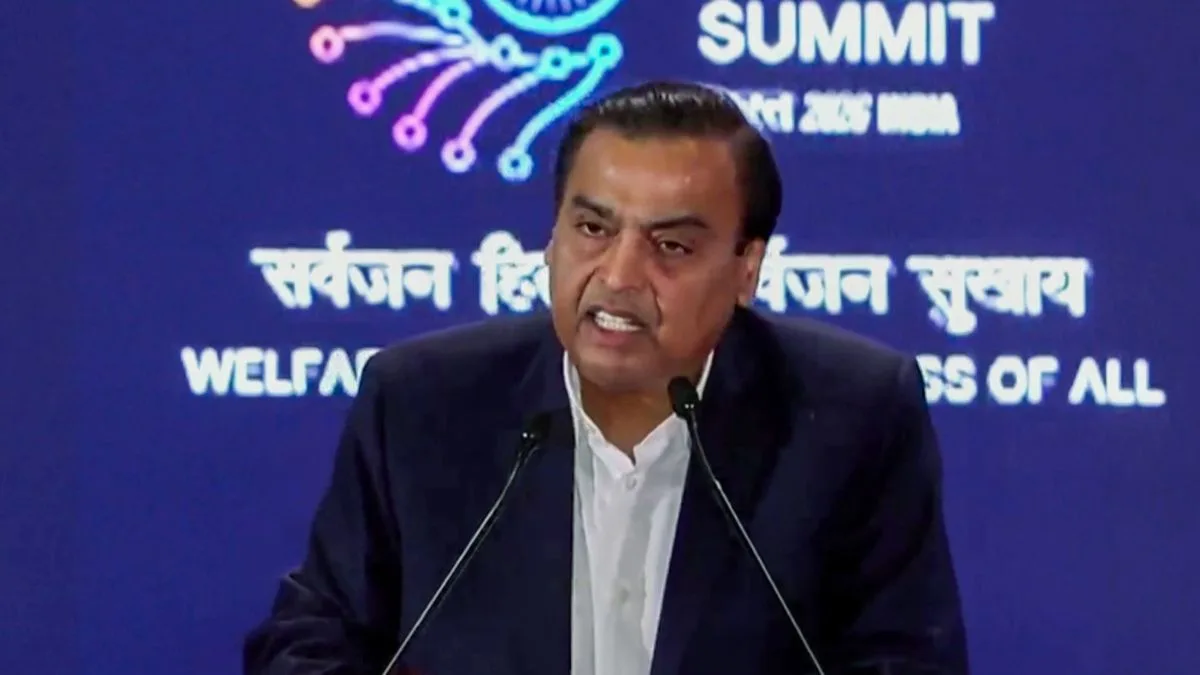
The other was delivered with characteristic aplomb by Reliance Industries’ Mukesh Ambani, better known for his polyester mills and gigantic oil refineries, who pledged an investment of Rs 10 lakh crore into AI, including vast new data centres designed to anchor what he called the country’s next industrial leap.
“This is patient, disciplined, nation-building capital, designed to create durable economic value and strategic resilience for decades to come,” the Mumbai-based tycoon said.
Individually, each announcement would have been notable. Together, they suggest that India’s AI ambitions are shifting from aspiration to infrastructure.
“These are big announcements, and they reflect the country’s intent to build the infrastructure necessary to become an AI power. The challenge lies in utilising and maintaining these data centres and green energy-powered infrastructure,” said Saibal Dutt, former Director (R&D) of STMicroelectronics India.
India already ranks third globally in Stanford University’s Global AI Vibrancy Tool, behind only the United States and China. It stands sixth worldwide in AI computing power, with roughly 1.2 million compute units, and third in the number of AI chips deployed.
Eight AI clusters operate nationally, and the AIRAWAT supercomputer at Pune’s C-DAC ranks among the world’s top 75. “Under the India AI Mission, New Delhi has pushed aggressively to expand datasets, build indigenous models and establish an AI Safety Institute,” said top officials of the Ministry of electronics and Information Technology (MeitY).