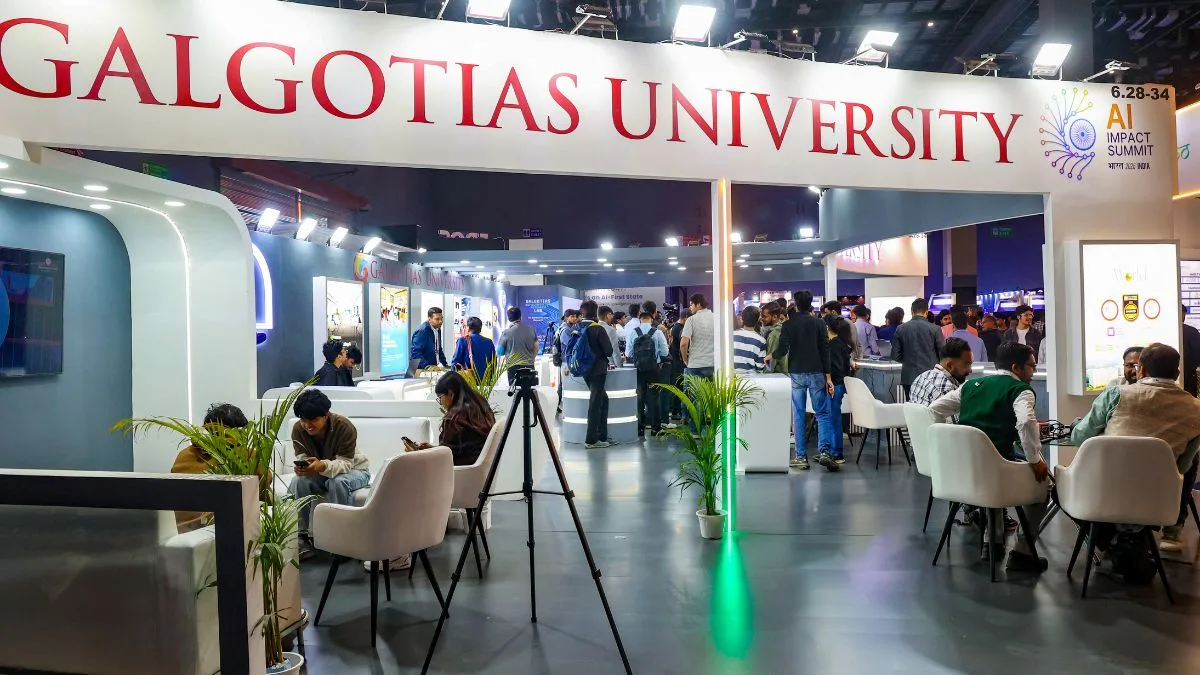
Following the “Orion” controversy, Union Minister Ashwini Vaishnaw said action had been taken over alleged wrongdoing at the India AI Impact Summit 2026. The Galgotias University was ordered to vacate its stall for allegedly passing off a Chinese-made robot as an indigenous innovation. At the same time, the minister urged focus on many positive AI solutions presented at the summit.
The summit is aimed at showcasing India’s technological prowess to the world, however, the controversy seems to have shifted some attention to concerns about credibility and accountability. With representatives from over 40 countries present, the incident drew sharp scrutiny and mockery, online as well as offline.
Advertisement
The university displayed a robotic dog named “Orion”, describing it as an in-house development which social media users and sections of Chinese media identified it as the commercially available Unitree Go2 manufactured by Unitree Robotics. Some also pointed out that the robot was available online for around Rs 2.5 lakh.
According to some reports, tech major Wipro also showcased a similar robotic dog at its pavilion. However, company representatives reportedly insisted that Wipro is primarily a software company and never claimed to be a hardware manufacturer or to have built the robot.
Experts say such situations need to be avoided through transparency, proper attribution and authentic innovation rather than public relations optics. There should be strong certification mechanisms, independent vetting bodies, and clear penalties for misrepresentation. Prioritising transparency and long-term R&D are essential if India wants its AI ambitions to be matched by global trust, they said.
If using off-the-shelf hardware (like the Unitree Go2), institutions should clearly state its origin. And when errors occur, they should acknowledge them promptly and take responsibility. In the Galgotias case, the issue intensified after a professor’s viral claim that the university’s “Centre of Excellence” had developed the robot. Real progress requires sustained investment in foundational R&D rather than short-term spectacle or PR optics, they add
The incident came at a time when India is trying to strengthen its position in the global AI race.
Experts, therefore, also point to constraints, including in areas like high-performance computing infrastructure, in the country. Many startups continue to rely on foreign large language models. Though government and private investments in semiconductor manufacturing and AI missions are increasing, building competitive domestic AI infrastructure is a big challenge, they say.