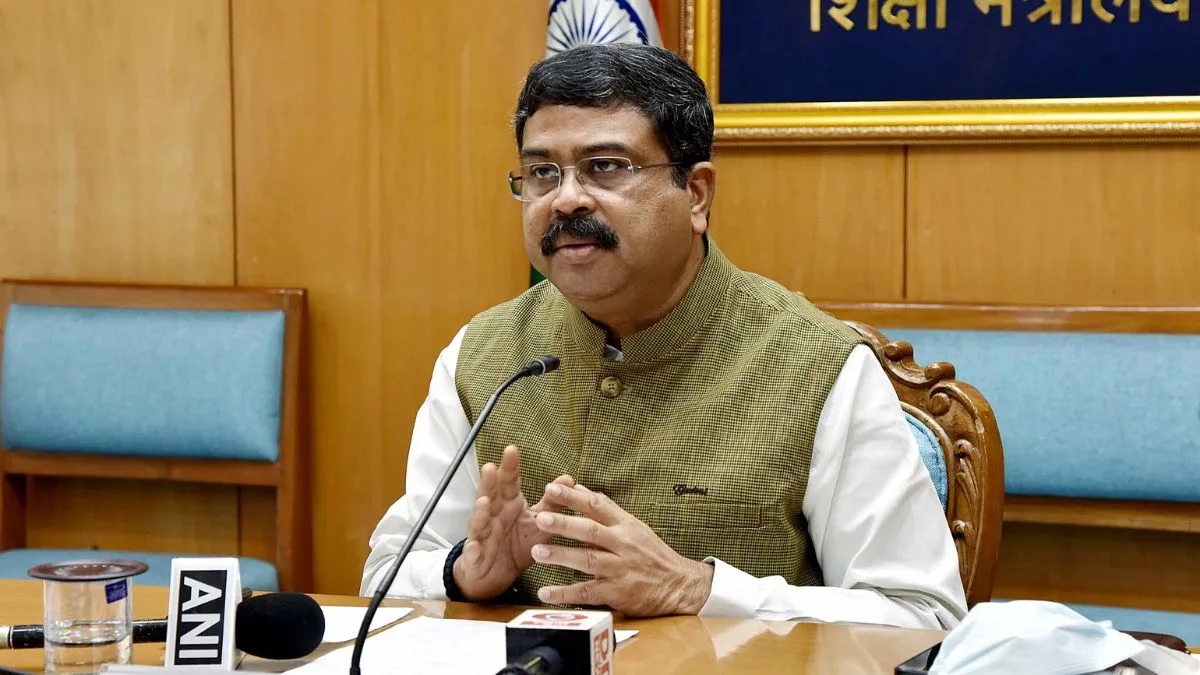
‘Thank you for calling us cockroaches’: CJP founder Abhijeet Dipke’s message to CJI Surya Kant after Pradhan’s resignation
The CJP founder's message to the CJI came shortly after Pradhan announced his resignation.
Illegal cigarettes are flooding India, evading taxes and regulations, and threatening public health and the economy. Philip Morris India tackles this with data-driven intelligence, partnerships, and Track & Trace systems to support enforcement and protect consumers.





File Photo
Across small shops, border towns, and busy coastal routes, illegal cigarettes are quietly flooding Indian markets. They cost less, skip taxes, and slip past rules. In 2025, Philip Morris India Trading Private Limited (PM India) decided to take the fight straight to the source with data, partnerships, and boots on the ground.
Illicit tobacco trade is no longer a hidden problem. It has become serious threat to India’s economy, public health, law enforcement systems. These cigarettes enter the country illegally, avoid taxes. Then they reach consumers at cheaper prices than legal products.
Advertisement
According to Euromonitor International, India is now fourth-largest market for illegal cigarette consumption in the world after China, Brazil and Pakistan. The reason is simple: illegal cigarettes are cheaper, while legal companies face very high taxes. This price gap keeps the black market alive.
Advertisement
Recent public reports suggest that enforcement agencies seized smuggled cigarettes worth around ₹600 crore in FY’25, showing just how big the problem has become.
To understand how deep the issue runs, PM India carried out a large intelligence-gathering exercise in 2025. The company engaged with more than 3,000 shops across 10 states. This covered over 500 market clusters. These interactions helped map where illegal cigarettes are most visible and how they move their way through local markets.
The goal was not just observation but building reliable intelligence that could in turn support enforcement agencies and policy discussions.
Also in the meantime, PM India worked closely with authorities to strengthen on-ground capabilities. The company supported capacity-building efforts for over 145 officers from customs and tax departments.
Data from the Directorate of Revenue Intelligence (DRI) points to some clear trends. The North-Eastern region has emerged as the largest hub for cigarette smuggling, accounting for one-third of total seizures. Porous borders make this region especially vulnerable.
Other regions are also becoming key routes. Maharashtra-Goa accounts for about 20% of seizures, followed by Tamil Nadu at 13% and West Bengal at 9%. Coastal and maritime routes are increasingly being used to bring illegal products into the country.
As the Government of India strengthens enforcement, one major reform stands out. It is the rollout of the Track & Trace system for tobacco products. This system digitally monitors cigarette packs and makes it harder for these illegal products to enter the supply chain.
PM India has been supporting this reform with their global experience and best practices. The parent company Philip Morris International (PMI) has already implemented Track & Trace systems in more than 140 markets worldwide.
In regions like the European Union, the UK, Russia, Jordan and GCC, every cigarette pack is digitally tagged and tracked. These systems work in collaboration with national authorities and are adapted to local needs.
According to PMI, such systems have improved visibility, strengthened compliance, and helped reduce illegal trade.
Navaneel Kar, Managing Director of Philip Morris India, said the company’s stance on illicit trade has been consistent over the years.
“Illicit tobacco trade is not a new challenge, and neither is our commitment to addressing it. Our endeavor in India combines global expertise with local partnerships to strengthen enforcement, protect consumers, and support national priorities. This year, we engaged with over 50 key stakeholders from the Ministry of Finance, Ministry of Commerce & Industry, DRI, GST, Police, and Customs—deepening collaboration through market intelligence, advanced track-and-trace systems, and collaborative frameworks to curb the inflow of illicit cigarettes. Combating this issue requires sustained, collective action, and we remain committed to working in collaboration with regulators, enforcement bodies, and civil society to build a transparent and compliant tobacco ecosystem for India.”
In 2025 alone, PM India engaged with over 50 key stakeholders, including officials from the Ministry of Finance, Ministry of Commerce & Industry, DRI, GST, Police, and Customs. These interactions focused on market intelligence, Track & Trace systems in addition to collaborative frameworks to curb illegal inflows.
By combining technology, intelligence, and partnerships, PM India aims to help create a more secure and compliant tobacco ecosystem, one that protects consumers, supports enforcement agencies, and safeguards national interests.
Advertisement