Daldal review: Let’s start with the vibe. ‘Daldal’ opens like one of those late-night conversations you shouldn’t be having. Dark, messy, full of secrets, slightly exhausting. You think you know where it’s going. A serial killer. A tough cop. Mumbai at its grimiest. But ‘Daldal’ doesn’t want to just scare you. It wants to ‘say something’. And sometimes, it says too many things at once.
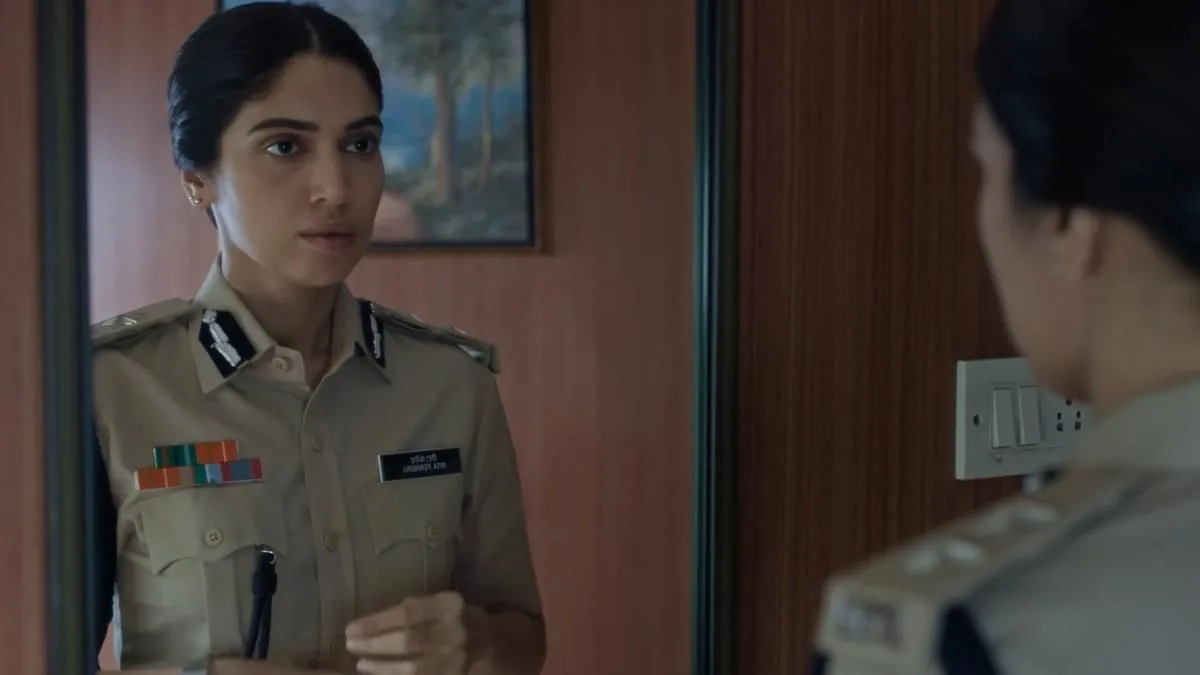
Streaming on Amazon Prime Video, this seven-episode series stars Bhumi Satish Pednekar as DCP Rita Ferreira, a senior Mumbai police officer chasing a high-profile serial killer while quietly falling apart in her personal life. The show wants to be a psychological thriller, a social critique, an emotional character study rolled into one. The result? Ambitious, sincere, often powerful. And also uneven, frustrating, messy.
Advertisement
Bhumi Pednekar as DCP Rita Ferreira: Angry, tired, human
Bhumi Pednekar plays Rita Ferreira like a woman who hasn’t slept in years, emotionally or physically. She is sharp, capable, deeply wounded. Rita is not your glossy, heroic cop. She is burdened by trauma, struggling with broken relationships, fighting to stay sane while the city throws its worst horrors at her.
This is one of Bhumi’s most intense performances. She doesn’t try to make Rita “likeable.” She makes her real. Rita snaps at colleagues, shuts out loved ones, and carries guilt like a second skin. You believe her exhaustion. You believe her rage. Even when the writing doesn’t fully support the character, Bhumi holds the centre together with sheer force.
The case: A serial killer who gets too close for comfort
At the heart of ‘Daldal’ is a serial killer case that grows darker with every episode. The murders are not random. They are brutal, personal, deeply disturbing. As Rita gets closer to the truth, the investigation begins to mirror her own psychological breakdown.
The show smartly avoids glamourising violence. These crimes are ugly and unsettling. They involve themes of trafficking, abuse, violence against women and children, and cyclical trauma. This is not easy viewing. And it’s not meant to be.
However, where ‘Daldal’ falters is in the actual ‘investigation’. For a show about policing, the procedural detail often feels thin. Clues appear so, so conveniently. Logic is sometimes sacrificed for mood. The tension comes more from emotional suffering than from sharp detective work.
Mumbai’s underbelly: Gritty, sad, unforgiving
One of ‘Daldal’’s biggest strengths is its atmosphere. This is not Mumbai of sea views and skyline shots. This is Mumbai of narrow lanes, broken systems, invisible people. The show focuses on underprivileged communities heavily. These are people who are easy to exploit and easier to ignore.
The series paints bleak picture of how justice system often fails the most vulnerable. Victims are dismissed. Complaints are delayed. Trauma is treated like paperwork. In this sense, ‘Daldal’ feels deeply angry, and rightly so.
The supporting cast brings some life
While Bhumi leads from the front, the supporting cast does a lot of heavy lifting.
Geeta Agrawal as Indu Mhatre is a standout. She commands attention every time she appears balancing authority with emotional depth. Her performance feels lived-in.
Samara Tijori takes on one of the most difficult roles as Anita Acharya and delivers a performance that is intense without being exploitative. She brings a quiet menace and sadness that fits the show’s darker corners.
Actors like Aditya Rawal, Chinmay Mandlekar, Prateek Pachauri, Sandeep Kulkarni, and Sandesh Kulkarni add texture to the world of Mumbai policing.
No one feels cartoonish. Even smaller roles feel thought-through.
Big ideas, uneven execution
This is where ‘Daldal’ starts slipping.
The series clearly wants to talk about inherited trauma, patriarchy, moral decay, and what it means to survive in a male-dominated system. These are important themes. But the writing doesn’t always give them enough breathing space.
Some ideas are repeated again and again without moving forward. Emotional beats are stretched too long. The pacing drags in the middle episodes. These make the show feel heavier than it needs to be.
‘Daldal’ makes some odd choices. The background score is often too loud, too dramatic, and sometimes completely unnecessary.
The serial killer backstory: A risky misstep
The most uncomfortable and problematic aspect of ‘Daldal’ lies in how it handles the serial killer’s backstory.
The show reveals that the killer has suffered extreme childhood trauma, abuse, abandonment. These are familiar psychological markers. But the series also gestures toward gender dysphoria as a factor in the killer’s descent into violence.
This is where ‘Daldal’ loses clarity.
The problem is not representation. The problem is implication. Trauma, abuse, and gender nonconformity are stacked together in a way that blurs the line between correlation and causation. In today’s world where trans, queer, and gender-diverse people already face enormous prejudice, this lack of clarity can be harmful.
The show does not clearly state its position. Is gender dysphoria a red herring? Is it irrelevant? Also, is it being wrongly interpreted by the cops? The writing doesn’t make it clear enough, and that silence becomes dangerous.
Gender politics: What the show wants to say vs what it ends up saying
Ironically, ‘Daldal’ wants to critique gender bias and systemic failure. It perhaps wants to show how institutions damage vulnerable children and shape violent adults. But by not being careful enough, it ends up reinforcing some of the very associations it seems to question.
Rita Ferreira represents the woman navigating what feminist scholars call a gendered institution. She is constantly questioned, emotionally policed, professionally isolated, expected to be strong without being disruptive.
Her rage is treated as instability while male aggression as authority. This reflects Joan Acker’s theory of gendered organisations. Institutions appear neutral but are structured around masculine norms.
However, Daldal limits its feminist critique by internalising conflict. Patriarchy is felt through Rita’s emotional suffering more than challenged through narrative consequence. System remains largely intact. Rita adapts rather than transforms it.
This feels like missed opportunity. Had the writing been a bit tighter, the show could have been sharp critique of how society fails to understand intersection of trauma and identity.
The final episode: Too late, but compensating
‘Daldal’ finds its strongest footing in the final episode interestingly. Writing tightens. The emotional arcs land better. Rita’s journey finally feels earned.
By then, though, you’re already tired.
The show breaks free of its own confusion only at the end, when it should have been confident from the start.
From a narrative theory lens, Daldal struggles with tonal consistency. It wants realism but relies on symbolism. It wants social critique but leans on genre shortcuts. And, it wants ambiguity but lacks ideological framing.
Ambiguity, in serious social storytelling, requires ethical anchoring. Without it, the audience is left unsure what the show is questioning, and what it is unconsciously endorsing.
Final Verdict: Ambitious but flawed
‘Daldal’ is a series you will admire more than you love.
The show struggles with repetition, uneven pacing, intrusive music, unclear messaging. This holds true around sensitive issues of gender and trauma.
‘Daldal’ lives up to its name. It pulls you in, makes you uncomfortable, refuses to let go easily. You may not enjoy every step, but you will remember the walk.
And sometimes, that’s still worth it to an extent.