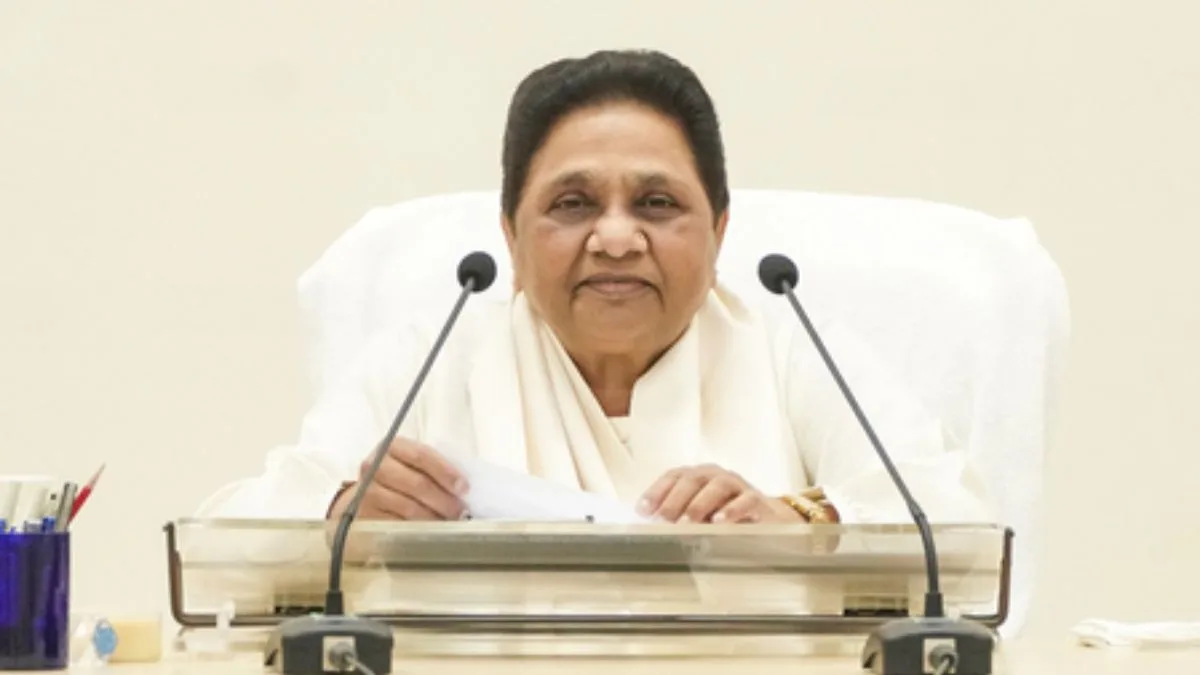
Bahujan Samaj Party (BSP) chief Mayawati on Thursday welcomed the Supreme Court’s stay on the University Grants Commission’s (UGC) newly introduced regulations aimed at preventing caste-based incidents in government and private universities.
In a statement posted on X, Mayawati said that the apex court’s intervention was appropriate in view of the social tension that had emerged following the implementation of the new rules. She remarked that such an atmosphere could have been avoided if the UGC had taken all stakeholders into confidence before enforcing the regulations.
Advertisement
The former Uttar Pradesh chief minister also raised concerns over the composition of inquiry committees under the new framework. She said that the absence of adequate representation of the upper-caste community in these committees goes against the principles of natural justice.
Mayawati stressed that inclusive consultation and fair representation are imperative to maintaining social harmony in educational institutions. She added that policy decisions of such sensitivity should be implemented only after thorough dialogue and consensus-building.
The Supreme Court on Thursday stayed the implementation of the University Grants Commission’s (UGC) newly introduced regulations aimed at preventing caste-based discrimination in government and private universities across the country. The apex court’s decision comes amid growing concerns that the new rules have led to an atmosphere of social tension in academic institutions.
Several stakeholders have expressed apprehensions over the manner in which the regulations were framed and implemented. Critics argue that the current situation of social unrest could have been avoided had the UGC engaged in wider consultations with all concerned parties before enforcing the new norms. They also contend that investigation committees constituted under the new framework lack adequate representation from the upper-caste community, raising questions about adherence to the principles of natural justice.
In view of these concerns, the Supreme Court’s decision to temporarily halt the implementation of the regulations has been described by many as appropriate under the prevailing circumstances. The court is expected to examine the matter in detail, including issues related to inclusivity, fairness, and due process, before taking a final call.