Punjab Police bust organised fraud networks, make 729 arrests in a year
The Punjab Police have significantly strengthened their cybercrime response by expanding the cyber defence network across the state.
Most of us have encountered the above-mentioned questions without knowing the fact that we have been conned. Welcome to the world of cybercrime, where the only way to save oneself is to try not to fall prey to the crime itself.




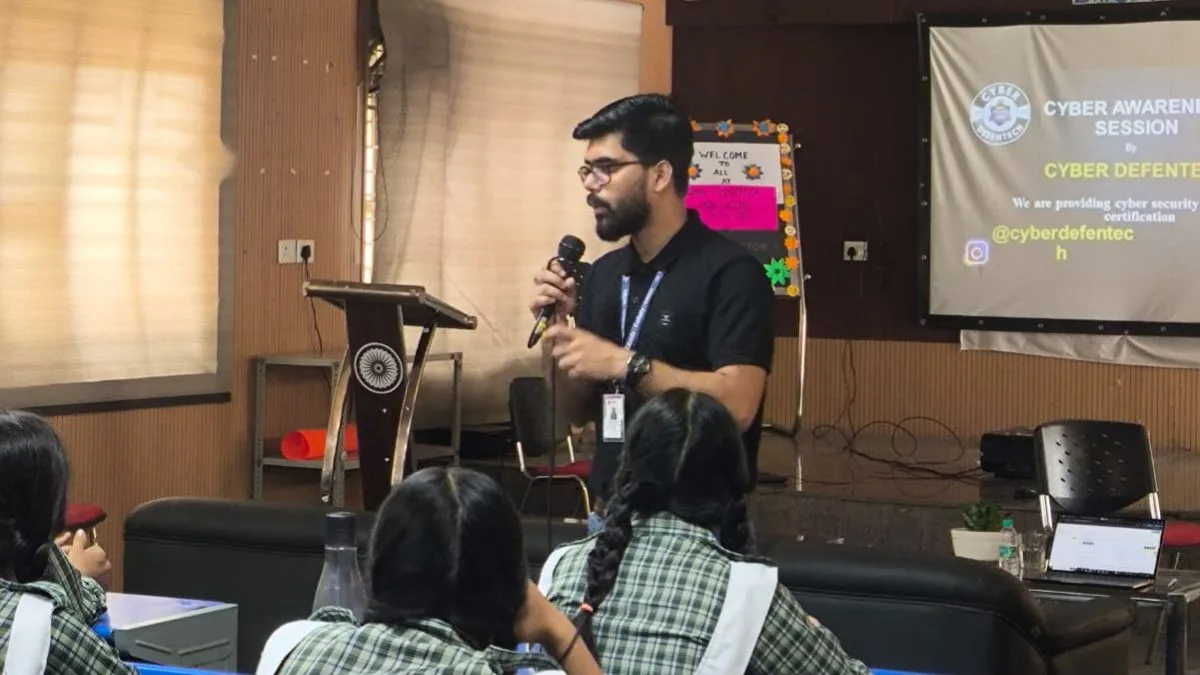
Photo: SNS
Has a stranger approached you to make a call through your phone? Has someone called you for an OTP for a parcel sent by a random person? Did a distant relative ask for monetary help on popular messaging platforms like WhatsApp?
Most of us have encountered the above-mentioned questions without knowing the fact that we have been conned. Welcome to the world of cybercrime, where the only way to save oneself is to try not to fall prey to the crime itself.
Advertisement
Nitish Pathak, CEO and founder, Cyber Defentech, says the “cobweb of cybercrime’ is so deep that it is very difficult to catch hold of the criminals as their network is multi-layered.
Advertisement
“With increasing dependence on digital platforms for education, banking, communication, and business, cyber threats such as phishing, financial fraud, identity theft, social media hacking, and data breaches have become common. Lack of awareness remains one of the biggest reasons people fall victim to cybercrime,” he told The Statesman in a telephonic conversation.
He emphasized that cybercrime is no longer limited to large corporations. “Today, hackers don’t just target big companies. A school student, a government employee, a defence professional, or a small business owner—anyone can be a victim. Awareness is the first line of defence,” he added.
Pathak conducts free cyber security seminars. He also actively works with government schools, defence institutions, and corporate organizations to educate citizens on how to protect themselves from cyber frauds and other online crime.
“We educate a range of people, from school students, working professionals to defence personnel, on the perils of cybercrime, and how to counter the same. For instance, we teach them something as basic as how hackers hack wifi and router, and how to save one’s data.
“We teach students the art of ‘cyber hygiene’, that is, how to keep one’s digital trail clean and how to get out of dark web. With defence personnel, we talk about the various sophisticated tools available to prevent any cyber attack,” he adds.
Another expert emphasizes that cyber security is also a form of social responsibility.
“Thanks to Modi government’s ‘Digital Mission’, we are rapidly moving to a digital society, where except the rural areas, digital transactions are the new norm today. It is quite natural that some mischievous elements will try to manipulate the loopholes. So, it is our responsibility that we are aware and take all precautions for a safe virtual world,” he says.
Asked about the common mistakes committed by people, Pathak pitches in, “Most of the times, people get conned while taking parcel delivery. The conmen usually send random parcels to their targets on their birthdays. These parcels are usually not sent via trusted names like Amazon, Flipkart or Myntra. Or else, these parcels will have the names with incorrect spellings like ‘Mynntra’, ‘Amazion’ or ‘FlipKaart’.
“What these cyber criminals want is the OTP in your phone so that they can steal your money. So be very patient and particular whenever it comes to OTP— check your vendor and the brand thoroughly,” he adds.
What if someone has fallen in the trap, what should be his next step?
“The first one hour after the crime is the golden hour wherein you need to act. As a preventive measure, try to use IMPS or NEFT for transactions above Rs 5,000 as it can be traced and the transaction can also be stopped within an hour of any crime. This mainly applies to those transactions when you are sending money to someone for the first time,” Pathak adds.
Advertisement