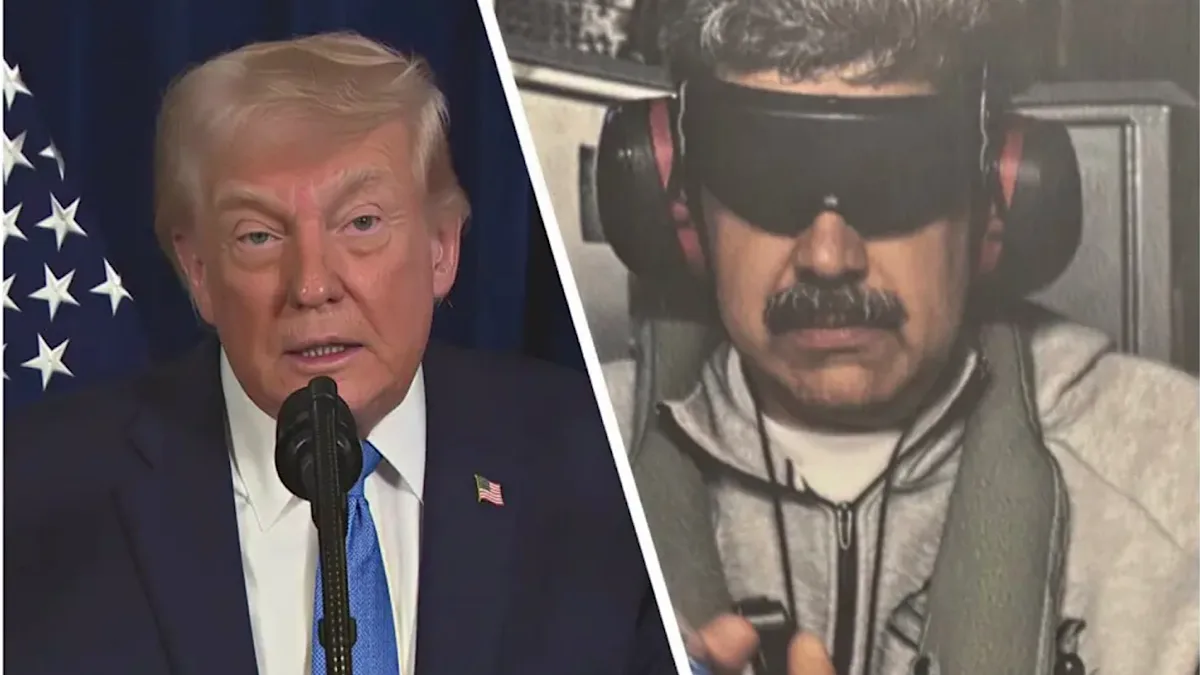
Venezuela was not an aberration. It was a declaration. The forcible removal of Nicolás Maduro was presented as a corrective to criminality and democratic collapse, but it has also reset expectations about how power will now be exercised. The operation’s brazenness ~ a sitting head of state seized, a government displaced, an interim authority installed ~ was not merely tactical. It was signalling.
And signals, in international politics, are rarely sent without intended recipients. Those recipients are already visible. Greenland is the most unsettling case, because it collapses the distinction between strategic interest and territorial ambition. The language used ~ necessity, security, inevitability ~ mirrors justifications historically associated with expansionist powers, not treaty-bound democracies. If strategic value alone becomes sufficient rationale, alliance membership offers no immunity. Colombia sits at the intersection of ideology, narcotics and geography. A left-leaning government, persistent drug flows, and rising US frustration form a combustible mix. Historically a close security partner, it is now being rhetorically recast as a problem state.
Advertisement
That shift matters. When partners are redefined as liabilities, the space for coercive action widens rapidly. Mexico is more complicated and therefore more dangerous. Its proximity to the US makes restraint harder, not easier. Cartels, migration and domestic US politics combine to create pressure for action that diplomacy struggles to absorb. Any cross-border intervention, even limited, would fracture a foundational bilateral relationship. But the logic of “if they won’t, we will” has already been articulated. Once that logic is normalised, execution becomes a matter of timing, not principle. Iran lies outside the hemispheric frame, but not outside the doctrine. Here the justification is moral rather than geographic: human rights, nuclear threat, regional destabilisation. The problem is that morality, when weaponised, becomes indistinguishable from convenience. If domestic repression is sufficient cause for external force, the list of eligible targets expands dramatically ~ and selectively.
Cuba, finally, is the low-hanging fruit. Isolated, economically brittle, and now deprived of Venezuelan support, it is being openly described as a regime waiting to fall. That language is not analytical; it is anticipatory. It prepares audiences for an outcome, and outcomes tend to follow preparation. Taken together, these cases reveal a pattern. This is not a scatter of unrelated grievances. It is a coherent posture: strategic impatience combined with ideological certainty. Influence is no longer sufficient; control is the goal. Legitimacy is no longer negotiated; it is asserted. The danger is not that power is being used. Great powers always use power.
The danger is that constraint is being discarded. When intervention becomes normalised, resistance becomes rational. Smaller states hedge, rivals harden, and institutions hollow out. Venezuela will be defended as a special case. Every intervention is. But precedents do not remain isolated. They travel. They are cited. They are eventually turned. Venezuela was the breach. The question now is whether it will remain the exception ~ or become the template as America turns brazenly rapacious.