The United States does not expect elections in Venezuela anytime soon.
US Secretary of State Marco Rubio has outlined a three-stage American plan for the country, making it clear that Washington sees its involvement stretching over years, not months.
Advertisement
Speaking to reporters in Washington on Wednesday (local time), Rubio said the Trump administration’s approach would move through stabilisation, recovery, and, only later, political transition. Rushing the process, he said, would risk plunging the country into further instability.
Also Read: Implications of Maduro’s extraction
Stabilisation first, recovery next
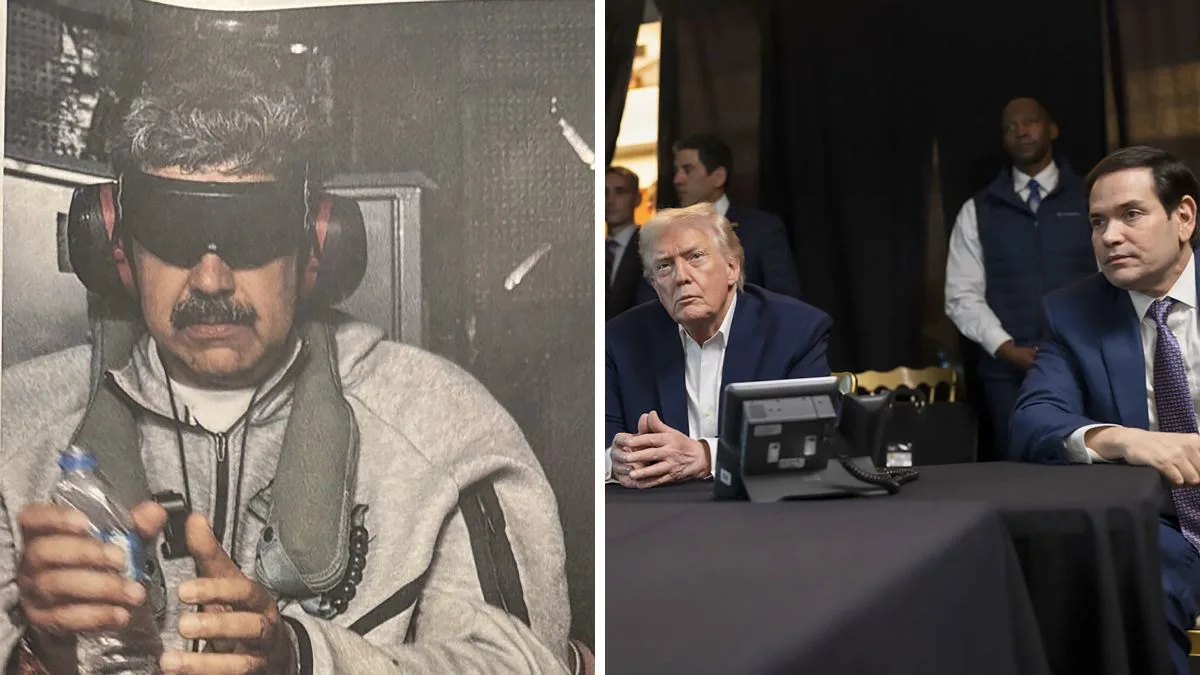
Rubio said the immediate priority is to prevent chaos after the removal of Nicolas Maduro.
“Step one is the stabilisation of the country,” he said.
According to Rubio, the United States believes it now holds its strongest leverage yet over Venezuela’s interim authorities. That leverage comes largely from control over Venezuelan oil exports, enforced through sanctions and a naval quarantine.
The second phase focuses on economic recovery. Rubio said this would involve reopening Venezuela’s economy to American, Western, and other permitted companies. Infrastructure rebuilding would be central to this effort, including repairs to the electricity grid and steps aimed at restarting economic growth.
Recovery, he added, would also include reconciliation measures. It may be possible to release opposition figures or grant amnesty to them, as well as to encourage Venezuelans who have fled the country to return home.
Political transition without a timeline
Only in the third phase would Venezuela move towards a political transition.
Rubio declined to set any timeline for elections, pushing back against expectations of rapid change. “It’s been just a few days,” he said, arguing that years of institutional collapse cannot be undone overnight.
The administration has faced criticism from some US lawmakers, particularly House Democrats, who say the White House has offered multiple plans but few concrete guarantees about Venezuela’s political future. Rubio rejected claims that the policy lacks direction.
“We’re not just winging it,” he said, adding that detailed planning has already been communicated to Congress.
Rubio insisted that forcing early elections could destabilise the country further and that stabilisation and recovery must come before political restructuring.
For India, the phased strategy matters beyond diplomacy. Long-term US involvement in Venezuela could reshape global oil supply, with potential consequences for energy markets that India depends on.
The plan also reflects a broader US approach of using economic and energy leverage before political change, while signalling Washington’s intent to counter China’s influence in Latin America.