Special one-day SIR camp at all polling booths in Punjab on July 19
The house-to-house enumeration phase of the Special Intensive Revision (SIR) is currently underway across Punjab and will continue until August 3.
The Chief Electoral Officer of Uttar Pradesh, Navdeep Rinwa, informed on Tuesday that the Election Commission has revised the schedule for the Special Summary Revision (SSR) being conducted in the state, with January 1, 2026, as the qualifying date.




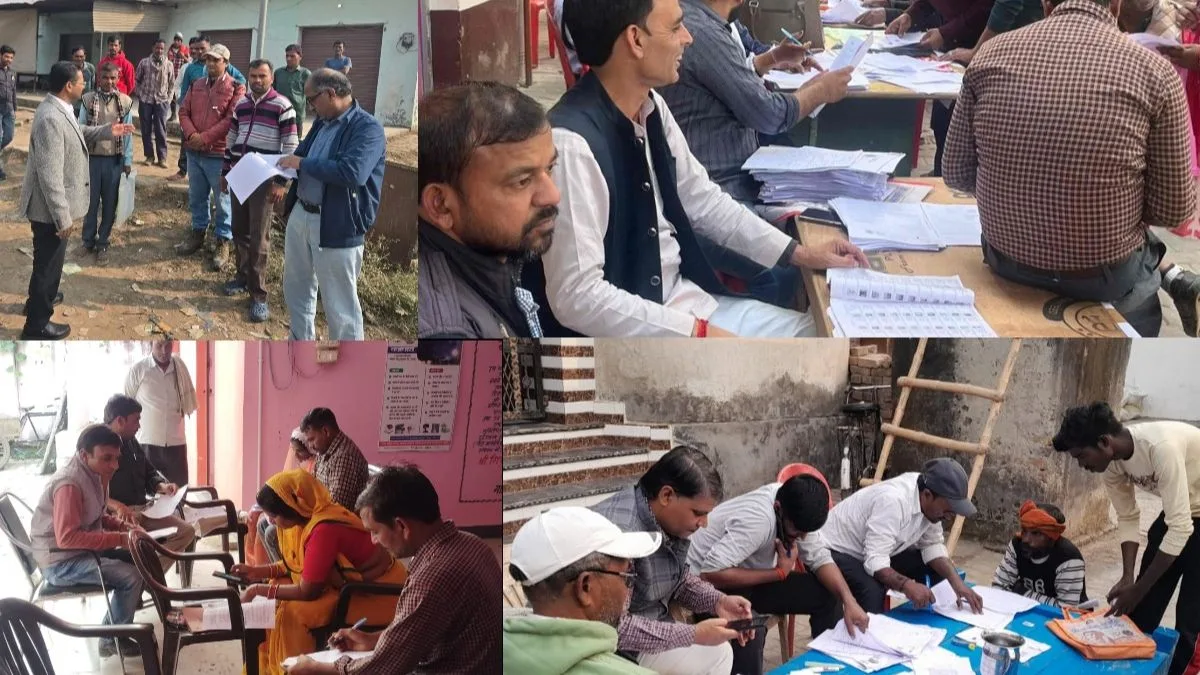
File Photo: IANS
The Election Commission of India (ECI) has extended the date for the publication of the draft electoral roll under the Special Intensive Revision (SIR) process by six days.
The Chief Electoral Officer of Uttar Pradesh, Navdeep Rinwa, informed on Tuesday that the Election Commission has revised the schedule for the Special Summary Revision (SSR) being conducted in the state, with January 1, 2026, as the qualifying date.
Advertisement
According to the revised schedule, the draft electoral roll will now be published on January 6, 2026. The period for filing claims and objections will remain open from January 6 to February 6, 2026.
Advertisement
Earlier, the draft electoral roll under the SIR was scheduled to be published on December 31.
The CEO further stated that the process of verification of enumeration forms, disposal of claims and objections, and related procedures will be carried out between January 6 and February 27, 2026. The final publication of the electoral roll for Uttar Pradesh will take place on March 6, 2026.
Earlier, the Special Intensive Revision exercise for submission of enumeration forms concluded on December 26 in Uttar Pradesh. During this process, records of approximately 28.9 million voters were found to be unresponsive or incomplete.
Before the revision exercise, Uttar Pradesh had a total of 154.4 million registered voters.
According to official sources, among the unresponsive voters, around 12.6 million have permanently migrated outside the state, 4.595 million voters are reported deceased, 2.332 million entries were found to be duplicates, 8.42 million voters could not be traced, and 9.37 million voters failed to submit their enumeration forms.
Advertisement