NIA court issues non-bailable warrant against Hafiz Saeed
As many as 26 people, mostly tourists, were killed by terrorists at Pahalgam in south Kashmir on April 22 last year.
Bangladesh became a new trouble spot for India in its neighbourhood where the caretaker regime left no stone unturned to antagonise New Delhi with its intransigent behaviour and virtually turned a blind eye to the atrocities against the minorities, especially Hindus.




File Photo: ANI
2025 is ending on a pessimistic note for India on the foreign policy front, as the year witnessed four days of intense hostilities between India and Pakistan in May following the Pahalgam terror attack, and the country’s ties with the United States faced severe strain due to President Donald Trump’s punitive tariffs, immigration crackdowns, and perceived tilt towards Islamabad.
Bangladesh became a new trouble spot for India in its neighbourhood where the caretaker regime left no stone unturned to antagonise New Delhi with its intransigent behaviour and virtually turned a blind eye to the atrocities against the minorities, especially Hindus. Instead of being grateful to India for winning its freedom in 1971, Bangladesh is now cosying up to Pakistan in what is seen as a significant change in the South Asian geopolitical landscape.
Advertisement
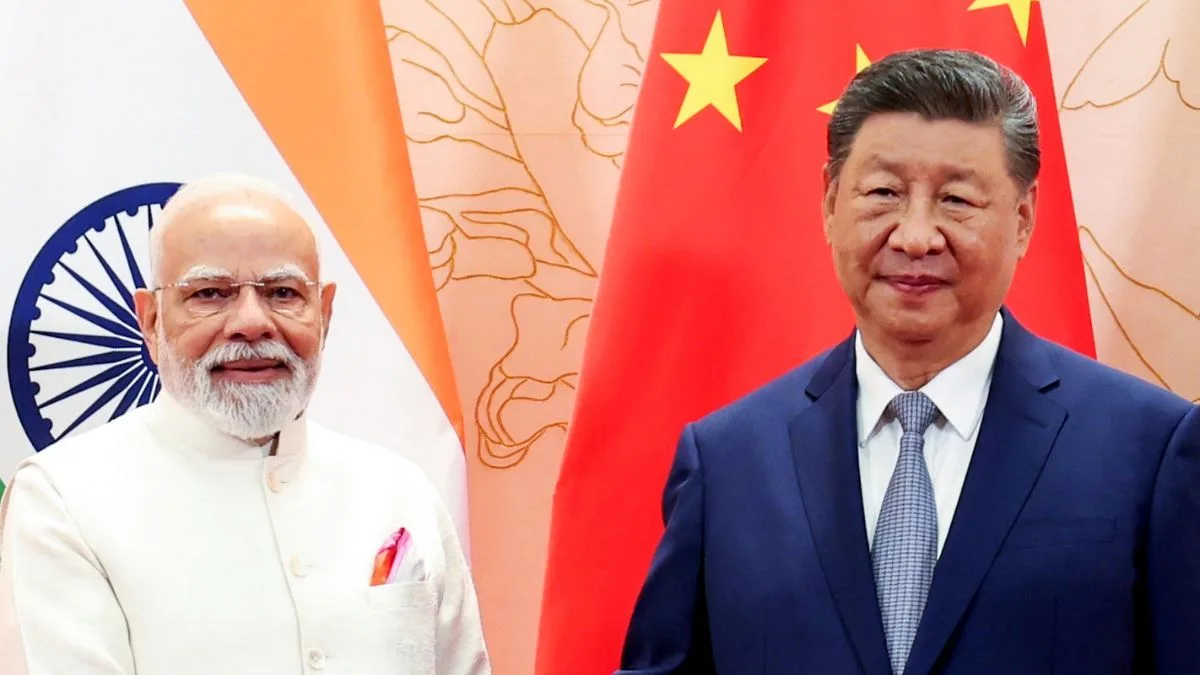
There was some improvement in India’s ties with China as Prime Minister Narendra Modi met Chinese President Xi Jinping in Tianjin on the margins of the SCO Summit in August to reassert India’s strategic autonomy and make it clear to the world that his government will keep national interests on top while dealing with the world.
Advertisement
Trump’s inauguration as President for the second time had raised hopes of further consolidation in ties with the US, given his equation and personal chemistry with PM Modi.
But these hopes were dashed soon as the American leader imposed 50 per cent tariffs on Indian products, the highest on any country, accusing New Delhi of aiding the Russian war machine in the ongoing conflict in Ukraine by purchasing oil from Russia.
Not only that, President Trump also repeatedly claimed credit for the cessation in hostilities between India and Pakistan in May, while New Delhi made it clear that there was no third-party involvement in ending the ‘mini war’ with Pakistan.
Given the slide in ties between India and the US, the much-anticipated Quad Summit of India, Australia, Japan and the US, for which President Trump was also to visit New Delhi, has been postponed. It’s not certain if the summit will take place in 2026, either. It all depends on whether India and the US are able to stitch a free trade deal that is being negotiated between the two sides for quite some time and resolve differences on other issues.
Pakistan continued to support cross-border terrorism on Indian soil. Terrorists trained by the neighbouring country massacred innocent tourists on the basis of their religion in the Pahalgam valley on April 22. India was left with no choice but to retaliate. India launched “Operation Sindoor” and caused immense damage to the terrorist infrastructure deep inside Pakistan. While the hostilities came to an end after four days, New Delhi made it clear that it would not succumb to nuclear blackmail, and any terror attack would be treated as an act of war.
India is yet to fully assess the extent of help in terms of weaponry provided by China to Pakistan during the four-day ‘mini war’. However, that has not deterred it from re-engaging with Beijing, especially on the economic front. PM Modi’s picture with President Xi and Russian President Vladimir Putin in Tianjin became the focus of global attention and drew some unsavoury remarks from President Trump, which were ignored by both New Delhi and Beijing.
But the year saw a remarkable improvement in ties between India and Canada, which went through an ugly phase in the past two years after former PM Justin Trudeau alleged the involvement of Indian agencies in the killing of a ‘Khalistan’ supporter. Canada’s new PM Mark Carney has given firm indications of his government’s commitment to strengthening ties with India.
The rough edges witnessed in India and Russia due to various global factors, including the Ukraine conflict, disappeared as President Putin paid a highly successful visit to New Delhi in December, with the two countries inking landmark deals. The visit also gave an opportunity to President Putin to demonstrate his legitimacy to the Western world, as he was feted by the largest democracy.
However, PM Modi once again made it clear to the Russian leader that this is not the era of wars, and the conflict in Ukraine must be brought to an end through peaceful negotiations.
Advertisement